Logitech History: How the P4 Mouse and OEM Deals Built a Peripherals Powerhouse
Logitech's first great product category was the mouse, and its route into that business came through engineering work rather than retail branding. Founded in 1981 in Apples, Switzerland, the company developed the P4 mouse in 1982 after work connected with a Ricoh workstation project. Early OEM relationships then turned the mouse from an interesting product into a scalable business.
The P4 mouse put Logitech on the map
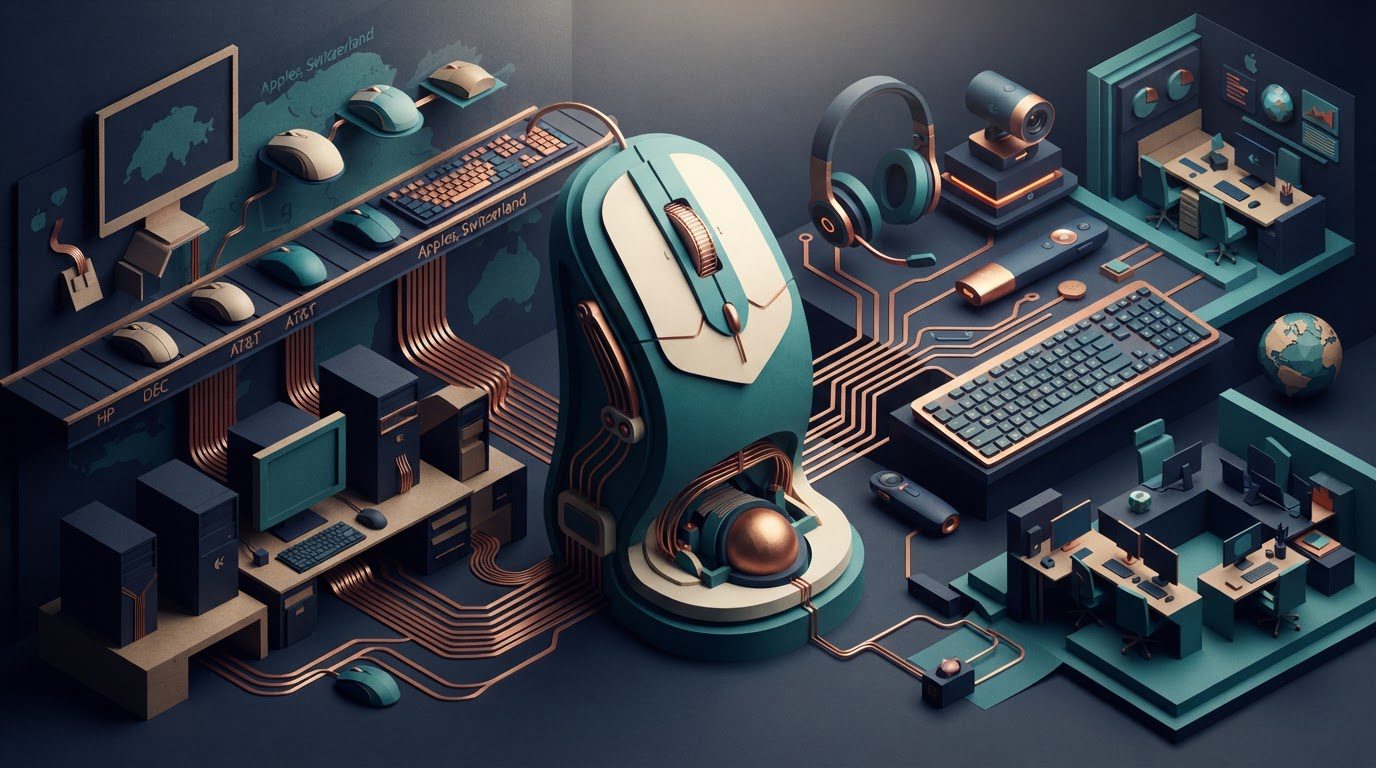
Logitech's research notes identify DEC, HP, AT&T and Convergent Technologies among early OEM buyers, with an HP contract in 1984 becoming an important step in international growth. OEM work mattered because the personal-computer market was expanding rapidly and manufacturers needed pointing devices that could ship with complete systems. Logitech learned to compete on reliability, ergonomics, manufacturing and cost at high volume.
The company did not remain a mouse supplier. Keyboards, webcams, headsets, speakers, presentation devices and video-collaboration hardware broadened its role from one input device to many of the physical interfaces through which people use computers. The expansion makes sense technically: sensing, buttons, optics, wireless links, microphones and cameras all sit at the boundary between the user and the PC.
OEM deals turned mouse engineering into scale
Gaming eventually became important enough for Logitech to formalise a separate Logitech G line in 2013. Business collaboration also grew into its own major area as webcams and meeting-room systems became central to hybrid work. Those businesses share an engineering heritage but address customers with very different requirements.
Logitech's OEM years are important because they explain how the company learned to manufacture at scale before the mouse became a mass consumer accessory. Supplying computer makers meant meeting another company's design, quality and delivery requirements, not merely selling under the Logitech name. The 1984 HP contract therefore represented both revenue and validation. Once graphical interfaces made the mouse central to everyday computing, Logitech was positioned to move from an OEM specialist toward a consumer brand. Later keyboards, webcams and collaboration products extended the same human-interface logic: the company repeatedly built hardware that sits between a user and the computer rather than trying to own the computer itself.
The P4 mouse remains a better historical anchor than any current flagship because it shows the problem Logitech learned to solve first: translating human movement into a dependable computer input. Nearly every later category—gaming mice, webcams, headsets or conference systems—extends that same concern with the point where people meet machines.