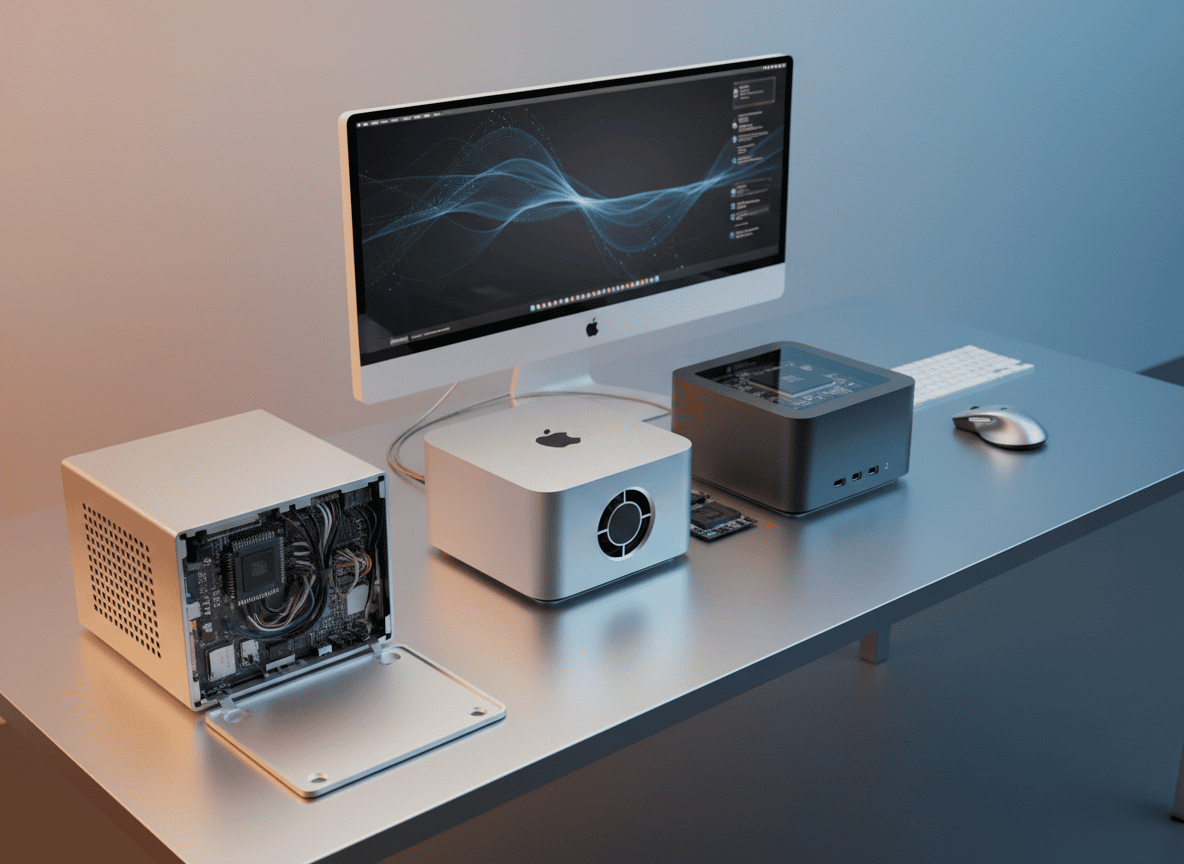
Mac mini History: How Apple’s $499 Desktop Survived Three Processor Eras
Apple introduced the Mac mini on 11 January 2005 with a deliberately unusual proposition: buy the computer, but reuse the display, keyboard and mouse you already owned. Starting at $499 in the United States, the small PowerPC G4 desktop lowered the entry price for Mac OS X without requiring Apple to bundle a complete desktop setup.
The $499 Mac mini changed the entry point to Mac
That positioning made the form factor strategically important. The Mac mini was not designed to win on expandability like a traditional tower. It used compact packaging and commodity peripherals to make the Mac easier to add to an existing desk. The concept survived major internal changes because the product's value was tied more to size, price and flexibility than to one processor generation.
Apple moved the Mac mini to Intel processors in 2006, then to Apple silicon in 2020. Each architecture change altered performance and software compatibility, but neither required abandoning the basic small-desktop idea. Over time the mini also found uses beyond the consumer desk, including development, media, small-office and server-like roles where a compact macOS machine was useful.
One small desktop survived three processor eras
The product's history also shows the limits of using Apple's 1976 founding date in a Mac mini article. The relevant brand launch is 2005; everything before that is parent-company background. Apple supplied the operating system, industrial-design language and retail ecosystem, but the mini itself belongs to the mid-2000s effort to broaden Mac adoption.
The original pricing and 'bring your own display, keyboard and mouse' concept are central to why the Mac mini existed. Apple was trying to lower the cost of entering the Mac ecosystem without competing in the same form factor as an iMac or notebook. The small enclosure then survived two major processor migrations—from PowerPC to Intel and from Intel to Apple silicon—because the product idea proved more durable than its internal architecture. In that sense, Mac mini history is unusually clean: the specifications changed radically, but the role remained a compact, relatively accessible desktop that lets customers reuse external peripherals.
What has endured is the original separation between computing box and peripherals. The hardware inside has changed completely—from PowerPC to Intel to Apple-designed silicon—but the Mac mini still occupies the same conceptual space: a small desktop that gives users the Mac platform without forcing them into an all-in-one computer.
