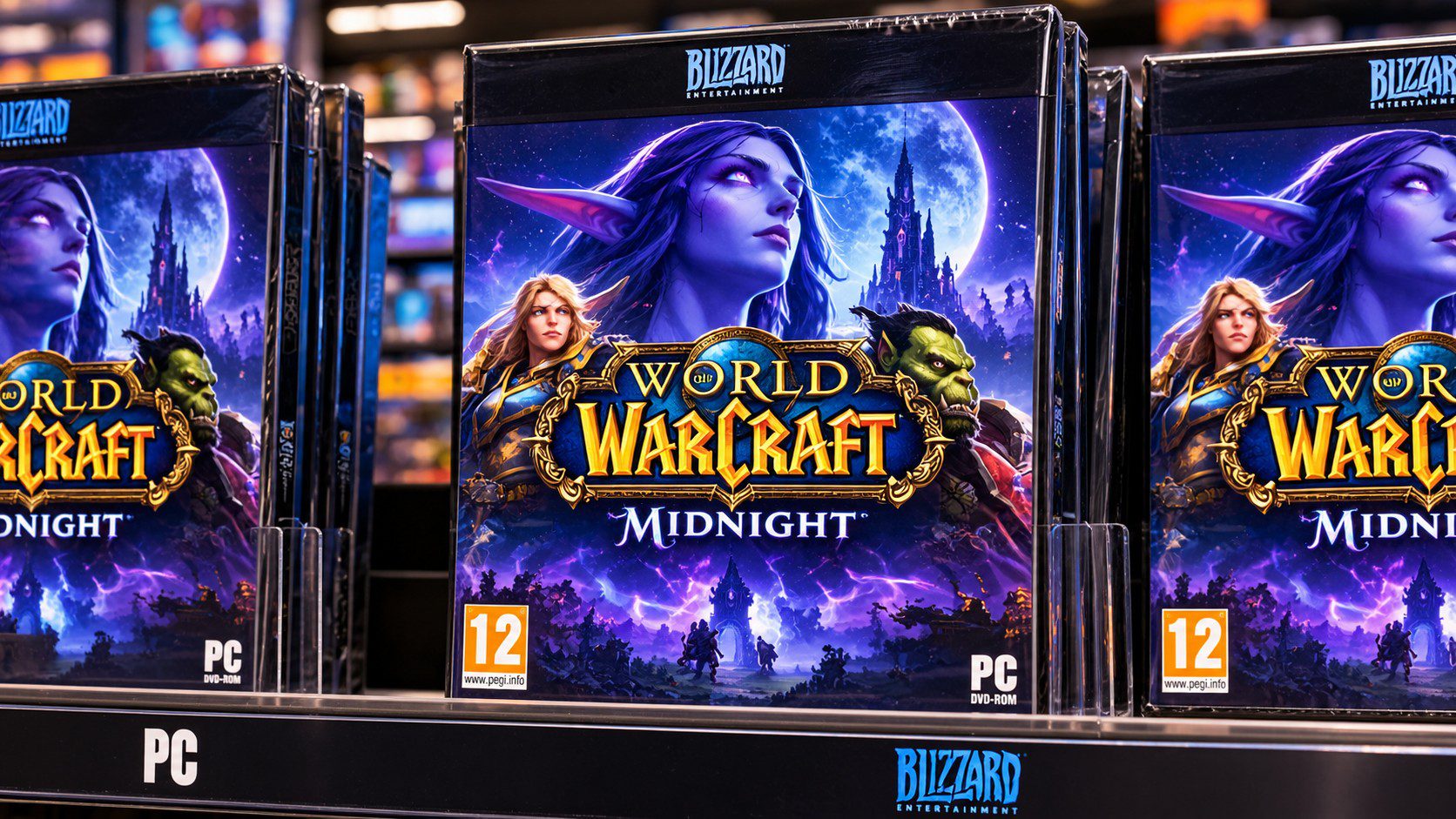
World of Warcraft keeps Azeroth alive more than two decades after launch
World of Warcraft has outlived entire generations of online games, yet its most important feature has never been a particular dungeon, raid or expansion.
It is the feeling that Azeroth continues existing even when a player logs off.
Cities remain gathering places. Guilds organise their next adventures, while other players explore forgotten regions, collect equipment or prepare for difficult encounters.
Some return after years away and discover that the world has changed considerably. Others have never really left.
Since launching in November 2004, Blizzard Entertainment’s massively multiplayer online role-playing game has grown from a fantasy adventure into an enormous collection of stories, activities and communities.
In 2026, World of Warcraft: Midnight continues that evolution with a renewed focus on Quel’Thalas, the growing threat of the Void and one of the game’s most significant additions: player housing.
However, understanding World of Warcraft requires looking beyond its latest expansion.
Its longevity comes from the many different ways players can make Azeroth their own.
Azeroth became a world rather than just a game map
World of Warcraft takes place in Azeroth, a fantasy world populated by numerous races, kingdoms and factions.
Its history extends back through the Warcraft real-time strategy games, but the MMORPG transformed that setting into a place players could explore directly.
Instead of commanding armies from above, players created individual characters and entered the world themselves.
They travelled between settlements, completed quests, discovered dangerous locations and encountered other adventurers.
The scale of the world made exploration a central part of the experience.
A journey between major cities could become an adventure, particularly when travelling through territory occupied by powerful enemies.
Even relatively ordinary locations developed significance because players associated them with particular quests, friendships or discoveries.
That relationship between geography and memory helped establish Azeroth’s lasting appeal.
The Horde and Alliance shaped Warcraft’s identity
The conflict between the Horde and Alliance has been central to Warcraft for decades.
Both factions contain different races, cultures and political interests.
The Alliance traditionally includes groups such as humans, dwarves and night elves, while the Horde includes orcs, trolls and tauren.
However, the relationship between these factions has evolved considerably.
Some expansions emphasised open conflict, while others brought characters together against threats affecting the entire world.
Modern World of Warcraft also supports more opportunities for players from different factions to cooperate in eligible activities.
This reflects an important change in the game’s design.
Faction identity remains meaningful, but Blizzard has gradually reduced some of the barriers that previously prevented friends from playing together.
Choosing a class changes the entire experience
Character creation is one of World of Warcraft’s most important decisions.
Players select a race and class, with the available combinations determined by the game’s rules.
Classes provide different abilities, combat styles and specialisations.
A Warrior may prefer direct melee combat, while a Mage relies on powerful spells. Hunters can attack from a distance and use pets, while Druids can change forms to fulfil different roles.
However, the same class can often support several approaches.
A Paladin might protect allies as a Tank, heal teammates or concentrate on dealing damage.
That flexibility encourages experimentation.
Players can develop a preferred role while exploring alternative specialisations when their group needs something different.
Tanks, healers and damage dealers make teamwork essential
Much of World of Warcraft’s group content revolves around three fundamental roles.
Tanks control enemy attention and absorb dangerous attacks.
Healers keep teammates alive and respond to incoming damage.
Damage dealers concentrate on defeating enemies while avoiding mechanics that threaten the group.
These roles create a cooperative structure.
A skilled Tank cannot complete every encounter without support. Similarly, powerful damage dealers may struggle when enemies are not controlled effectively.
Successful groups learn to coordinate movement, defensive abilities and attack timing.
That teamwork becomes increasingly important in difficult dungeons and raids.
World of Warcraft rewards individual preparation, but its most demanding encounters often depend on the performance of the entire group.
Levelling introduces players to Azeroth
Character progression begins through quests, exploration and combat.
Players earn experience, unlock abilities and develop their understanding of their selected class.
Quests provide direction while introducing locations and characters.
Some involve defeating enemies or collecting resources. Others develop storylines that reveal more about the world.
As World of Warcraft expanded, its enormous catalogue of older content created challenges for new players.
Blizzard has therefore introduced systems intended to make the levelling experience more manageable.
The Midnight era includes a streamlined journey through Dragonflight content to help players prepare for the current expansion.
worldofwarcraft.blizzard.com
This approach makes it easier to reach contemporary activities, although it also means newcomers may encounter the wider Warcraft story out of its original release order.
Dungeons provide structured group adventures
Dungeons are among World of Warcraft’s most recognisable activities.
They generally involve smaller groups travelling through hostile environments, defeating enemies and confronting bosses.
Each dungeon introduces its own layout, objectives and encounter mechanics.
Some require players to interrupt dangerous abilities, while others demand careful positioning or movement.
The difficulty increases as players move into more demanding versions of the content.
Mythic+ dungeons add timed challenges and scaling difficulty, giving experienced groups opportunities to test their coordination.
For many players, improving their performance in Mythic+ becomes a long-term goal.
Success depends on understanding routes, managing resources and responding to increasingly dangerous encounters.
Raids turn cooperation into large-scale challenges
Raids expand group content into more elaborate encounters.
Bosses may require players to divide responsibilities, coordinate defensive abilities or respond to several mechanics simultaneously.
Unlike ordinary enemies, raid bosses often follow distinct phases.
A group may need to change its strategy as the encounter progresses.
These battles can be demanding because mistakes affect more than the player making them.
However, completing a difficult raid also creates a sense of shared achievement.
Guilds may spend multiple evenings learning an encounter before finally defeating it.
That combination of preparation, persistence and teamwork has helped establish raiding as one of World of Warcraft’s defining activities.
Equipment progression gives players reasons to return
World of Warcraft uses equipment progression to reward participation in increasingly demanding activities.
Weapons, armour and accessories improve character statistics and can influence performance.
However, equipment quality is not the only consideration.
Players must understand which attributes benefit their specialisation and how different bonuses interact.
A powerful item may be less useful if it does not support the character’s intended role.
Progression therefore involves balancing equipment, abilities and encounter knowledge.
For some players, acquiring better gear is the main motivation for completing difficult content.
Others see equipment as a way to experience more of the game’s world.
Both approaches contribute to the MMORPG’s broad appeal.
Player versus player combat offers a different challenge
World of Warcraft also supports player-versus-player combat.
Battlegrounds place teams against each other through objectives such as capturing locations or controlling resources.
Arenas concentrate on smaller-scale combat where coordination, positioning and ability timing become particularly important.
PvP creates a different challenge from fighting computer-controlled enemies.
Human opponents can change tactics, exploit mistakes and respond unpredictably.
A character build designed for dungeon encounters may therefore require adjustments for competitive play.
The variety allows players to choose between cooperative PvE activities and more directly competitive experiences.
Professions make the economy part of the adventure
Not every World of Warcraft activity revolves around combat.
Professions allow players to gather resources and craft useful items.
Mining, herbalism, blacksmithing, alchemy and other professions contribute to the wider economy.
The Auction House provides a marketplace where players can buy and sell eligible goods.
These systems create opportunities for players who enjoy trading, crafting or gathering.
A character might spend an evening collecting materials rather than completing dungeons.
Another may specialise in producing equipment or consumables needed by raiding groups.
The economy adds another layer to Azeroth by allowing players to participate in activities that support the wider community.
Guilds helped make World of Warcraft a social experience
World of Warcraft’s longevity cannot be explained through game mechanics alone.
Guilds have provided communities where players organise activities, share resources and develop friendships.
Some concentrate on competitive raiding or Mythic+ progression.
Others prefer casual adventures, role-playing or social events.
These groups often develop their own routines and traditions.
Players may return because their friends are online rather than because a particular reward is available.
That social connection is one of the reasons long-running MMORPGs can remain meaningful.
Azeroth becomes associated with the people encountered there.
Expansions have repeatedly transformed the world
World of Warcraft’s expansion history reflects its changing priorities.
The Burning Crusade introduced Outland, while Wrath of the Lich King took players to Northrend and continued the story of Arthas.
Cataclysm reshaped large parts of the original world.
Later expansions introduced new continents, races, classes and systems.
Some concentrated on faction conflict, while others explored threats beyond Azeroth.
Not every change received the same response from players.
Certain systems became popular, while others generated criticism or were later redesigned.
However, expansions have allowed Blizzard to reconsider how the game should work rather than relying entirely on its original design.
World of Warcraft Classic offers a different way to experience Azeroth
Blizzard also supports World of Warcraft Classic, which revisits earlier versions of the game.
Classic appeals to players who prefer older progression systems, slower levelling and different approaches to group content.
It also allows newer players to experience aspects of the game that have changed significantly over time.
However, Classic is not simply the modern game with older graphics.
Its mechanics, progression and social expectations can differ substantially.
This creates two broad approaches to World of Warcraft.
Modern WoW concentrates on contemporary systems and expansions, while Classic provides experiences based on earlier stages of the game’s history.
The Worldsoul Saga introduced a longer narrative
Blizzard announced the Worldsoul Saga as a connected sequence of expansions.
The story began with The War Within, continued through Midnight and is planned to conclude with The Last Titan.
This approach differs from treating every expansion as a largely independent chapter.
Instead, Blizzard is developing a longer narrative involving Azeroth’s future and threats connected to the Void.
The structure provides continuity between expansions.
However, it also creates expectations for meaningful storytelling and satisfying conclusions.
Players who follow the narrative over several years will expect the major conflicts to develop rather than simply continue indefinitely.
Midnight returns players to Quel’Thalas
World of Warcraft: Midnight launched on 2 March 2026.
The expansion centres on Xal’atath and the growing threat of the Void.
Players return to Quel’Thalas, including the blood elf homeland and Silvermoon City, while exploring new and reimagined environments.
The story places familiar locations under renewed pressure.
That gives the expansion an opportunity to combine nostalgia with contemporary storytelling.
Players who remember earlier adventures in Quel’Thalas can revisit the region under very different circumstances.
Meanwhile, newcomers encounter the area through the current conflict rather than its original introduction.
Blizzard’s official Midnight expansion page outlines the story and major features.
worldofwarcraft.blizzard.com
The Haranir add another playable race
Midnight introduces the Haranir as an allied race.
Players can unlock them through the expansion’s story and associated quests.
The Haranir are connected to Harandar, a region with its own history and visual identity.
They also provide additional character customisation options.
The race supports several established classes, including Druid, Hunter, Mage, Monk, Priest, Rogue, Shaman, Warlock and Warrior.
Adding a race is significant because character identity matters in an MMORPG.
Players may develop a new character around its appearance, background or relationship with the wider world.
The Haranir therefore contribute to both gameplay variety and Warcraft’s expanding lore.
worldofwarcraft.blizzard.com
Demon Hunters gain the Devourer specialisation
Midnight also introduces the Devourer specialisation for Demon Hunters.
Unlike the class’s established approaches, Devourer draws on the power of the Void.
It provides a different combat style, including mid-range abilities and distinctive visual effects.
The specialisation expands the options available to Demon Hunter players without requiring an entirely new class.
It also reflects the expansion’s broader themes.
The Void is not simply an enemy force within the story. Its power becomes part of the gameplay systems available to players.
That relationship between narrative and character abilities helps make new specialisations feel connected to the world.
Player housing gives adventurers somewhere to belong
One of Midnight’s most significant additions is player housing.
Players can establish homes, decorate interiors and participate in neighbourhood activities.
The system provides a different form of progression.
Rather than concentrating on damage output or equipment statistics, players can collect decorations and create personalised spaces.
Neighbourhoods also support communal activities called Endeavors.
These allow residents to work towards shared objectives and rewards.
Housing gives players another reason to revisit older content, collect items and spend time with friends.
It also introduces a creative element that exists independently of combat progression.
worldofwarcraft.blizzard.com
+1
Housing introduces questions about monetisation
Blizzard has introduced Hearthsteel, a virtual currency used to purchase selected housing decorations.
The company has stated that the vast majority of housing items are intended to remain obtainable through gameplay.
However, the presence of paid decorative items introduces questions about the relationship between earned rewards and purchases.
For players, housing can become a long-term collecting activity.
Its appeal will depend partly on whether meaningful customisation remains accessible without additional spending.
Blizzard’s published explanation of Hearthsteel and housing outlines its approach.
worldofwarcraft.blizzard.com
The Prey system adds another activity to Midnight
The Prey system introduces targeted hunting challenges.
Players track powerful enemies across the expansion’s environments.
The activity includes different difficulty settings, allowing players to pursue increasingly demanding encounters.
This provides another alternative to traditional dungeon and raid progression.
Rather than entering an instance with a fixed group, players can pursue particular enemies through the world.
The system also encourages exploration of the expansion’s regions.
For players who prefer shorter or more flexible activities, it adds another way to engage with current content.
Midnight’s October update introduces new challenges
Blizzard scheduled Midnight update 12.1.5 for 13 October 2026, alongside regional maintenance.
The update introduces The Unbinding of Kith’ix, a single-boss raid connected to the continuing story.
It also adds the Labyrinth of Kindo’jan, a nine-chamber challenge designed to test players through a sequence of demanding encounters.
Additional activities include Aqir Invasions and a mid-season refresh for Season 2.
The story continues through The Promise of Tomorrow, returning players to Quel’Thalas and Zul’Aman.
These additions demonstrate Blizzard’s ongoing approach to expansion support.
Major releases establish the foundation, while subsequent updates develop the story and introduce new challenges.
The official 12.1.5 update notes provide the detailed changes.
worldofwarcraft.blizzard.com
+1
World of Warcraft’s greatest challenge is its own history
More than two decades of content provide enormous depth, but they also create complexity.
A newcomer must understand classes, specialisations, progression systems and the relationship between expansions.
Returning players may discover that familiar mechanics have changed.
Meanwhile, experienced players expect new challenges without losing the systems they enjoy.
Blizzard must balance all three audiences.
Streamlined levelling helps newcomers reach current content, but it can also make older storylines feel disconnected.
New progression systems create opportunities for experimentation, yet they increase the amount of information players must learn.
World of Warcraft’s longevity is therefore both an advantage and a responsibility.
Why World of Warcraft still matters in 2026
World of Warcraft remains one of gaming’s most recognisable MMORPGs because it offers more than a sequence of quests and battles.
Its world supports exploration, competition, crafting, collecting, storytelling and social interaction.
Some players measure progress through difficult raids or Mythic+ dungeons.
Others prefer exploring older regions, collecting mounts or developing a home in Azeroth.
The Midnight expansion builds on that variety through new story content, character options and housing.
Meanwhile, the October 2026 update continues expanding the challenges available to experienced players.
World of Warcraft has changed enormously since 2004, but its underlying appeal remains familiar.
Azeroth is a place where players can pursue different goals while sharing the same world.
That sense of belonging may be the most important reason it continues to survive.


