Why Rocket League Is Still Relevant in 2026 — Even After 3,032 Hours, I’m Still Terrible
There are games you play for a few months, games you play for a few years, and then there is Rocket League.
I have spent 3,032 hours playing Rocket League, which is more than 126 days of continuous play. And despite all that time, I have to admit something: I am still terrible at it.
That might sound like an exaggeration, but anyone who has played Rocket League for any length of time will understand exactly what I mean. You can spend thousands of hours playing this game and still find yourself missing an open goal, completely whiffing the ball or flying through the air with absolutely no idea what you are doing.
And somehow, you still queue for another match.
That is probably the best explanation for why Rocket League remains relevant in 2026.
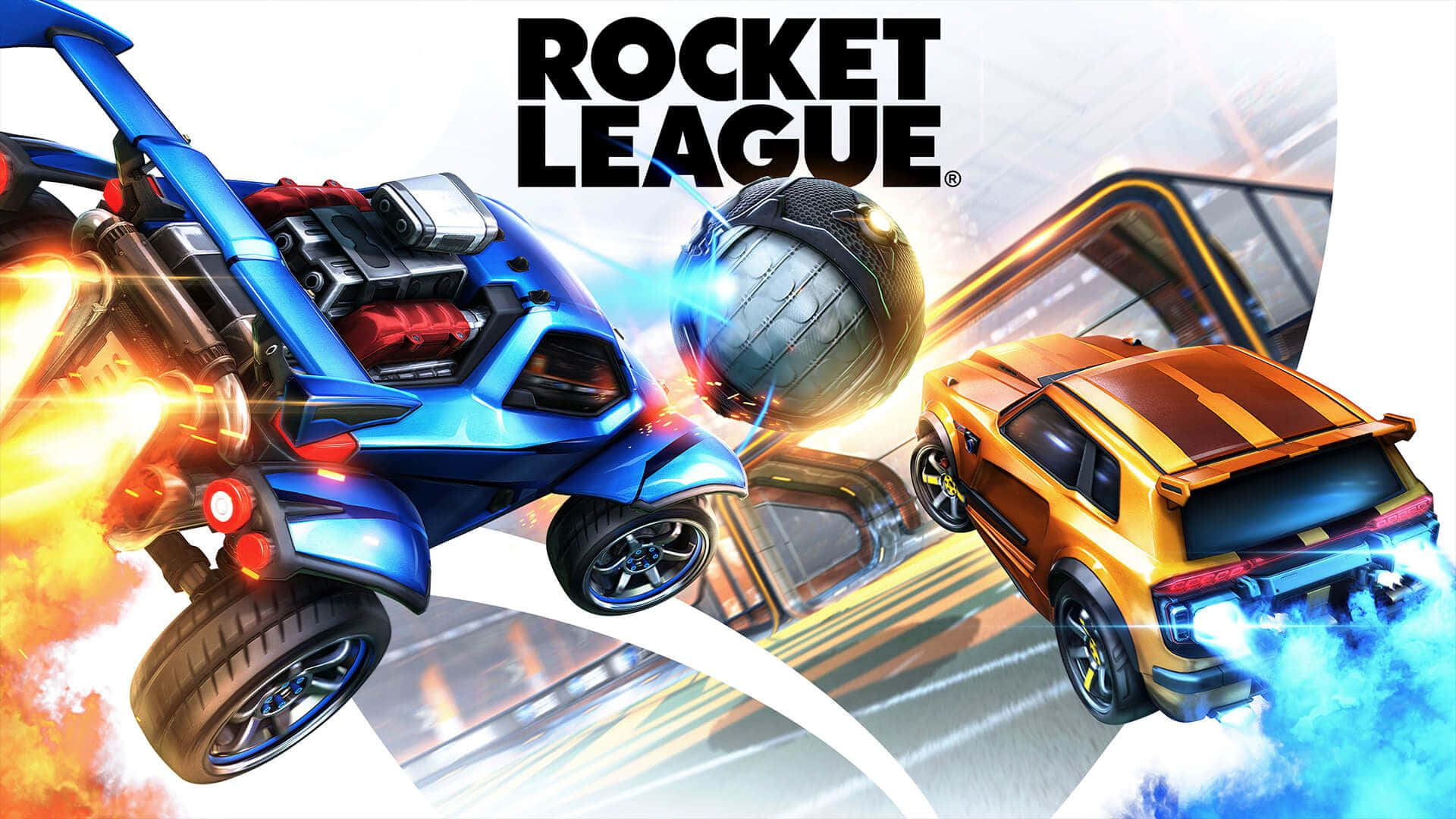
On paper, it shouldn’t be this complicated. It is essentially football with rocket-powered cars. There are two teams, a ball, a goal at either end of the arena and a few minutes to score more goals than your opponent.
But that simple idea creates an almost ridiculous skill ceiling.
You can learn to drive, jump and hit the ball within minutes. Then you discover aerials. Then wall play. Then air dribbles. Then flip resets. Then increasingly complicated mechanics that make you realise you haven’t actually learned how to play the game at all.
And that is where Rocket League has managed to achieve something very few competitive games can.
It is incredibly easy to understand but incredibly difficult to master.
That combination gives the game enormous longevity because there is always something else to learn. You don’t need a new map or a new weapon every few months to keep improving. You can play the same arena thousands of times and still have something to work on.
I have 3,032 hours behind me and I’m still terrible.
That isn’t necessarily a criticism of Rocket League. In some ways, it is a compliment.
The game is simply that difficult.
Rocket League has also continued to evolve rather than simply sitting still. In 2026, Psyonix has continued adding new seasons, ranked changes, limited-time events and gameplay features. Season 22, for example, introduced new training options, visible boost-pad recharge progress and a flip-reset status indicator, while also expanding tournament features and ranked playlists.
The competitive side of Rocket League is arguably even more important to its future.
The 2026 RLCS season expanded the competitive format again, including 1v1 competition and the introduction of 2v2 into RLCS, alongside two Majors and an expanded World Championship.
That is significant because Rocket League has something that keeps it relevant beyond the people actually playing it: spectatorship.
Watching a professional Rocket League player do something that seems physically impossible is one of the best advertisements for the game there is. You can watch someone execute a mechanical play that you know you will probably never be capable of doing yourself and still appreciate how difficult it was.
It also gives ordinary players something to aspire to.
Most of us aren’t going to become professional Rocket League players. Some of us aren’t even going to escape the lower ranks.
I’m apparently living proof of that.
But that doesn’t stop the game from being fun.
And I think that is particularly important as we look towards 2027.
Rocket League doesn’t need to reinvent itself. It has already established a formula that works, and Psyonix can continue building around it with new seasons, competitive formats, events and quality-of-life improvements.
The really interesting question, however, is what happens with the technology behind the game.
Epic has revealed the future of Unreal Engine, including Unreal Engine 6, and Rocket League is expected to be part of that wider transition eventually. There has already been discussion within the community about what an engine transition could mean for the game, although the exact timing of a major Rocket League engine upgrade remains uncertain.
That could become one of the biggest stories surrounding Rocket League in 2027.
A modernised technical foundation could potentially allow Psyonix to improve visuals, performance, lighting, physics-related systems and other aspects of the game while keeping the fundamental Rocket League experience intact.
But there is also a danger.
Rocket League’s simplicity is part of its identity.
Players don’t want the game to become something completely different. They don’t want the developers to sacrifice the precise gameplay that has kept people playing for years simply to make the game look prettier.
If Psyonix does eventually make a major technological upgrade, the most important thing will be making sure Rocket League still feels like Rocket League.
The competitive scene should also remain an important part of the picture. The 2026 RLCS structure has already expanded the competitive offering, with 1v1 and 2v2 competitions joining the established 3v3 format.
That creates possibilities for 2027 that go beyond simply adding another season and another Rocket Pass.
More competitive formats, bigger events, better integration between the professional scene and the game itself, and potentially more opportunities for ordinary players to participate could all help keep Rocket League relevant.
There is also something else working in Rocket League’s favour: it has become almost platform-independent in the minds of its players.
You can play it on PC, PlayStation, Xbox and Nintendo Switch, and its relatively simple concept means that the game doesn’t need to constantly chase the latest gaming hardware to remain enjoyable.
That gives Rocket League an advantage that many technically demanding games don’t have.
The game can continue to evolve without having to completely reinvent itself.
And perhaps that is exactly what we should expect from 2027.
I don’t think Rocket League needs a Rocket League 2.
I don’t think it needs some enormous gameplay overhaul.
I think it needs Psyonix to continue doing what has worked: improve the technology underneath it, keep the competitive scene healthy, introduce meaningful updates and, most importantly, protect the gameplay that made people fall in love with it in the first place.
Because after 3,032 hours, I still find myself coming back.
And yes, I’m still terrible.
I’ve spent more than 3,000 hours trying to get better at a game where the difference between looking like a professional and looking like someone who has never held a controller can sometimes be one missed jump.
But that is Rocket League.
You can spend hundreds of hours learning something and then discover there is another mechanic you can’t do.
You can finally learn to hit the ball consistently and then realise your positioning is terrible.
You can climb a rank and immediately get destroyed by someone who appears to have been born inside a Rocket League training pack.
And then you press “Play Again.”
That is why I think Rocket League will still matter in 2027.
It doesn’t need to be the newest game.
It doesn’t need to be the biggest game.
It just needs to remain the game where you can spend thousands of hours trying to become slightly better than you were yesterday.
I’ll probably still be playing it.
I’ll probably still be missing open goals.
I’ll probably still be flying past the ball when I swear I had the perfect angle.
And after 3,032 hours, there is a very good chance I’ll still be terrible.
But I’ll probably queue for another match anyway.
Because somehow, after all these years, Rocket League is still one of those games that makes me say the same thing after a frustrating loss:
“Okay, one more.”
