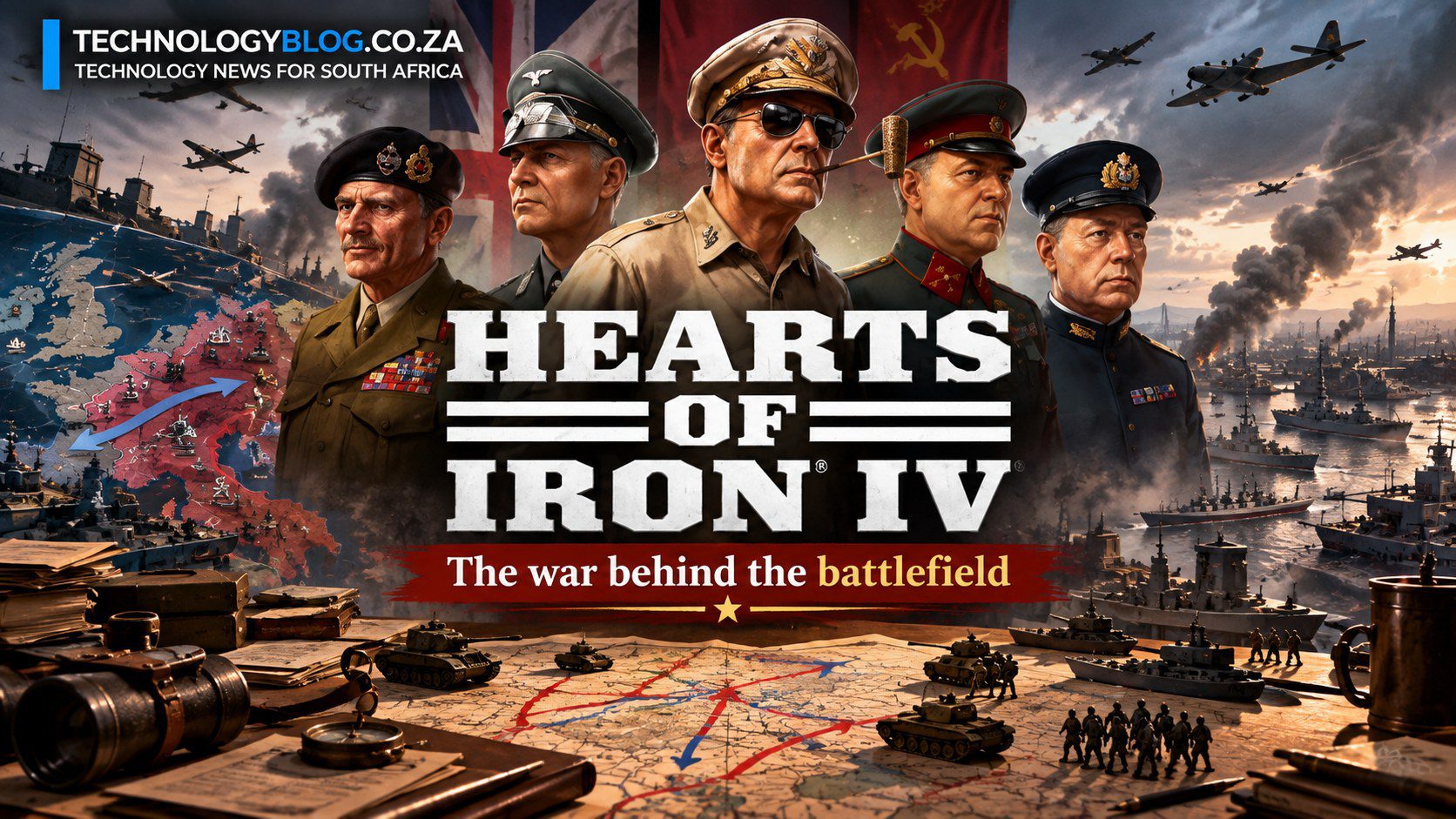
Hearts of Iron IV turns global warfare into a battle of logistics and industry
Building the largest army in Hearts of Iron IV does not guarantee victory.
Those soldiers need rifles.
Tanks need factories.
Aircraft need fuel.
Divisions need supplies.
Ships need dockyards.
Equipment lost in battle needs to be replaced, while every new offensive pushes supply networks further from the industrial centres keeping the war machine alive.
Eventually, a badly planned campaign can grind to a halt without the enemy needing to destroy the army outright.
That is where Hearts of Iron IV becomes more than a game about moving military units across a map.
Released in June 2016, Paradox Development Studio’s Second World War grand strategy game puts players in control of a country during one of history’s largest conflicts.
More than a decade later, its central challenge remains compelling.
You do not simply command the war.
You have to build the machine capable of fighting it.
Hearts of Iron IV gives you an entire country to manage
Many military strategy games begin once the battle starts.
Hearts of Iron IV begins long before that.
Players control countries during the period surrounding the Second World War, giving them responsibility for far more than individual armies.
Factories need to be allocated.
Military equipment must be produced.
Research priorities need to be chosen.
Political decisions can reshape the country.
Armies need commanders and organisation.
Aircraft need somewhere to operate.
Navies need missions.
Supply systems must support troops once the shooting begins.
These systems are interconnected.
Increasing tank production, for example, means dedicating industrial capacity to tanks rather than something else.
Building more aircraft can strengthen control of the skies but requires another substantial production commitment.
Creating additional divisions looks impressive on the map, but those formations become considerably less useful when there is not enough equipment to supply them.
The strategy therefore begins in the factories long before it reaches the battlefield.
Industrial production can decide the war
Factories form one of the foundations of Hearts of Iron IV.
Military factories produce the equipment armies and air forces require, while dockyards construct ships.
Production lines become more efficient when they remain focused on the same equipment.
That creates difficult decisions when new technology becomes available.
A newer tank or aircraft may offer advantages, but changing production can disrupt an established manufacturing system.
Meanwhile, the army is still consuming equipment.
Losses need replacements.
New divisions require weapons.
Aircraft are destroyed.
Vehicles disappear during combat and attrition.
Consequently, production is not simply preparation for war.
It remains part of the war.
A successful offensive can become unsustainable when equipment losses begin exceeding the country’s ability to replace them.
Logistics can stop an army without destroying it
Hearts of Iron IV becomes particularly interesting when enormous armies begin moving.
A division cannot fight effectively simply because it exists.
It needs supply.
Infrastructure, railways, supply hubs, ports and transport networks become crucial once armies move away from their established bases.
An enormous concentration of troops can overwhelm the available logistics network.
An offensive into poorly supplied territory can therefore create problems even when the enemy appears weaker.
Suddenly, the tanks that looked unstoppable on the planning screen are struggling.
Units lose effectiveness.
Fuel becomes another concern.
The offensive slows.
That creates one of Hearts of Iron IV’s most important lessons: the strongest army on paper is not necessarily the strongest army in the field.
Sometimes the most important part of an offensive is everything happening behind it.
Battle plans operate on a continental scale
Players do not need to control every division individually.
Hearts of Iron IV allows armies to be assigned front lines and offensive plans, with commanders responsible for groups of divisions.
That makes enormous conflicts manageable.
However, automation does not remove the player’s responsibility.
A battle plan still depends on the divisions involved, terrain, equipment, supply, commanders, air support and the strength of the opposing forces.
Players can intervene directly when necessary.
Armoured formations might be concentrated for a breakthrough.
Fast units can exploit gaps.
Infantry can hold long defensive lines.
Specialised troops can operate in environments where conventional forces struggle.
The result sits somewhere between high-level strategic planning and direct military management.
You are not controlling individual soldiers.
You are deciding where entire armies should fight.
The air war can reshape the battlefield
Ground forces are only part of the conflict.
Aircraft compete for control of the skies, provide support to troops, attack strategic targets and perform other missions across designated air regions.
That means a strong ground army can still find itself operating under hostile skies.
Producing aircraft therefore competes with every other industrial requirement.
Those aircraft also need suitable bases and sufficient operational range.
The air war becomes another strategic layer rather than a visual effect playing above the ground battle.
Ignoring it can make operations considerably harder.
Investing heavily in it means accepting the industrial cost.
Once again, Hearts of Iron IV forces players to decide where limited resources matter most.
Naval warfare creates another enormous strategic problem
The oceans introduce an entirely different challenge.
Navies can protect trade routes, hunt enemy shipping, contest sea regions and support invasions.
However, ships are expensive.
Capital ships can take considerable time and resources to build.
Naval losses can therefore have consequences that extend far beyond one battle.
A country with limited naval capacity may need to decide whether challenging a major fleet directly makes sense at all.
Submarines offer another approach.
Air power can influence naval operations.
Ports become strategically important.
Overseas armies depend on secure routes.
For countries separated from their enemies by oceans, naval control can determine whether an invasion is possible in the first place.
National focus trees give countries different directions
One of Hearts of Iron IV’s most recognisable systems is the national focus tree.
Focuses allow countries to pursue political, military, industrial and diplomatic developments over time.
They also provide structure to the historical setting.
Players can follow paths broadly resembling historical events.
Alternatively, many countries offer routes that push events in dramatically different directions.
Governments can change.
Alliances can shift.
Countries that historically fought alongside one another can become enemies.
The Second World War therefore provides the setting rather than an unchangeable script.
That creates enormous replayability.
Playing Germany is fundamentally different from controlling Britain.
The Soviet Union presents different strategic problems again.
Smaller countries can face the challenge of surviving between much larger powers.
Each campaign changes the player’s priorities.
Alternative history can completely reshape the conflict
Hearts of Iron IV begins from a recognisable historical foundation, but it does not require history to repeat itself.
That becomes especially apparent when alternative political paths begin interacting.
One country diverging from history can already change the campaign.
Several countries doing so simultaneously can produce a world that looks nothing like 1939.
Alliances can form differently.
Civil wars can change governments.
Traditional enemies can end up fighting alongside each other.
Countries that played relatively small historical roles can become major powers under player control.
This flexibility is important because Hearts of Iron IV is designed to be replayed.
A rigid recreation of the same historical sequence would eventually become predictable.
Instead, the game provides enough structure to make the period recognisable while allowing the simulation to move elsewhere.
Different countries create different strategic problems
Not every Hearts of Iron IV campaign begins with equal resources.
Major powers can possess substantial populations, industries and military forces.
Smaller countries may begin with very little.
That imbalance is deliberate.
Playing a major industrial power can become an exercise in managing enormous military resources across several theatres.
Playing a smaller nation can instead become a struggle to build enough industry and political influence to survive.
Geography matters as well.
An island power faces different problems from a landlocked state.
Countries with large borders need to consider where their armies are concentrated.
Access to resources can influence industrial planning.
Ports matter when forces need to operate overseas.
The country you choose therefore changes the strategic puzzle before the war even begins.
Hearts of Iron IV has grown far beyond its 2016 launch
The Hearts of Iron IV available today contains years of additional development.
Paradox has released expansions and updates that have revised or expanded areas including national focus trees, espionage, naval warfare, logistics, aircraft design, tank design and other systems.
That continued development means Hearts of Iron IV has not remained frozen in its original 2016 form.
Major mechanics have evolved.
Countries have received additional content.
Existing systems have been revised.
For returning players, that can make the modern version feel considerably different from the game they remember.
It also creates another challenge for newcomers.
There is a lot to learn.
The learning curve is part of Hearts of Iron IV
Hearts of Iron IV can be intimidating.
The interface contains armies, fleets, aircraft, factories, production lines, construction, research, politics, logistics, diplomacy and national focuses.
A new player can understand what they want to accomplish while having very little idea how to accomplish it.
Why are the divisions losing?
Why have the tanks stopped?
Why is there no equipment?
Why can the naval invasion not launch?
Why is the air force ineffective?
Why is the entire army suddenly short of supply?
Learning Hearts of Iron IV involves answering those questions one system at a time.
Eventually, the map begins to make more sense.
You stop seeing only divisions.
You start seeing the infrastructure supporting them.
You stop seeing only factories.
You start seeing production lines and replacement equipment.
You stop seeing only an enemy border.
You start seeing terrain, supply and opportunities for breakthroughs.
That transition is where much of the satisfaction comes from.
The Steam Workshop can turn it into another game
The official game is only part of the Hearts of Iron IV ecosystem on PC.
Steam Workshop support gives players access to a large modding community.
Some modifications adjust interfaces or individual mechanics.
Others introduce extensive alternative-history scenarios or transform the setting much more dramatically.
That fits particularly well with Hearts of Iron IV because the underlying game already functions as a large political, industrial and military sandbox.
Modders can use that framework to create entirely different versions of the world.
For players who have already explored the official campaigns extensively, mods provide another reason to return.
Why Hearts of Iron IV still works more than a decade later
Hearts of Iron IV remains compelling because warfare is only the visible result of everything happening underneath it.
An army represents factories, equipment, manpower, fuel, infrastructure and political decisions.
A tank division is useless if the tanks cannot be replaced.
An enormous offensive can collapse when supply cannot keep up.
A powerful navy means little if it is constantly operating in the wrong place.
Air superiority requires aircraft, bases, fuel and industrial investment.
Victory therefore begins long before two armies meet.
That makes Hearts of Iron IV a natural example of the design philosophy behind Paradox Development Studio and the wider Paradox Interactive strategy catalogue.
The game gives players interconnected systems and then asks them to live with the consequences of their decisions.
More than a decade after its 2016 release, Hearts of Iron IV is no longer simply the game Paradox originally launched.
Years of expansions, mechanical revisions and community modifications have turned it into a much larger strategy platform.
The map shows the war.
The real game is building everything required to win it.


