Who is Focus Entertainment? The publisher behind A Plague Tale, Space Marine 2 and some of gaming’s biggest AA hits
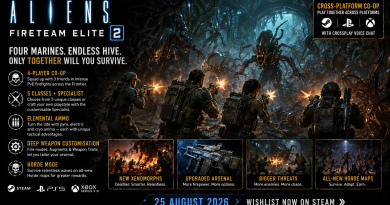
Focus Entertainment is the publisher behind Resonance: A Plague Tale Legacy, but its history stretches back far beyond Sophia, the Macula and the world of A Plague Tale.
The French company has spent decades operating in a part of the games industry that sits between small independent releases and the enormous budgets associated with the biggest global publishers.
That position has become increasingly important.
Focus has worked with studios on games ranging from A Plague Tale and SnowRunner to Warhammer 40,000: Space Marine 2, often backing projects that would struggle to fit neatly into the traditional blockbuster model.
Today, however, the company structure is slightly more complicated than the familiar Focus Entertainment name suggests.
The wider group became PULLUP Entertainment in 2024, while Focus Entertainment Publishing continues as the publishing label responsible for many of the games players still associate with the Focus name.
That change reflects how much the company has grown.
Focus Entertainment started long before A Plague Tale
The story began in 1996 under the name Focus Home Interactive.
According to PULLUP Entertainment’s official company history, the business initially distributed music creation software before moving fully into video game publishing in 2000.
Its early successes included Runaway, Cossacks and TrackMania.
Those games were very different from one another.
Runaway was an adventure game.
Cossacks was real-time strategy.
TrackMania became known for fast, competitive racing and user-created challenges.
That variety would eventually become part of Focus’ identity.
Rather than building everything around one genre or one flagship franchise, the company repeatedly worked with specialist developers on projects aimed at specific audiences.
Focus built its reputation around games that did not need to be everything for everyone
This is where Focus Entertainment became interesting.
The major publishers often chase the widest possible audience.
That can mean enormous budgets, huge production teams and projects designed to appeal across several player groups at once.
Focus frequently took a different route.
Many of its games focused intensely on one particular experience.
A tactical game could remain tactical.
A simulation could stay complicated.
An off-road driving game did not need to become an arcade racer.
A narrative adventure could concentrate on atmosphere and story instead of trying to add competitive multiplayer simply because other games had it.
That approach helped create a catalogue filled with titles that were not always designed for the largest possible market but could still build extremely loyal communities.
The modern industry often describes this space as AA gaming.
It sits somewhere between traditional indie development and the very largest AAA productions.
Focus Entertainment Publishing now explicitly positions itself around this market within the wider PULLUP group.
TrackMania helped establish Focus early
One of the company’s early milestones was TrackMania.
PULLUP Entertainment lists the game’s 2003 launch among the most important dates in its history.
The series demonstrated something Focus would repeatedly return to: a specialised game can reach a much larger audience when the underlying idea is strong enough.
TrackMania was not trying to replicate every other racing game.
Its identity revolved around speed, precision, unusual tracks and repeated attempts to improve times.
That focus helped it develop into one of the most recognisable racing properties associated with PC gaming.
Focus would later apply a similar publishing philosophy to very different genres.
Farming Simulator proved niche games could become enormous
Another major milestone arrived with Farming Simulator.
PULLUP lists 2008 as another key date in the group’s development.
A farming simulation hardly sounds like an obvious candidate for a major international gaming franchise.
Yet that is exactly the point.
Games do not always need to appeal to everybody.
Sometimes a developer needs to understand one audience extremely well.
Simulation communities tend to value mechanical depth, authenticity and long-term support more than cinematic spectacle.
Focus’ involvement with projects such as Farming Simulator helped reinforce the publisher’s ability to work with games that larger companies might previously have considered too specialised.
That experience would become important later as the company moved into other simulations and service-driven titles.
A Plague Tale became one of Focus Entertainment’s defining partnerships
For many modern players, the Focus name became closely associated with Asobo Studio.
Their collaboration produced A Plague Tale: Innocence in 2019.
PULLUP Entertainment itself lists that launch as one of the key moments in the company’s history.
The importance of A Plague Tale was not simply that it sold another game.
It demonstrated what the AA model could achieve.
Innocence was not trying to match the scale of the industry’s largest open-world productions.
Instead, it concentrated on Amicia and Hugo, medieval France, stealth, rats and a tightly controlled narrative experience.
That narrower focus allowed the game to establish a distinctive identity.
Its success led to A Plague Tale: Requiem and eventually Resonance: A Plague Tale Legacy.
The partnership between Focus Entertainment and Asobo has now lasted across multiple games.
When Resonance was announced, Focus and Asobo explicitly described the project as a renewal of a relationship dating back to the birth of the A Plague Tale series.
Resonance shows why long-term developer relationships matter
Resonance: A Plague Tale Legacy launched on 27 August 2026 for PC, PlayStation 5 and Xbox Series X|S. Focus Entertainment Publishing is the publisher, while Asobo Studio remains the developer.
That distinction matters.
Focus did not develop Sophia’s combat system or design Minotaur’s Island.
Asobo did.
The publisher’s role is different.
A publisher can help finance development, manage production, market the game, organise distribution and provide the infrastructure needed to bring the project to a global audience.
PULLUP describes that broader publishing role as supporting studios through financing, development, production management, marketing, sales and distribution.
The A Plague Tale relationship is therefore a good example of what Focus has built over time.
Instead of simply publishing one game and moving on, it can maintain partnerships across multiple releases.
That creates continuity between publisher and developer.
SnowRunner became another important long-term game
Focus’ portfolio is not built only around narrative adventures.
SnowRunner demonstrates the other side of the company’s strategy.
The off-road simulation became a long-running success supported by expansions and continued content.
PULLUP lists SnowRunner among its major historical milestones, while the group’s financial reporting continues to identify it as an important part of the back catalogue.
This matters because it shows how two very different business models can exist inside the same publishing portfolio.
A Plague Tale is primarily a narrative-driven single-player experience.
SnowRunner is built around extended engagement, vehicles, regions and ongoing content.
Focus does not need every game to follow the same commercial template.
That flexibility is one of its strengths.
Space Marine 2 pushed Focus into a much larger spotlight
Then came Warhammer 40,000: Space Marine 2.
Released in 2024, the game became one of the most important launches in the history of the wider Focus/PULLUP organisation.
PULLUP’s annual financial report described Space Marine 2 as delivering record-breaking performance and helping drive group revenue to €390 million for the 2024/25 financial year, up 108% from the previous year.
That is significant because Space Marine 2 sits much closer to traditional AAA expectations than many earlier Focus titles.
It has a major international licence.
Large-scale action.
High production values.
Co-operative and multiplayer systems.
Extensive post-launch support.
Its success demonstrated that Focus’ AA publishing experience could scale upward without abandoning the company’s preference for distinctive projects.
Focus Entertainment is no longer the whole group
This is where the company history becomes slightly confusing.
The business originally operated as Focus Home Interactive.
In 2021, the company introduced the Focus Entertainment name as its commercial brand. It said the change reflected a desire to broaden its games, services and entertainment activities.
Then another major restructuring arrived.
In 2024, the wider organisation became PULLUP Entertainment.
Focus Entertainment Publishing remained part of the group, but the Focus name no longer represented the entire corporate organisation.
Today, PULLUP Entertainment acts as the parent structure.
Focus Entertainment Publishing handles AA publishing.
Other divisions cover different areas of the business.
That makes the modern organisation considerably larger and more diverse than the old Focus Home Interactive publisher.
The PULLUP structure contains several specialised businesses
PULLUP says the group now brings together multiple entities across four countries and more than 600 creative staff.
Its current structure includes several distinct areas.
Focus Entertainment Publishing concentrates on AA game publishing.
Dotemu and The Arcade Crew focus heavily on retro-inspired and independent games.
PULLUP Studios groups internal development studios including Dovetail Games, BlackMill Games, Deck13 and Carpool.
Scripteam handles audiovisual production and the potential adaptation of intellectual properties into series or films.
That structure provides a clearer picture of what Focus has become.
It is no longer simply an external publisher signing individual games.
The wider organisation now owns development studios, publishing operations and entertainment production capabilities.
The acquisitions changed Focus from publisher to group
The transition happened gradually.
Focus acquired Deck13 Interactive in 2020.
Dotemu followed in 2021.
The group continued adding studios and businesses over the following years, including Dovetail Games in 2023.
Dovetail is particularly interesting because it brought deep simulation expertise through franchises such as Train Sim World.
Focus described the acquisition as a way of adding established simulation knowledge and intellectual property to the group.
Those acquisitions changed the business model.
A publisher normally works with external studios.
A group that owns studios can participate more directly in development, intellectual property ownership and long-term strategy.
PULLUP now does both.
Focus still works with outside studios
Owning developers has not ended the older Focus model.
The publisher continues signing external teams.
Its current catalogue includes partnerships with developers on very different projects.
The Focus Entertainment website currently highlights Resonance: A Plague Tale Legacy, BioEden, Elta: Defy All Gods, Clutch, Bradley the Badger and Magicians: The Devil’s Deal among its featured and upcoming releases.
That range is telling.
There is no single genre defining the publisher.
Instead, the connection is often that each game has a clear idea of what it wants to be.
This is consistent with Focus’ long-standing preference for distinctive projects rather than simply producing versions of whatever genre currently dominates sales charts.
AA gaming may be more important now than ever
The industry surrounding Focus has also changed.
AAA development has become extraordinarily expensive.
Production cycles are longer.
Development teams can involve hundreds or even thousands of people.
A major failure can therefore be financially devastating.
At the opposite end, independent studios can create extraordinary games but often face limits in financing, marketing and global distribution.
The AA market occupies an important middle ground.
A developer can build something more ambitious than a small indie project without automatically needing one of the largest budgets in entertainment.
That can also allow for more experimentation.
A game does not necessarily need tens of millions of players to justify its existence.
It needs an audience large enough to support the scale at which it was built.
Focus Entertainment has spent much of its history operating in exactly that space.
South African gamers have probably played more Focus games than they realise
Focus Entertainment is not necessarily a publisher whose logo dominates gaming conversations in South Africa.
Its games do.
A Plague Tale.
SnowRunner.
Space Marine 2.
Insurgency: Sandstorm.
Atomic Heart.
Train Sim World.
These represent very different types of players.
Some want cinematic single-player narratives.
Others want hardcore shooters.
Others want simulation.
Others simply want to drive a truck slowly through an impossible amount of mud.
The importance of a publisher like Focus to South African gamers is therefore less about local exclusivity and more about variety.
Its catalogue has repeatedly brought mid-sized and ambitious games to PC and consoles without requiring every project to target the same audience.
That matters in a market where players already need to make careful decisions about hardware, subscriptions and which games deserve their time.
A strong AA market gives players more alternatives between small indie games and the largest premium releases.
Focus’ PC catalogue also matters
The company’s history has always included a significant PC presence.
That remains useful for South African gaming.
PC allows specialist genres such as strategy, simulation and tactical games to find audiences that might be too small to justify development purely around consoles.
Games such as SnowRunner and many of Focus’ earlier titles benefited from exactly this type of audience.
At the same time, modern Focus releases usually span multiple platforms.
Resonance: A Plague Tale Legacy, for example, launched on PC, PS5 and Xbox Series X|S, with Xbox Game Pass availability from day one.
That broader distribution gives players more ways to access games from the publisher than during its early PC-focused years.
Back-catalogue games have become a major part of the business
Another revealing detail appears in PULLUP’s financial reporting.
During the 2024/25 financial year, the group generated €123.6 million from its back catalogue.
That was almost unchanged from the previous year despite the arrival of major new releases.
Games contributing to that performance included SnowRunner, Insurgency: Sandstorm, Atomic Heart, Expeditions: A MudRunner Game, Train Sim World, A Plague Tale and Teenage Mutant Ninja Turtles: Shredder’s Revenge.
That tells us something important about the modern Focus strategy.
A game is valuable beyond launch week.
Long-running titles, older single-player releases, DLC and catalogue sales can continue generating revenue for years.
This is particularly important for AA publishing because it reduces dependence on every new title immediately becoming a blockbuster.
Focus is still betting on individual studios having their own identities
There is always a danger when a publisher becomes larger.
More acquisitions can lead to standardisation.
Studios can lose the qualities that made them attractive in the first place.
Focus has publicly framed its strategy differently.
When the company changed its commercial name in 2021, it emphasised acquiring and supporting studios with distinct creative visions.
Its current group structure still reflects that approach.
Dovetail remains associated with simulation.
Deck13 has its own action-RPG heritage.
Dotemu has become strongly associated with revivals and modern interpretations of classic gaming properties.
Asobo remains an external partner with its own identity.
Whether that independence can be maintained as the organisation continues growing is something worth monitoring.
But allowing different teams to remain recognisably different has been central to what made Focus’ catalogue interesting in the first place.
Resonance represents the old and new Focus at the same time
That brings us back to Resonance: A Plague Tale Legacy.
In some ways, it represents the Focus model that has existed for decades.
An external studio has a distinctive project.
Focus publishes it.
The relationship grows over several games.
The publisher helps bring that project to an international audience.
At the same time, Resonance exists inside a much larger organisation than A Plague Tale: Innocence did in 2019.
Focus Entertainment Publishing now sits inside PULLUP Entertainment.
The group owns studios across multiple genres, operates several publishing labels and has expanded into audiovisual production.
The company grew.
The partnership model remained.
Why Focus Entertainment matters
The easiest way to describe Focus Entertainment is therefore not as the company that made A Plague Tale.
It didn’t.
Asobo Studio made it.
Focus is the publisher that helped make projects like it possible.
That distinction is important.
Publishers influence which games reach the market.
They decide which developers to support.
They provide funding.
They help manage production.
They market and distribute games around the world.
When those decisions work, studios can build games that might otherwise struggle to exist between indie budgets and enormous AAA production.
Focus has been doing that in different forms since the late 1990s.
Its name has changed from Focus Home Interactive to Focus Entertainment.
Its parent organisation has become PULLUP Entertainment.
The scale of its games has grown.
Yet the central idea remains surprisingly familiar.
Find developers with a clear idea.
Give them enough room to build it.
Then find the audience that understands why the game exists.
From TrackMania and Farming Simulator to A Plague Tale, SnowRunner, Space Marine 2 and now Resonance: A Plague Tale Legacy, that approach has produced one of the more unusual catalogues in European gaming.
And in an industry increasingly divided between enormous blockbusters and tiny independent projects, publishers willing to occupy the space between them may be more important than ever.