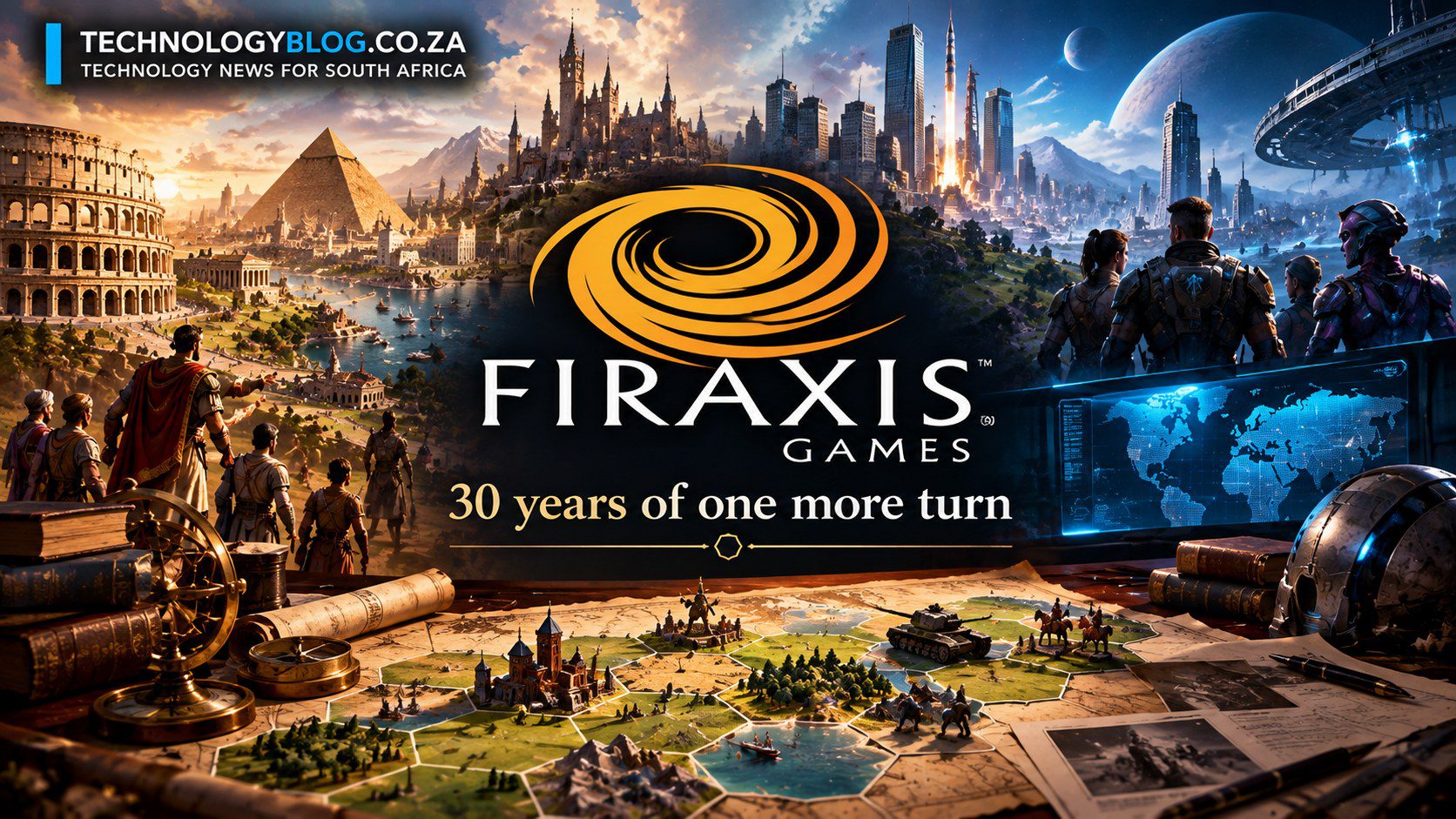
Firaxis Games has spent 30 years perfecting one more turn
Few phrases explain a game developer as effectively as “one more turn.”
You know you should stop.
Then a technology finishes.
An enemy moves.
A city needs attention.
A soldier is suddenly in trouble.
One decision creates another, and before long the game has taken another hour.
For Firaxis Games, that feeling has become part of a design philosophy stretching across three decades of strategy games.
The Maryland-based studio officially celebrated its 30th anniversary in May 2026, marking three decades since Sid Meier, Jeff Briggs and Brian Reynolds founded Firaxis in 1996. firaxis.com
Its history includes Civilization, XCOM, Sid Meier’s Alpha Centauri, Marvel’s Midnight Suns and other strategy games that operate at dramatically different scales.
Civilization can ask you to guide a society across thousands of years.
XCOM can make the survival of one soldier feel important.
The settings and mechanics change.
The decisions remain at the centre.
Firaxis Games began with some serious strategy experience
Firaxis did not begin with developers trying to discover strategy gaming for the first time.
Sid Meier had already co-founded MicroProse in 1982 and helped create games that would become enormously influential.
Civilization was among them.
Firaxis traces its own foundation to 1996, when Meier established the new studio alongside Jeff Briggs and Brian Reynolds. firaxis.com
That experience immediately shaped what followed.
Sid Meier’s Gettysburg! arrived in 1997.
Then came Sid Meier’s Alpha Centauri in 1999.
Civilization III followed in 2001, while Civilization IV arrived in 2005.
The studio was already developing the relationship with strategy gaming that would define much of its identity.
However, Firaxis was not simply repeating one game.
It was experimenting with different scales and different ways of making strategic decisions matter.
Civilization became inseparable from Firaxis
No franchise is more closely connected to Firaxis than Civilization.
The series predates the studio itself, but Firaxis became its long-term home.
The basic idea sounds almost impossibly ambitious.
Take a civilisation from its earliest beginnings and guide it across enormous stretches of human history.
Cities grow.
Technology develops.
Governments change.
Wars begin.
Religions spread.
Cultures compete.
Borders expand.
Eventually, the small settlement from the opening turns becomes part of a civilisation operating in an entirely different world.
Yet Civilization does not ask the player to manage thousands of years simultaneously.
It asks what you want to do next.
That distinction is crucial.
An enormous historical strategy game becomes understandable because the player deals with one series of decisions at a time.
One more turn is more than a joke
Civilization’s association with “one more turn” has become so strong that Firaxis itself now uses the idea when discussing its studio philosophy.
During its 2026 Vision Summit, Firaxis described “one more turn” as extending beyond the gameplay loop into a philosophy of continuous evolution. firaxis.com
The reason the phrase works so well in Civilization is structural.
There is nearly always something close to happening.
A technology needs another turn.
A unit is almost at its destination.
A building is nearly complete.
A war could be decided by the next battle.
A city is about to grow.
TechnologyBlog’s Civilization VI profile explores this structure in detail.
The brilliance lies in breaking enormous objectives into small pieces.
You are building a civilisation across history.
But right now, you only need to decide what happens next.
XCOM made strategy personal
Then there is XCOM.
Civilization deals with entire societies.
XCOM can make you care about one soldier.
Firaxis released XCOM: Enemy Unknown in 2012, bringing the classic tactical strategy concept to a new generation.
The strategic scale changes dramatically.
Players still make large decisions involving research, resources and global threats.
However, combat focuses on relatively small squads.
Those soldiers can gain experience.
They become more capable.
Players become familiar with them.
Then somebody dies.
Suddenly a tactical mistake is not represented by losing an anonymous unit from a stack.
A character who survived multiple missions is gone.
That gives XCOM a very different emotional rhythm from Civilization.
The strategic systems remain important, but the consequences become personal.
XCOM 2 turned resistance into strategy
Firaxis followed Enemy Unknown with XCOM 2 in 2016.
Instead of simply repeating the previous game’s premise, XCOM 2 begins from an uncomfortable assumption.
Humanity lost.
Earth has fallen under alien control, and XCOM operates as a resistance movement.
That reversal changes the tone immediately.
Players are no longer simply defending an established organisation.
They are rebuilding one while fighting a much stronger enemy.
The tactical battles still matter.
Research still matters.
Resources still matter.
Individual soldiers still matter.
However, the context surrounding those systems changes.
It demonstrates an important part of Firaxis’ approach.
A sequel does not necessarily need to discard the fundamental design that worked before it.
Changing the circumstances can make familiar systems feel different.
Firaxis strategy operates at different scales
Civilization and XCOM make an interesting pair because they demonstrate how broad the word “strategy” can be.
Civilization asks questions such as:
Where should the next city be built?
Which technology should come next?
Should you go to war?
How should your civilisation develop?
XCOM asks different questions.
Which soldier moves first?
Is that position safe?
Can you risk another attack?
Should the squad retreat?
One franchise thinks in centuries.
The other can make a single turn terrifying.
Yet both depend on giving players enough information to make a decision without guaranteeing the result.
Uncertainty creates tension.
Consequences give the decision meaning.
Marvel’s Midnight Suns took Firaxis somewhere unexpected
Marvel’s Midnight Suns, released in 2022, demonstrated another side of the studio.
Superheroes might initially seem like an unusual direction for a developer associated with Civilization and XCOM.
Firaxis approached the idea through systems it understood.
Combat remained tactical, although Midnight Suns used a card-based ability system rather than simply recreating XCOM with Marvel characters.
Outside combat, relationships between characters became important.
Players interacted with heroes and developed connections between missions.
That created a combination of tactical decision-making and character interaction.
Midnight Suns therefore looked very different from Civilization.
It also played differently from XCOM.
However, the familiar Firaxis interest in giving the player meaningful choices remained.
Firaxis became part of Take-Two
The corporate structure surrounding Firaxis also changed.
Firaxis joined the Take-Two Interactive family in 2006.
Today, Firaxis describes itself as a 2K studio, while 2K operates as a publishing label of Take-Two Interactive. firaxis.com
That distinction matters.
Firaxis is the developer.
2K handles the publishing relationship within the wider Take-Two organisation.
The arrangement has now existed for two decades, covering major releases across Civilization, XCOM and other Firaxis projects.
Civilization VI carried the formula for almost a decade
Civilization VI launched in 2016 and became another long-running chapter in the studio’s history.
Its district system changed the physical structure of cities by spreading specialised areas across the map.
Technology and Civics provided parallel forms of progression.
Expansions added further systems.
Leaders and civilisations created different strategic possibilities.
Yet beneath all those mechanics remained the familiar Civilization structure.
Make a decision.
End the turn.
See what happens.
TechnologyBlog’s Civilization VI profile examines why that loop remains compelling even a decade after the game’s release.
Its longevity also demonstrates something important about Firaxis.
The studio makes games designed to be replayed.
Replayability is built into the decisions
Strategy games have a natural advantage when it comes to replayability.
The player creates part of the story.
Different maps change the situation.
Different opponents create new problems.
Different tactical decisions produce different consequences.
Firaxis repeatedly builds around that uncertainty.
A Civilization campaign does not need to unfold identically twice.
An XCOM mission can collapse because one attack misses.
A soldier who survived one campaign may die immediately in another.
The systems create possibilities rather than prescribing one exact experience.
That gives players reasons to return even after they understand how the game works.
Mastery does not remove uncertainty.
It simply changes how you respond to it.
Civilization VII begins Firaxis’ next chapter
Firaxis’ current flagship is Sid Meier’s Civilization VII, released in 2025.
The studio continues to develop the game in 2026.
Firaxis recently detailed further Civilization VII updates while celebrating the wider franchise’s 35th anniversary. Its September 2026 PAX West presentation also revealed the Arc of Tomorrow free update for 2027 and the Earthrise expansion. firaxis.com
That makes 2026 an unusual milestone year for the studio.
Firaxis is 30.
Civilization is 35.
The developer is simultaneously celebrating its history and working on the future of the franchise most closely associated with its name.
Firaxis is more than Sid Meier
Sid Meier remains fundamental to the identity of Firaxis.
The studio itself describes his influence as central to its history and design legacy. firaxis.com
However, a studio lasting 30 years cannot remain the work of one person.
Firaxis currently operates under studio head Heather Hazen, who assumed leadership in 2023. Its current structure includes offices in Sparks, Maryland and Cary, North Carolina, alongside remote team members. firaxis.com
Civilization itself has passed through generations of designers and developers.
The same applies across the studio.
That continuity matters because Firaxis now has to do something difficult.
It needs to respect decades of established strategy design without allowing that history to prevent experimentation.
Why Firaxis Games matters to strategy gaming
Firaxis has spent 30 years working with an idea that sounds simple but is remarkably difficult to execute.
Give the player an interesting decision.
Not an obviously correct decision.
Not a meaningless choice.
A decision where several possibilities make sense and the consequences matter.
Civilization applies that philosophy across centuries.
XCOM applies it across battlefields.
Marvel’s Midnight Suns applied it to superheroes.
The scale changes, but the player remains responsible for what happens next.
That is why “one more turn” describes Firaxis better than a simple genre label.
The studio does not need every game to look the same.
It needs the next decision to feel important.
Thirty years after Firaxis Games was founded, players are still making those decisions.
And there is usually time for just one more.
