ROCCAT History: From Hamburg Gaming Peripherals to Turtle Beach
ROCCAT was founded in Hamburg in 2006 as a specialist PC-gaming peripherals company. Its early identity came from mice and keyboards rather than from a broader consumer-electronics parent, which let the brand build product language around PC gaming from the start.
Kone became an early ROCCAT signature
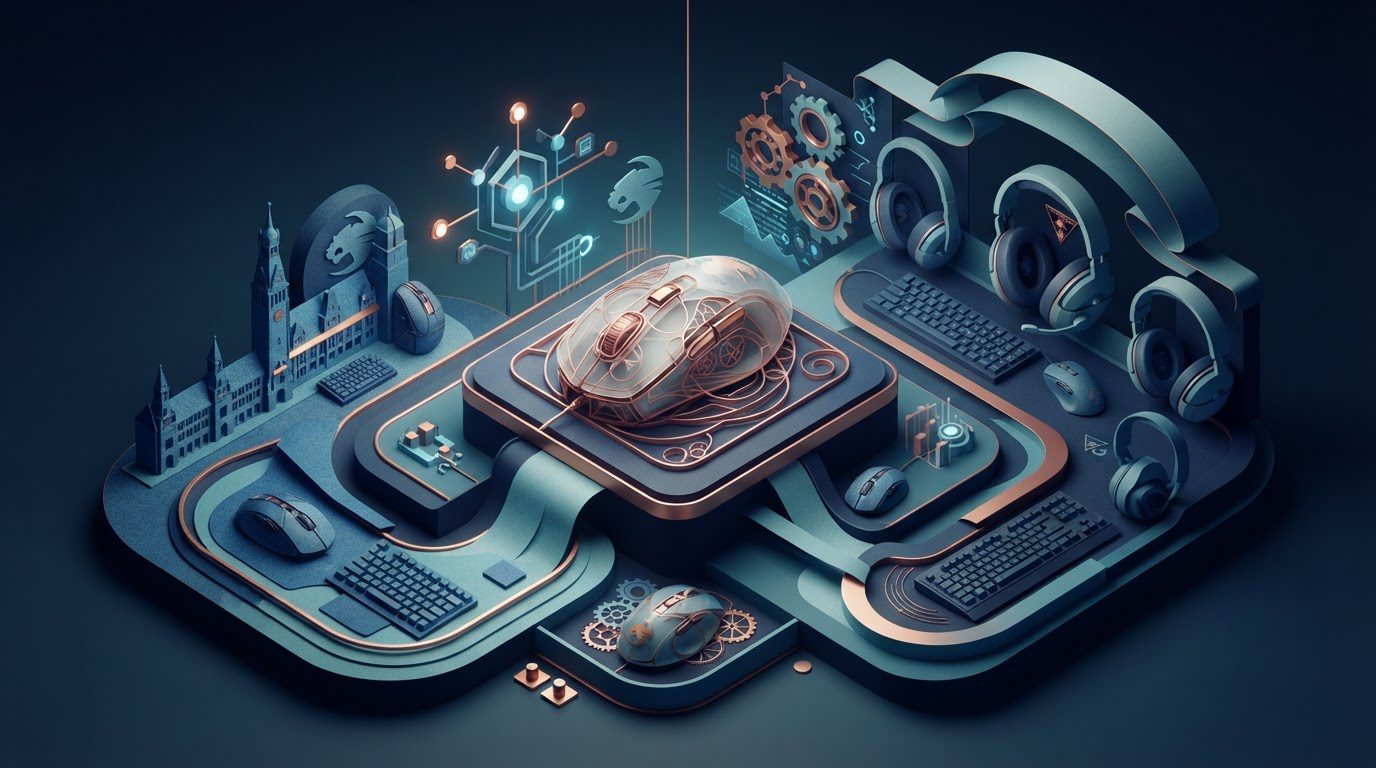
The Kone mouse became one of the products most closely associated with the company and helped establish a design vocabulary built around customisation, lighting and software. ROCCAT later expanded into keyboards, headsets and other accessories, using its Swarm software to manage features across devices.
The major corporate turning point came in 2019 when Turtle Beach acquired ROCCAT. For Turtle Beach, historically strong in gaming audio, the acquisition added PC mice and keyboards; for ROCCAT, it provided access to a larger global sales and marketing organisation. The brand continued for several years inside the group.
Turtle Beach absorbed the brand after 2019
Turtle Beach has since chosen to retire the ROCCAT brand and move product families such as Kone, Vulcan, Burst and Sense under the Turtle Beach name. That makes ROCCAT a legacy identity inside the group rather than an independent current brand, while parts of its product portfolio continue under the parent company's branding.
ROCCAT's acquisition history is as important as its early product design. Turtle Beach bought the Hamburg-based company in 2019, adding PC mice, keyboards and other peripherals to a business known primarily for gaming audio. Turtle Beach later decided to retire the ROCCAT brand while carrying several established product families into its own range. That shows the other side of acquisition: products and engineering teams can survive even when the acquired brand name does not. ROCCAT's history should therefore end with the way its categories were absorbed into a larger gaming-peripherals company, not with a generic claim of continued independent growth.
ROCCAT's history is therefore a compact example of specialist-brand consolidation. It started with a focused PC-peripheral identity, built recognition around products such as Kone, and was eventually absorbed into a larger gaming-accessories company. The technology contribution was at the human-interface layer: sensors, switches, ergonomics, software and the physical controls players use every second.