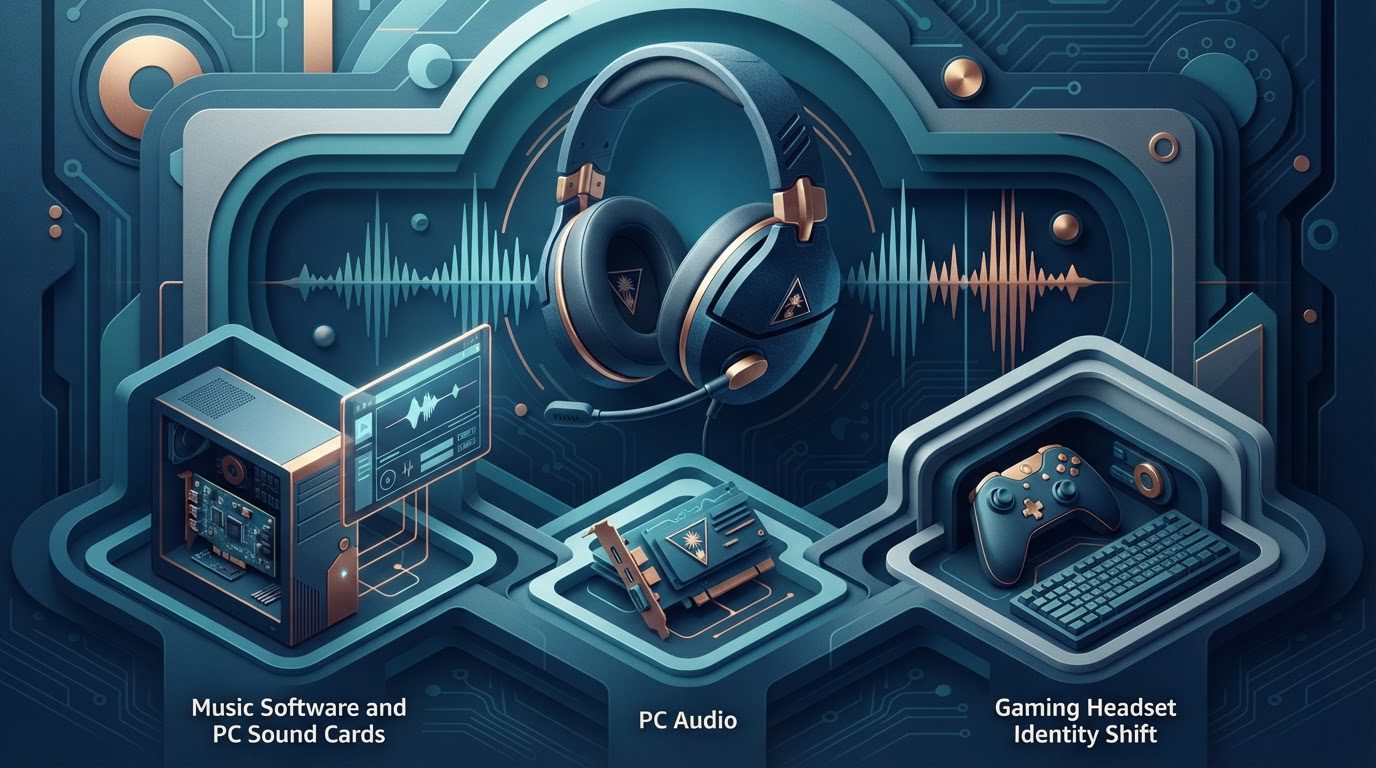
Turtle Beach History: From Music Software to PC Sound Cards and Gaming Headsets
Turtle Beach’s current reputation in gaming headsets hides a much older and stranger beginning. The company traces its roots to Turtle Beach Softworks, founded in 1975 in New York by Roy Smith and Robert Hoke. Its first product was not a headset at all but a graphical sound-editing system designed to work with the Ensoniq Mirage sampler. The company was therefore a digital-audio software business before “gaming audio” existed as a mainstream retail category.
That early relationship with electronic music technology shaped the company’s later movement into PC sound. Turtle Beach became known for audio hardware such as MultiSound cards, while corporate ownership changed around it. In 1996 the business was sold to Voyetra Technologies, another music-technology company with roots in synthesizers and MIDI. As Voyetra Turtle Beach, the combined company sold sound cards and software into the expanding PC market.
From Music Software to PC Sound Cards and Gaming Headsets
Gaming changed the centre of gravity. Turtle Beach’s corporate timeline says it began manufacturing the X51, its first Xbox gaming headset, in 2005. The X3 followed as a wireless gaming headset in 2007, and the X4 added Dolby surround sound in 2008. Those products moved the brand from general PC audio toward a use case where voice chat, positional cues, comfort and console compatibility were becoming important competitive features.
The consequence was a major identity shift. Instead of supplying sound hardware inside the PC, Turtle Beach increasingly owned the audio device on the player’s head. That move put the brand closer to consumers and created a platform for features such as wireless links, microphone design and game-oriented sound processing. Later expansion into controllers, keyboards, mice and simulation hardware widened the portfolio again, but gaming remained the organising idea.
Turtle Beach today
Turtle Beach now operates across headsets, controllers, keyboards, mice and simulation hardware. Its 2024 acquisition of PDP and Victrix widened that portfolio further, and the company has been integrating those product lines into the Turtle Beach ecosystem.
Turtle Beach is a good example of why product chronology matters. Calling it a headset company founded in 1975 would be technically misleading; the 1975 company worked in digital audio, not modern gaming peripherals. The more accurate story follows the technology from music software to PC sound cards and then to console headsets. What survived through those transitions was not a single product type but an expertise in turning digital audio into something users could create, process and eventually hear while playing games.