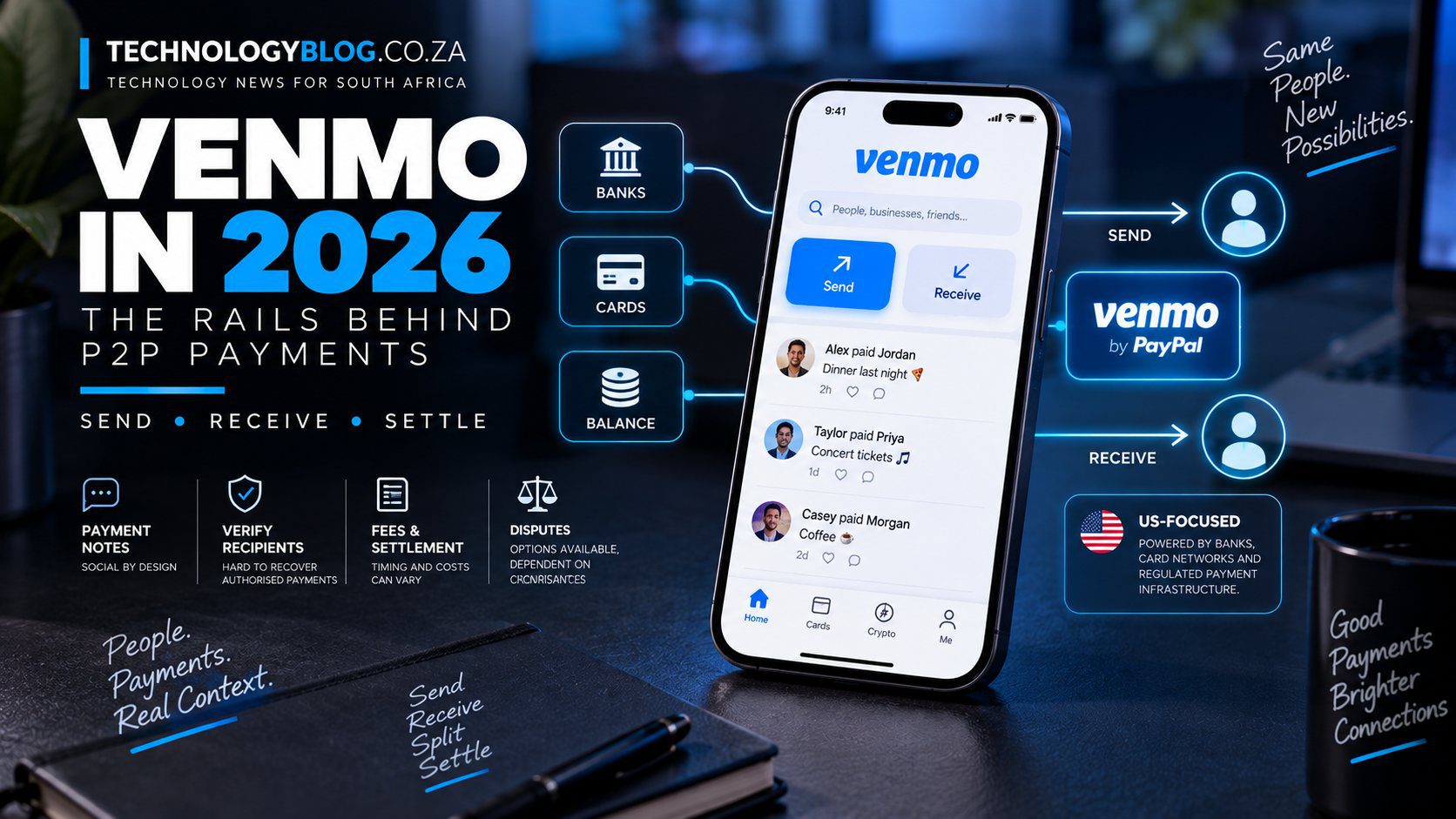
Venmo: the payment rails behind peer-to-peer transfers
Venmo is an US peer-to-peer payments network whose social simplicity hides identity, funding-source and fraud controls that determine whether money actually moves safely.
PayPal continues to operate Venmo primarily for the United States market.
Peer-to-peer transfers can draw from balances, bank accounts or cards
Peer-to-peer transfers can draw from balances, bank accounts or cards. Fees, settlement time and dispute options vary with the funding path and transaction type.
The commercial consequence of Venmo is best understood by following who pays whom and when. Fees, rewards or financing terms can move value between the user, platform and financial partners, which means the headline benefit needs to be read alongside the conditions that fund it, a dependency that directly shapes Venmo.
Payment notes and social features can expose context around transactions
Payment notes and social features can expose context around transactions. Privacy settings matter because payment metadata can reveal relationships even without showing bank details. The useful Venmo follow-up is to inspect the exact model, release, service tier or deployment topology involved.
Venmo also concentrates sensitive identity and financial data. That can make the service more convenient, but it raises the importance of authentication, recovery and clear account ownership because a support failure can affect more than one transaction or product relationship.
Instant convenience does not make every transfer reversible
Instant convenience does not make every transfer reversible. Users need to verify recipients because authorised person-to-person payments can be difficult to recover after a mistake or scam.
The interface simplifies a process that still involves external institutions. Banks, card networks, bureaus, custodians or regulators may control key decisions, so the application can orchestrate the experience without owning every outcome, a dependency that directly shapes Venmo.
How product rules change the user outcome — Venmo
Taken together in a regulated flow of money. The interface can simplify a transaction or account experience, but eligibility, settlement, partner rules and jurisdiction still determine what the user can actually obtain, a dependency that directly shapes Venmo.
The third point brings the commercial model into view. That matters because fees, rewards, financing terms or merchant economics can move value between several parties, so the apparent convenience has to be read together with the rules that fund and govern it.
What the interface hides in the money flow for Venmo
Financial software sits on top of regulated infrastructure. A smooth interface can hide banks, card networks, lenders, custodians or payment processors that still control important parts of the outcome, a dependency that directly shapes Venmo. Eligibility and settlement are therefore product behaviour, not administrative details. That matters because a feature can be visible in the app while remaining unavailable to a user because geography, account status or partner rules place a boundary outside the interface.
The money flow explains the commercial model. The P2P payment service can make a transaction simpler while fees, rewards, financing terms or interchange move value among several parties. That matters because a headline benefit should be read beside the condition that funds it. That does not make the product unattractive; it makes the economics legible. Readers can then distinguish a genuine reduction in friction from a benefit that depends on membership, volume, borrowing behaviour or another part of the provider’s ecosystem.
Why exceptions matter to cash and trust for Venmo
Reconciliation is where financial automation meets operations. That matters because transactions can be authorised, settled, reversed or disputed at different times, so the business record has to survive those state changes. Support quality matters when the normal path fails: a duplicate charge, refund, account restriction or settlement discrepancy can affect cash flow and customer trust. Good software shortens that exception path rather than merely making the original transaction look effortless.
That matters because terms can change faster than physical product specifications. Rewards, fees, supported countries and partner arrangements may move while the brand and interface remain familiar. A 2026 assessment of the P2P payment service therefore needs dated terms and lifecycle context. Older reviews can still explain the idea of the product, but they should not be treated as proof that today’s eligibility, economics or account benefits remain unchanged.
The practical consequence for Venmo
The consumer or merchant experience around the P2P payment service also depends on how clearly the service exposes states that matter financially. Pending, settled, reversed, disputed and declined transactions are not cosmetic labels; they describe different obligations and cash-flow outcomes. That matters because a good product reduces ambiguity when money is between states and gives support teams enough evidence to resolve exceptions. That becomes especially important when several providers sit behind one interface. Current country support and terms therefore deserve the same factual discipline as software features, because a beautifully designed flow is irrelevant to a user who is not eligible for it or who receives materially different pricing.
Venmo in the wider manufacturer portfolio
For related coverage from the same manufacturer, see PayPal Business Debit Card: global acceptance does not mean global eligibility. It covers a different product or service in the portfolio and is included for context rather than as a direct alternative.
What the South African context changes for Venmo
The P2P payment service should not be presented as a South African payment service; its consumer availability is US-focused.
The 2026 position in the product lifecycle for Venmo
Terms, eligibility and fees can change faster than hardware specifications, so dated product facts should be treated as part of the article rather than as timeless promises.
Venmo: why the 2026 context matters
PayPal continues to operate Venmo primarily for the United States market. That current position matters because the central issue is specific to Venmo: Venmo is a US peer-to-peer payments network whose social simplicity hides identity, funding-source and fraud controls that determine whether money actually moves safely. The lifecycle and the technical story therefore meet in the same place—what the product can do now, what surrounding system has to support it and which part of the value proposition changes as the portfolio moves forward.
For Venmo, the consequence is not an abstract specification comparison. The product has to be understood through the workload or service it changes, the operational cost it removes or creates, and the continuity expected from the current generation. That is the context that turns the documented features into a useful 2026 explanation rather than a catalogue entry.
Source note: Official information for Venmo was checked on 19 September 2026. Primary source. Manufacturer performance claims remain manufacturer claims unless independently stated.
