Company profile — ASUS: history, ownership, strategy and current technology portfolio
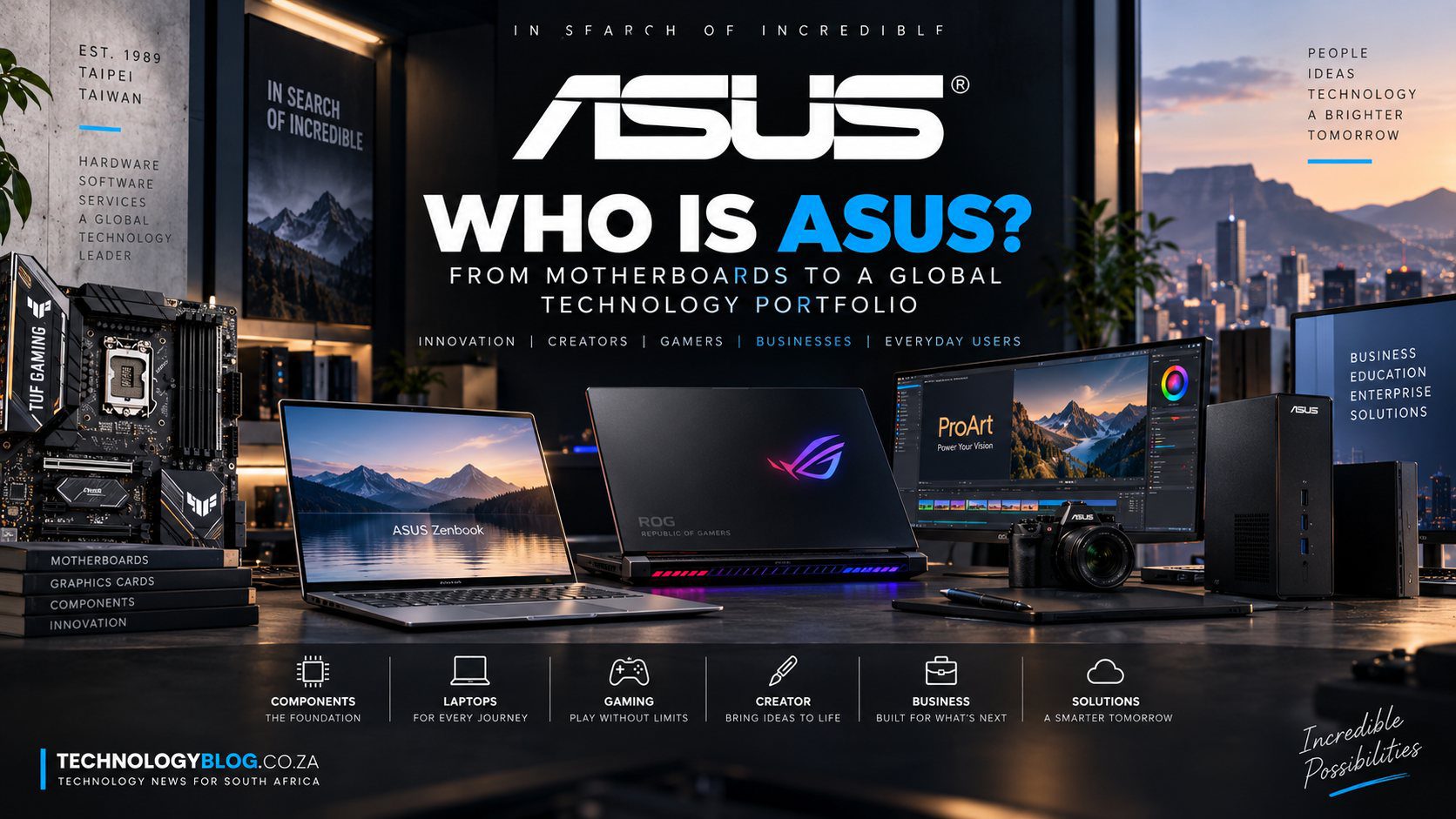
ASUS in 2026 is best understood as a portfolio company: it uses different brands to target mainstream PCs, creators, business users and gamers while also remaining a major supplier of motherboards, graphics cards, displays and networking hardware.
Motherboards built the engineering reputation
ASUS was founded in Taiwan in 1989 by former Acer engineers and first became widely known for motherboards. That component heritage still matters because the company remains deeply involved in PC hardware even after expanding into laptops, desktops, monitors, networking and mobile devices.
Unlike a vendor focused only on finished notebooks, ASUS can participate in the same PC generation through several layers: a motherboard, graphics card, monitor, router and laptop may all carry ASUS branding. That breadth gives the company many routes to enthusiasts but also creates a very large catalogue to support.
ASUSTeK is publicly listed and independent
ASUSTeK Computer Inc. is a publicly traded Taiwanese company rather than a subsidiary of a larger PC group. Founders and institutional investors remain relevant shareholders, while strategy is directed through the company’s own board and management.
Independence gives ASUS freedom to create aggressive sub-brands and product experiments, but it does not make the company vertically integrated in processors or operating systems. Intel, AMD, NVIDIA, Microsoft and major panel suppliers strongly influence what ASUS can build in each generation.
The brand architecture is doing real work
Zenbook targets premium ultraportables, Vivobook addresses broader consumer segments, ExpertBook focuses on business, ProArt serves creators, TUF emphasises durable value-oriented gaming and Republic of Gamers occupies the premium gaming position. Those names help ASUS sell very different design priorities without putting every product into one undifferentiated laptop family.
The benefit is choice; the cost is complexity. Two laptops launched in the same year can share a similar name while using different processors, GPUs, memory designs or displays. Buyers therefore need the full model code, not just the family name, when comparing specifications.
ROG is the showcase for high-performance design
Republic of Gamers lets ASUS experiment with high-refresh displays, advanced cooling, desktop components, handhelds and distinctive industrial design. Zephyrus machines emphasise portability, Strix systems prioritise sustained gaming performance, and the wider ROG portfolio includes monitors, graphics cards, motherboards and peripherals.
That ecosystem approach can make features such as lighting, display tuning or device management work across several products. It also means software quality matters more: a hardware brand becomes harder to recommend if configuration utilities, firmware or update tools create instability.
Creator products give ASUS a different premium market
ProArt systems use high-resolution displays, colour-focused features and creator-oriented connectivity rather than gaming aesthetics. This gives ASUS a route into professional and prosumer workflows where accurate displays, ports and application reliability may matter more than the highest frame rate.
The challenge is proving that creator branding corresponds to measurable workflow value. A premium display claim, for example, is more useful when calibration, colour-space coverage and I/O match the applications a buyer actually uses.
AI PCs are becoming a segmentation problem
Modern Intel and AMD processors increasingly include NPUs, and Microsoft’s Copilot+ PC requirements give vendors another specification to market. ASUS can offer these chips across several product families, but an NPU rating alone does not explain whether a customer’s software will use it.
The company therefore has to avoid turning “AI” into another layer of model confusion. Useful differentiation will come from battery efficiency, local features, software compatibility and sustained performance rather than from repeating a TOPS figure across every launch.
Regional configurations are a recurring ownership issue
ASUS often announces a wide global configuration range, while individual countries receive only a subset. Memory may be soldered on one model, GPU power can vary, and display options may differ even when the chassis name is identical. Retail listings that omit the full SKU can therefore be misleading.
Warranty and service arrangements also matter because a premium gaming or creator notebook is expensive to repair. Clear regional configuration data and parts support are as important to long-term value as a launch specification.
What to watch from ASUS next
The strongest signals will be whether ASUS keeps ROG performance competitive without sacrificing portability, how it handles serviceability in thin laptops, whether ProArt continues to earn a distinct creator role, and how clearly it communicates AI-PC and regional configuration differences.
ASUS competes by covering many niches quickly. That flexibility is a strength only when the catalogue remains understandable and support quality keeps pace. For readers, the safest way to evaluate the company is therefore at the exact model level while using the broader brand to understand intended use.
Desktop components give ASUS a different support obligation from laptop vendors
Motherboards and graphics cards are expected to live through CPU upgrades, BIOS changes, new operating systems and component swaps. That makes firmware longevity and documentation especially important because enthusiasts may keep a board long after the original launch cycle ends.
ASUS has to serve both novice buyers who want automatic configuration and advanced users who expect detailed firmware control. Balancing those audiences is difficult, and a confusing update utility or poorly explained BIOS change can undermine otherwise strong hardware.
Service reputation can influence premium-brand value
High-end ROG and ProArt products command prices that create an expectation of dependable warranty handling and parts support. A premium chassis or display loses much of its value if repair routes are unclear or a regional service centre cannot obtain parts.
For long-term buyers, support policy should therefore be researched alongside performance. The best-performing laptop on launch day can become the worse ownership choice if battery, keyboard or display repairs are impractical several years later.
Networking and displays widen the ASUS customer relationship
ASUS sells routers, monitors and other peripherals that can remain in use across several PC upgrades. Those categories give the company a longer relationship with customers than a single notebook refresh and can reinforce ROG or ProArt ecosystems.
They also expose ASUS to different support expectations. Router security updates and monitor firmware have their own lifecycles, so a broad hardware portfolio requires consistent maintenance practices across products that are replaced at very different intervals.
