Xigmatek History: Cooling, Heat Pipes and the Physical Engineering of the PC
Xigmatek was established in 2006 and positioned itself in PC cooling and peripherals. The company’s own description emphasises thermal engineering and specifically points to heat-pipe direct-touch technology as an example of the kind of design work it used to stand out. That cooling focus is the clearest thread connecting the company’s later PC-hardware products.
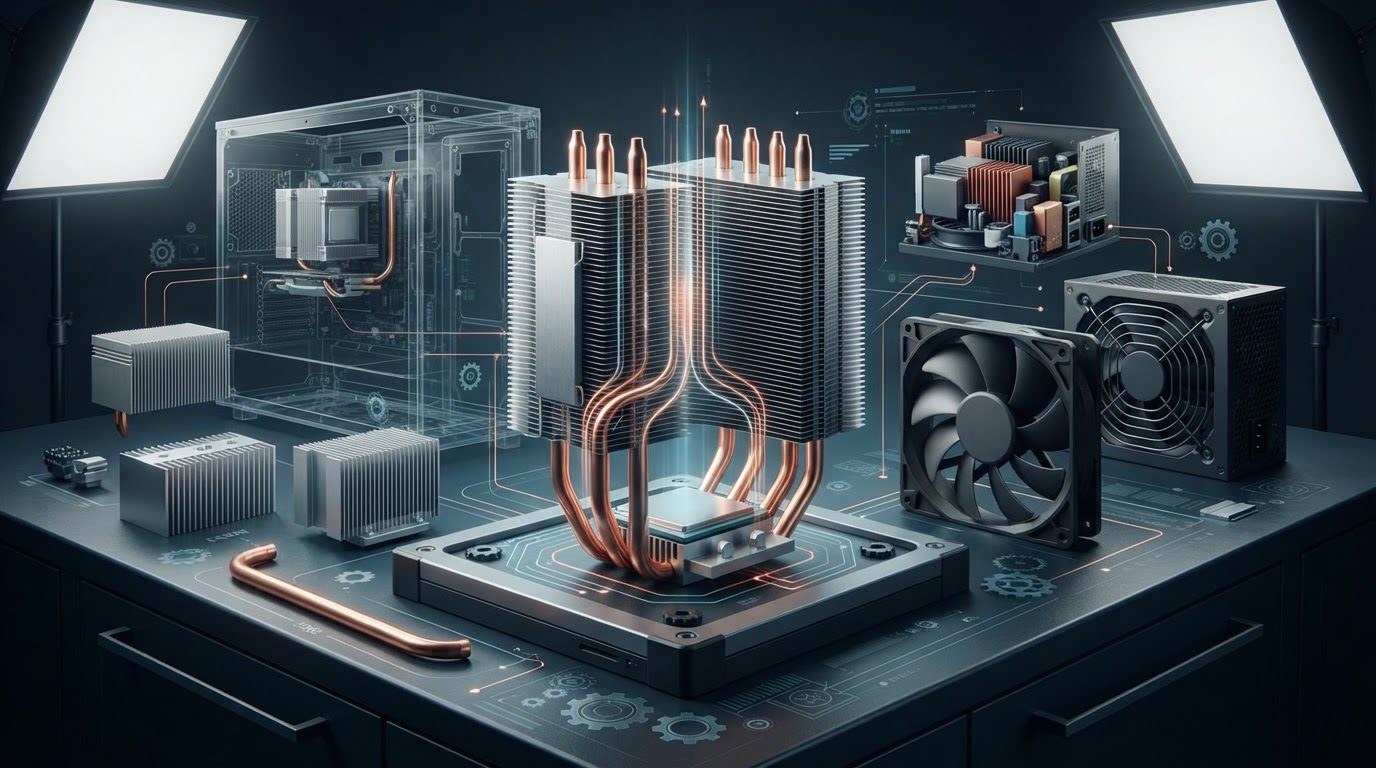
CPU cooling was an especially active field in the mid-2000s. Processor power densities had made large heatsinks, heat pipes and airflow design central to enthusiast PC building. Direct-contact heat-pipe designs attempted to shorten the thermal path between the CPU heat spreader and the cooler’s working fluid, turning the base of the heatsink into an active part of the heat-transfer system.
Cooling, Heat Pipes and the Physical Engineering of the PC
Xigmatek expanded from coolers into cases, fans, power supplies and other system-building products. Those categories are adjacent because they all participate in the same physical problem: moving heat and air through a desktop PC while supplying components reliably. A chassis determines airflow paths; fans set pressure and noise characteristics; a CPU cooler handles local heat; the power supply adds its own thermal and electrical constraints.
The company does not publish a detailed first-customer history, and its public chronology is far less extensive than those of older Taiwanese component manufacturers. Its documented chronology therefore begins with the 2006 establishment, cooling specialism and later expansion into the mechanical and power infrastructure of the DIY PC.
Xigmatek today
Xigmatek remains concentrated on the physical infrastructure of desktop PCs: cooling, fans, enclosures, power supplies and related enthusiast components.
Xigmatek’s identity has stayed close to that original layer of computing. It does not design processors or operating systems. It works around them, solving the physical consequences of increasingly powerful components. Cooling, airflow and enclosure design remain the technical thread running through Xigmatek’s history.