XFX History: How a 2001 Graphics-Card Specialist Built Its Place in DIY PC Gaming
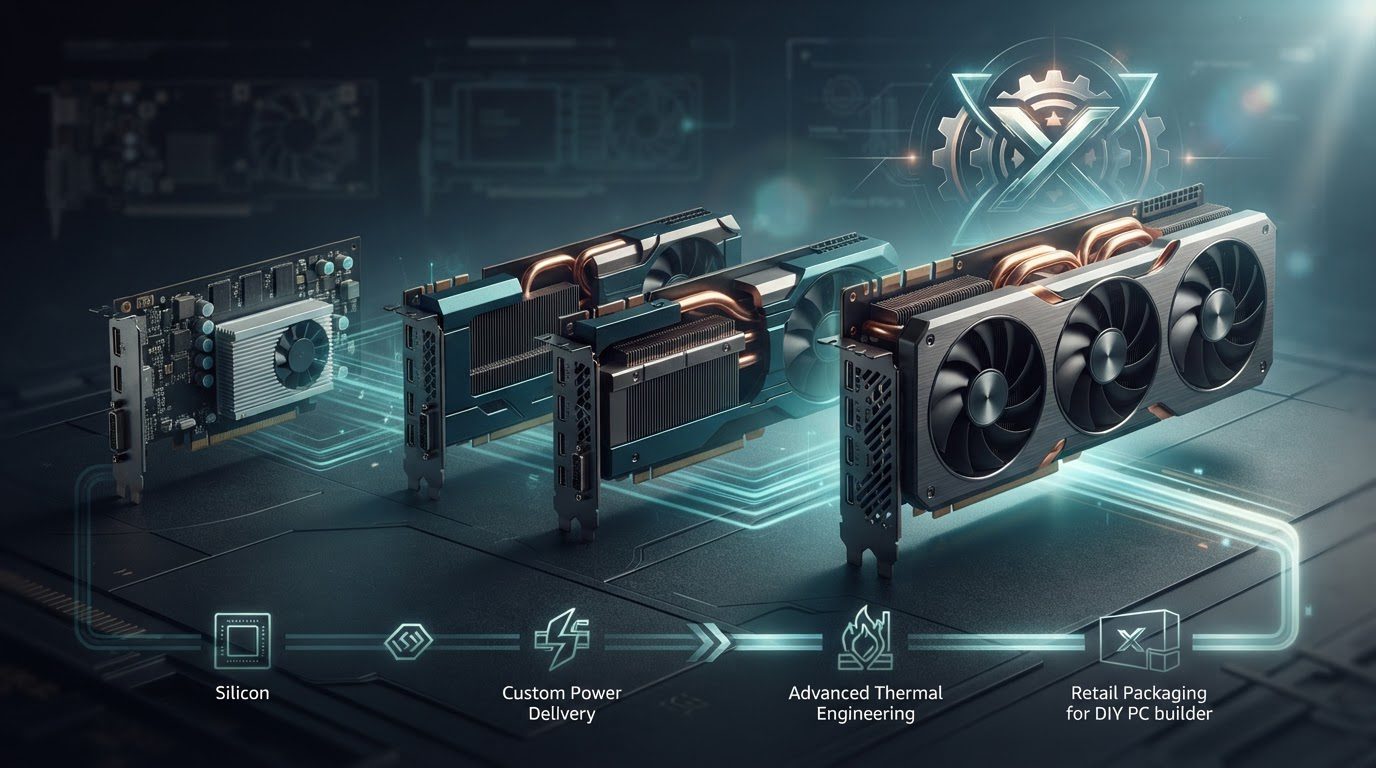
XFX was founded in 2001 around PC gaming and graphics hardware. Unlike a company that designs the GPU architecture itself, XFX operates downstream in the add-in-board market, where the graphics processor comes from a silicon vendor but board design, cooling, power delivery, factory configuration and warranty shape the product that reaches a PC builder.
That position in the stack is crucial to understanding the brand. A Radeon or GeForce GPU defines much of the raw feature set, yet board partners decide how to package that silicon for different price and performance tiers. XFX built its identity around enthusiast graphics cards, with industrial design and thermal engineering becoming visible points of differentiation.
How a 2001 Graphics-Card Specialist Built Its Place in DIY PC Gaming
The company’s history also reflects changes in GPU partnerships. XFX was long associated with NVIDIA graphics cards before becoming closely aligned with AMD Radeon products. The shift altered the chips inside its cards but not the basic role of the company: translating a GPU platform into retail boards for gamers and PC enthusiasts.
XFX’s own corporate page continues to describe the company as a graphics-card specialist and says the name refers to “Extreme Effects”. That narrow focus differentiates it from motherboard vendors that later added graphics cards or diversified electronics companies that treat GPUs as one category among many.
XFX today
XFX remains a graphics-card specialist focused on the DIY PC market. Its North American distributor, XFX Technology Inc., describes itself as a privately held California company, while the product brand is currently closely associated with AMD Radeon add-in boards.
XFX’s history is rooted in discrete graphics rather than power-backup or energy products. Its history belongs to the economics and engineering of discrete graphics: rapidly changing GPU generations, high thermal loads, board-partner competition and the expectations of DIY PC buyers. What has remained stable since 2001 is the decision to build a brand around the graphics card itself rather than around the processor architecture underneath it.