Vertagear History: How Gaming Chairs Became an Engineering and Ergonomics Business
Vertagear was founded in Los Angeles in 2015 by a team that the company describes as combining computer-hardware veterans, furniture specialists, designers and gamers. That mix is more revealing than the generic label “gaming chair company”. A chair sits outside the electronic stack entirely, so the brand had to compete through ergonomics, mechanical design, materials and visual identity while still speaking to the same enthusiast audience targeted by PC-component makers.
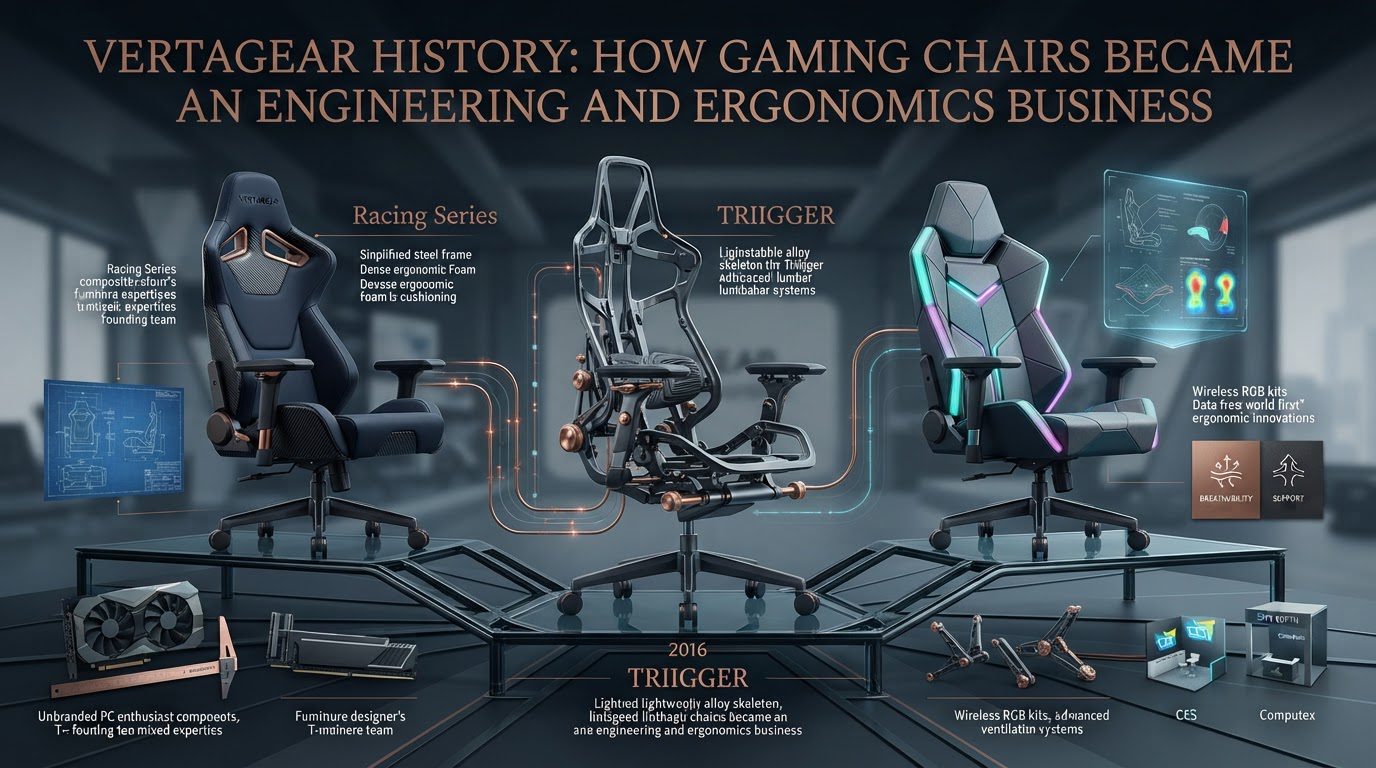
The Racing Series appeared in the company’s launch year and gave Vertagear its initial product language: high-backed seating, adjustment and a motorsport-inspired silhouette. In 2016 the company announced the TRIIGGER line, which pushed harder on exposed structure and fingertip adjustment controls. Those changes show Vertagear trying to make the chair itself a piece of engineered gaming equipment rather than a conventional office seat covered in gaming aesthetics.
How Gaming Chairs Became an Engineering and Ergonomics Business
Later products added technology more literally. Vertagear developed wireless RGB lighting kits for selected chairs and displayed prototypes at CES and Computex before commercial launches. It also introduced materials and ergonomic systems aimed at pressure, heat and lumbar support. The company has used ‘world first’ language for some developments; those claims remain Vertagear’s own, while the wider direction is clear: differentiation through mechanisms and materials, not only upholstery colours.
Partnerships helped connect that furniture expertise back to the computer industry. A 2019 Alienware collaboration placed Vertagear chairs alongside one of PC gaming’s best-known hardware brands. The 800 Series, launched later, moved the company further toward proprietary seating technologies and a more office-compatible design language.
Vertagear today
Vertagear remains focused on ergonomic seating, with gaming and work chairs that combine adjustable mechanisms, proprietary support systems and visual personalisation rather than branching into core PC electronics.
Vertagear follows a different technical path from a mouse or graphics-card maker. Its contribution is downstream of the PC: it works on the human body’s contact with a gaming or work setup over long sessions. The founding combination of furniture engineering and hardware culture still explains the brand better than raw specifications ever could.