UNITEK History: USB-C Hubs, Docks and Connectivity Hardware
UNITEK’s official site clearly establishes what the company sells today—USB hubs, docking products, storage adapters, chargers, cables and display-connectivity hardware—but it does not present a detailed public chronology with a founding year, first commercial product or named first customer. That absence limits how precisely the brand’s early chronology can be dated.
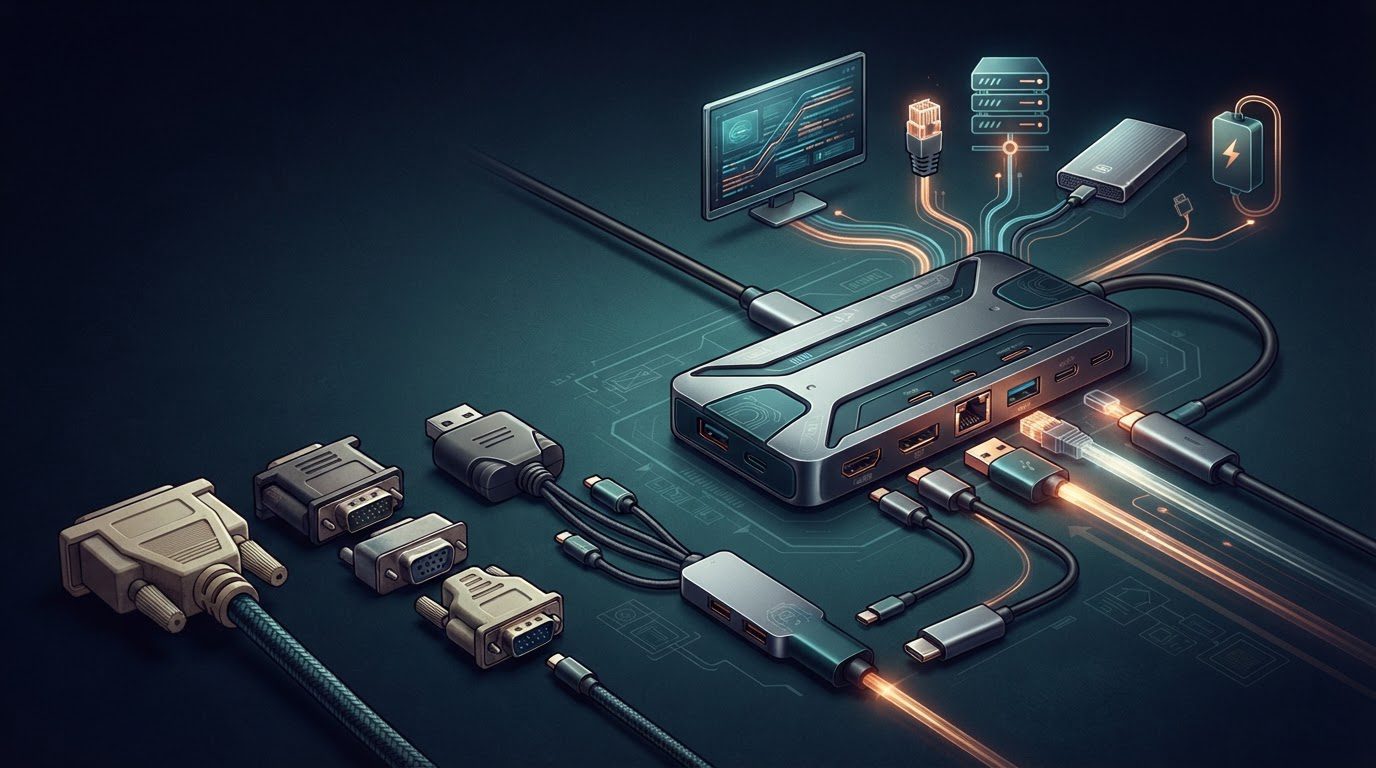
UNITEK’s clearest product history is visible in the technical layer it occupies. Its products sit between computers and the devices users need to attach to them: displays, Ethernet networks, external drives, memory cards, power supplies and USB peripherals. This category has changed dramatically as laptops have become thinner and moved from arrays of dedicated ports toward USB-C and Thunderbolt-style multifunction connections.
USB-C Turned Hubs and Docks Into Desktop Infrastructure
That transition created a larger role for hubs and docks. A modern adapter may carry display signals, network traffic, USB data and charging power through one upstream connection, so engineering is no longer simply a matter of wiring one connector to another. Signal bandwidth, power negotiation, display standards, thermal behaviour and operating-system compatibility all affect whether the accessory works reliably.
UNITEK’s current catalogue reflects that shift, with multifunction USB-C hubs, display adapters and SSD enclosures alongside more conventional cables. It is a product evolution that can be documented even when the corporate origin remains unclear: the company is following the move from single-purpose connectors to multi-function desktop expansion.
Unitek today
UNITEK currently focuses on hubs, docks, chargers, storage adapters and display connectivity, categories shaped by the consolidation of notebook ports around USB-C and other multifunction interfaces.
UNITEK’s history is ultimately a story of interface change. As notebooks shed dedicated ports, hubs and docks became more important, and the brand’s modern range sits directly in that gap between minimalist computers and the collection of displays, networks, drives and chargers users still need.