Saramonic History: From UHF Wireless Audio to Creator Microphones
Saramonic's own timeline dates the brand to 2012 and says it was founded by audio engineers and filmmakers. That origin is important because the company grew around production sound—microphones and wireless systems for people recording video—rather than around general consumer audio such as music headphones or speakers.
UwMic put wireless production audio at the centre
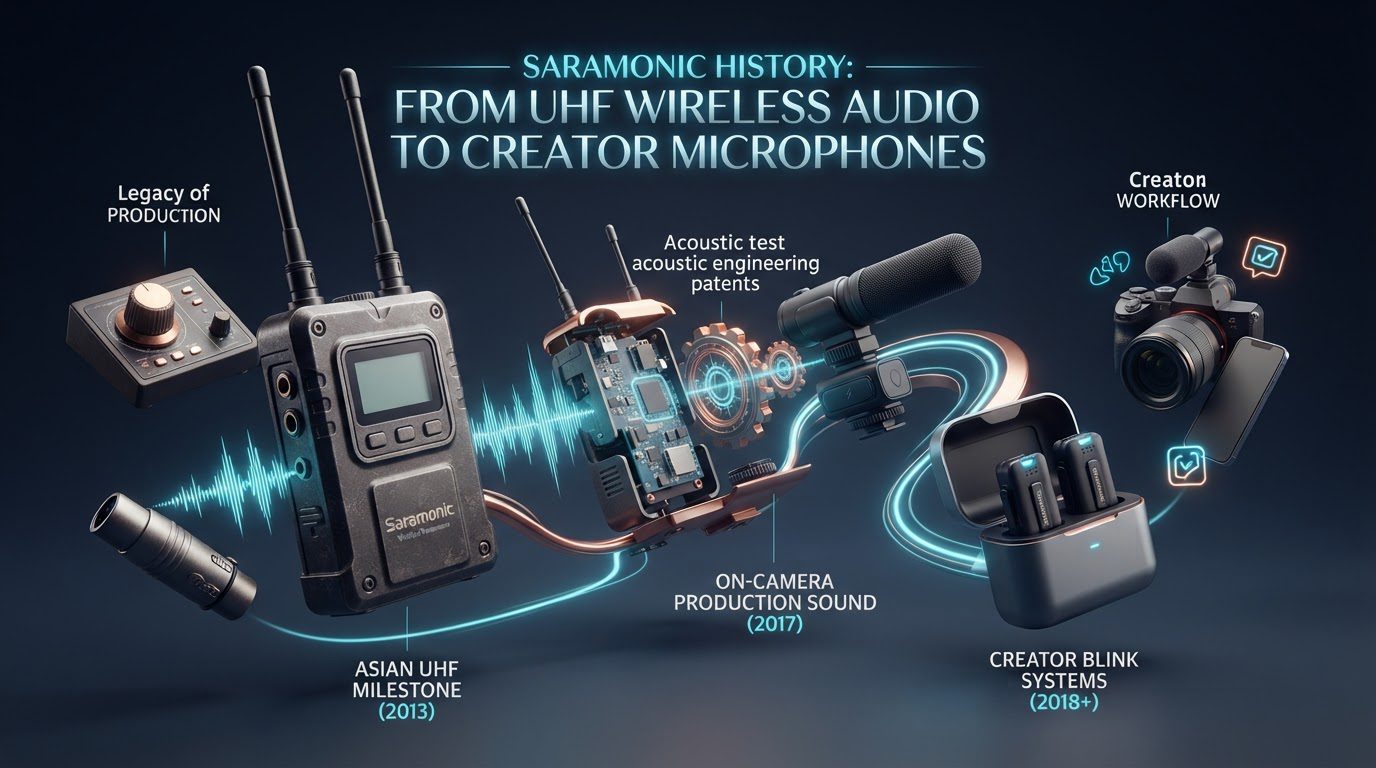
An early documented milestone came in 2013 with the UwMic7 UHF wireless system. Saramonic calls it Asia's first UHF wireless microphone system, a company claim that should stay attributed. The following year brought the UwMic9 dual-channel system and a larger investment in acoustic testing and patents, showing that the brand was trying to build radio and audio engineering capability rather than only resell microphones.
The company then moved through several generations of wireless production audio. Its milestone page lists the Vmic5 series in 2017, Blink 500 in 2018 and later portable systems that combined multiple channels with charging cases. Distribution expanded through retailers such as B&H and Best Buy, giving the brand access to filmmakers and creators outside its home market.
Blink and compact systems followed creator workflows
That progression tracks a broader change in content production. Cameras became smaller, phones became viable video tools and online creators needed wireless audio that was simpler than traditional broadcast systems. Saramonic responded by shrinking transmitters and receivers while adding digital links, recording, automatic gain control and eventually more sophisticated professional features.
The progression from UwMic wireless systems to on-camera Vmic products and the compact Blink family also mirrors a change in who makes video. Professional audio once centred heavily on dedicated film and broadcast crews; smartphones, mirrorless cameras and creator platforms expanded the market to solo shooters, podcasters and small production teams. Saramonic's product development moved toward smaller, simpler wireless systems that could fit those workflows. The company did not invent wireless audio, but it built a business around making production-grade microphone concepts more accessible to creators using increasingly compact cameras and mobile devices.
The useful continuity is sound capture, not a generic 'creator ecosystem'. Saramonic began with wireless microphones and still invests in microphones, intercoms and related audio systems. Its product milestones track wider changes in recording workflows—more mobile crews, more cameras, and a growing expectation that professional audio tools be compact and easy to deploy.