PowerA History: How Licensed Controllers Became a Global Accessories Business
PowerA's own timeline separates the brand from its parent history. BDA, the parent company, dates to 1984 and had worked with Nintendo for years before PowerA itself was founded in 2009. The new brand immediately secured licences from Xbox and PlayStation, giving it a defined role as a third-party maker inside established console ecosystems.
PowerA began in 2009, not with BDA in 1984
That licensing is more than a logo agreement. Console controllers and accessories have to meet platform requirements, communicate correctly with proprietary hardware and fit retail programmes controlled by the platform owners. PowerA used those relationships to build controllers, charging products, protective accessories and other gear at price points below many first-party premium products.
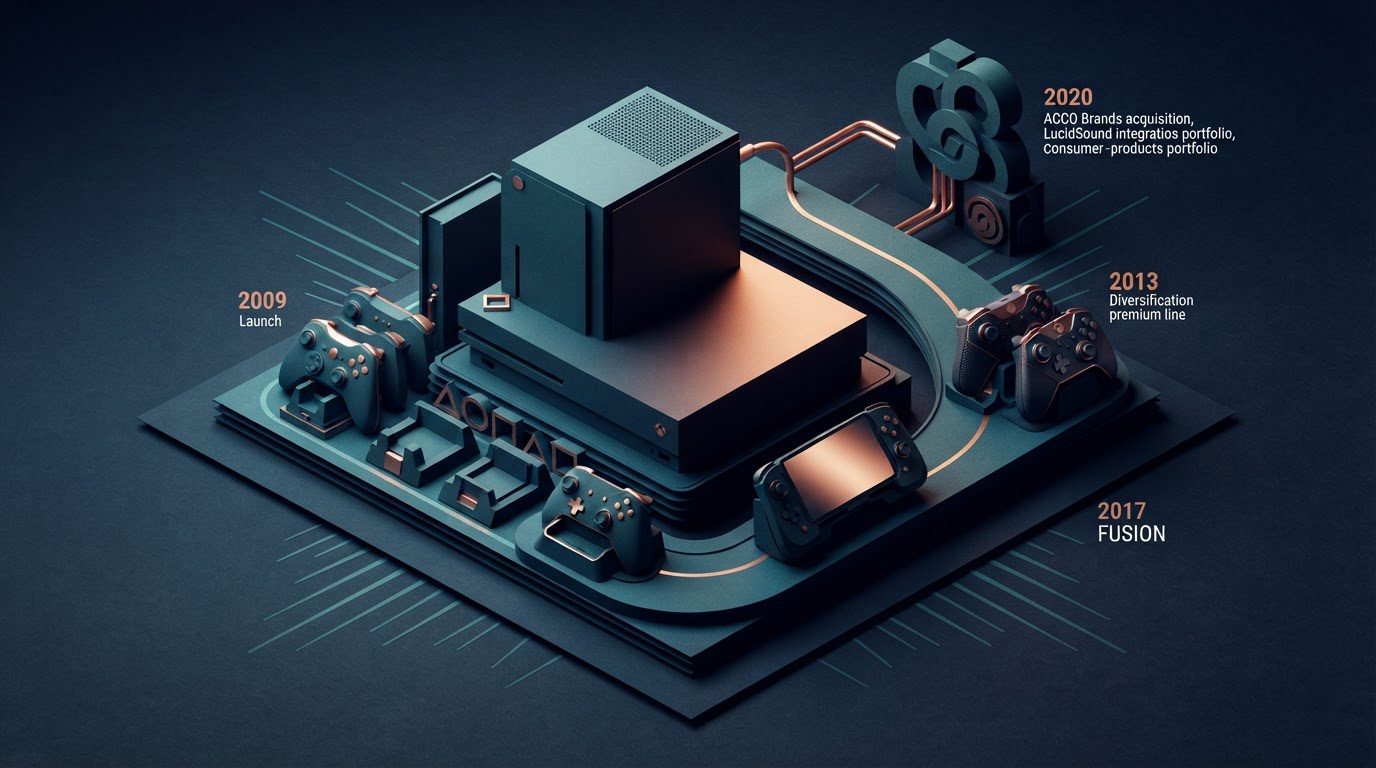
The company broadened its product strategy in 2013 with the MOGA line of mobile-gaming accessories and in 2017 with the FUSION premium range. Those launches show two different growth directions: follow players onto new devices, and move upmarket within the controller category.
MOGA, FUSION and ACCO reshaped the portfolio
Ownership changed in 2020 when ACCO Brands acquired PowerA. The same year PowerA acquired gaming-audio company LucidSound, adding another adjacent category. The brand therefore entered the 2020s as part of a larger consumer-products group rather than the independent business it had been at launch.
PowerA's official timeline is unusually useful because it separates the brand from its older corporate parent. BDA existed from 1984, while PowerA was created in 2009 around licensed gaming accessories. Later milestones show deliberate segmentation rather than random product expansion: MOGA targeted mobile gaming in 2013, FUSION created a more premium line in 2017, and ACCO Brands acquired the business in 2020. The result is a history driven by platform relationships. PowerA rarely controls the console itself; its opportunity comes from designing controllers and accessories that fit around ecosystems owned by Nintendo, Microsoft, Sony and mobile-device makers.
PowerA's history demonstrates why parent-company and brand dates need separate fields. BDA's 1984 origin explains the channel and licensing experience behind the business; 2009 is the actual PowerA launch. The brand's enduring capability is not owning a console platform but designing affordable, licensed hardware that fits neatly inside other companies' platforms.