MINISFORUM History: How Mini PCs Became the Company’s Core Strategy
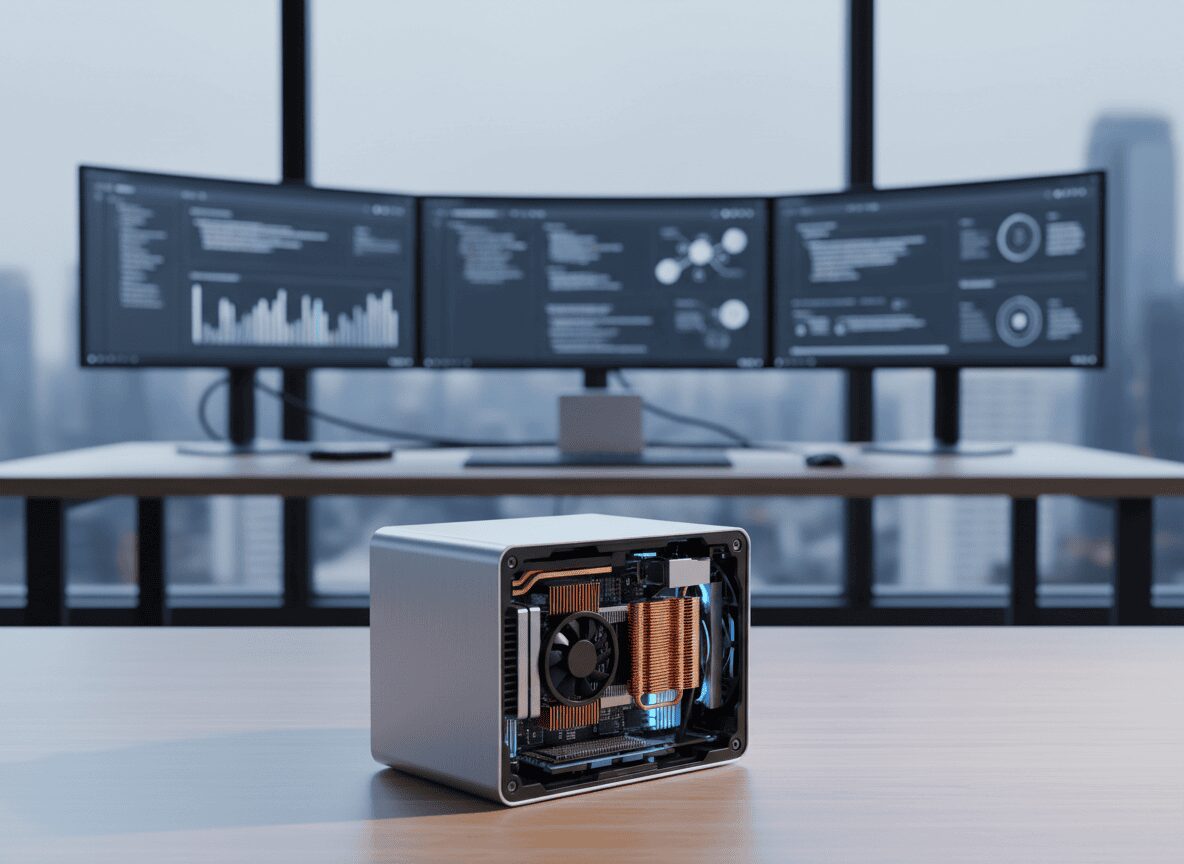
MINISFORUM was founded in Shenzhen in 2018 with a narrower proposition than the established PC giants: build compact computers. That focus matters because a mini PC is not simply a laptop without a display. Designers have to balance processor performance, cooling, storage, memory, power delivery and I/O inside a chassis small enough to disappear behind a monitor or sit unobtrusively on a desk.
MINISFORUM started with the mini-PC form factor
MINISFORUM’s public company history establishes its 2018 origin but does not identify one definitive first commercial product. Its documented starting point is therefore the category it chose from the beginning: small-form-factor personal computers.
MINISFORUM expanded quickly across Intel- and AMD-based systems, from low-power office machines to higher-performance mini PCs aimed at creators and enthusiasts. That progression was enabled by wider industry changes. Mobile-class processors became fast enough for desktop workloads, NVMe storage reduced the need for bulky drives, and USB-C/USB4-style connectivity made compact systems easier to integrate with docks and external devices.
Compact PCs moved beyond basic office work
The company has also experimented with more unusual compact systems and enthusiast-oriented configurations, showing that ‘mini PC’ is no longer synonymous with low-end computing. The engineering problem is increasingly thermal density—how to sustain modern CPU and GPU performance without letting noise, heat or power limits erase the advantage of faster silicon.
MINISFORUM’s specialisation also reflects a broader change in PC architecture. As processors integrated graphics, memory controllers and more platform functions, a useful desktop no longer had to be built around a large tower and multiple expansion cards. Mini PCs could move from simple office boxes toward systems capable of heavier productivity, development and even gaming-oriented workloads. MINISFORUM built its identity inside that form-factor shift. The company does not need a mythical ‘first breakthrough model’ to tell a coherent story; its verifiable differentiator is sustained focus on compact computing and increasingly ambitious performance inside small enclosures.
MINISFORUM’s history is short, but it has a clear technical subject. The company did not grow by moving through unrelated markets; it kept stretching what a small computer could contain. Without a clearer early-product timeline, the company’s sustained focus on compact computing is a stronger historical anchor than assigning an arbitrary model the role of foundational breakthrough.