Who is Gaijin Entertainment? The developer behind War Thunder
Gaijin Entertainment is almost impossible to separate from War Thunder.
For millions of players, the two names effectively belong together. War Thunder has grown into an enormous military game covering aircraft, tanks, helicopters and naval forces, and it remains Gaijin’s flagship project more than a decade after release.
However, War Thunder tells only part of the story.
Gaijin is an independent European game developer and publisher that dates back to 2002. It has developed more than 30 games, created its own game engine, expanded across multiple countries and built an online ecosystem used by both its own projects and games developed by partner studios.
Understanding Gaijin therefore means looking beyond War Thunder.
Gaijin Entertainment started in 2002
Gaijin describes itself as an independent European video game developer and publisher established in 2002.
That means the company has now been operating for almost a quarter of a century.
Its history predates modern free-to-play gaming, the current generation of consoles and even Steam’s public launch.
During that time, Gaijin says it has developed more than 30 games across a remarkable range of hardware.
Its catalogue has appeared on PC, Mac and Linux alongside multiple generations of PlayStation and Xbox consoles. Gaijin has also worked on Nintendo Switch, iOS and Android.
That multiplatform experience eventually became important to the company’s biggest game.
Aviation became an early speciality
Long before War Thunder grew into a combined-arms military platform, Gaijin had already developed experience with aviation games.
One notable project was IL-2 Sturmovik: Birds of Prey.
Gaijin’s own company history highlights the title among its recognised projects and points to its strong critical reception.
That aviation experience provides useful context for what happened next.
War Thunder did not appear from a company suddenly deciding to make a detailed military flight game.
Gaijin already had experience building games around aircraft, flight and military history.
War Thunder changed the company
War Thunder became the project that defined modern Gaijin Entertainment.
The game’s original identity focused heavily on military aviation, but its scope expanded dramatically.
Ground Forces brought tanks and other armoured vehicles.
Naval warfare followed.
Helicopters added another layer to combined battles.
Meanwhile, the aviation technology tree continued moving forward through increasingly modern aircraft.
The result became far larger than a traditional flight game.
War Thunder evolved into a military-vehicle platform spanning more than a century of technological development.
War Thunder became a long-term platform
This distinction matters.
Many games are developed, released and eventually left behind as studios move towards sequels.
Gaijin took another route.
War Thunder kept expanding.
New vehicles arrived.
New countries joined the technology trees.
Maps changed.
Graphics improved.
Weapons became more sophisticated.
Radar systems evolved.
Modern military equipment pushed the technological ceiling higher.
That continuous-development model transformed War Thunder from a product into an ongoing platform.
It also changed the kind of company required to support it.
Gaijin is both developer and publisher
One of the easiest mistakes when discussing Gaijin is assuming every game carrying its name was developed internally.
That is not the case.
Gaijin operates as both a developer and publisher.
War Thunder is directly developed by Gaijin Entertainment.
Other games involve partner studios.
Enlisted, for example, is developed by Darkflow Software.
Crossout is developed by Targem Games.
CRSED is another Darkflow Software project.
Star Conflict is associated with StarGem Inc.
Gaijin’s involvement with those games includes publishing, technology and other parts of the wider online ecosystem.
That distinction is important when discussing who actually created each game.
Enlisted expanded Gaijin’s military portfolio
Enlisted is particularly interesting because it shares some obvious interests with War Thunder while taking a very different approach.
Developed by Darkflow Software, Enlisted focuses on Second World War infantry combat.
Players control individual soldiers but also manage squads containing AI-controlled troops.
Tanks and aircraft operate on the same battlefields.
The result combines first-person shooting with larger-scale military combat.
Gaijin has been involved with the project since its early development and publishes the game while Darkflow remains the developer.
That relationship demonstrates how Gaijin’s role expanded beyond creating everything internally.
The Dagor Engine connects much of Gaijin’s technology
Behind War Thunder and several associated projects sits another important part of the company:
Dagor Engine.
Gaijin developed the proprietary technology to power its games.
The engine has evolved alongside the projects using it.
That relationship can provide an important advantage.
When a studio owns the engine, it does not need to wait for an external engine company to prioritise a feature.
Its engineers can change the technology around the needs of the game.
For a project such as War Thunder, that matters.
The game needs to render enormous environments, detailed vehicles, aircraft travelling at high speeds and combined battles involving several types of military equipment.
War Thunder and Dagor evolved together
War Thunder has existed for more than a decade, but the visual and technical requirements have not remained frozen.
New console generations arrived.
PC hardware changed.
Rendering techniques improved.
Vehicle detail increased.
Modern weapons required more complicated systems.
The Dagor Engine therefore needed to evolve with the game.
That makes War Thunder an interesting example of a live game and its underlying technology developing alongside one another.
Instead of replacing the game with War Thunder 2, Gaijin has repeatedly modernised the existing platform.
Gaijin opened Dagor to outside developers
In 2023, Gaijin took an unusual step.
The company released significant portions of Dagor Engine as open-source software under the BSD-3 licence.
Gaijin explained that this fitted into a broader belief in free and open-source software.
The company had already made technologies including its daScript and Quirrell programming languages available through GitHub.
Opening Dagor therefore was not an isolated experiment.
It indicated that Gaijin increasingly saw its internal technology as something that could have value outside its own development teams.
Open source does not mean War Thunder became open source
There is an important distinction.
Opening Dagor Engine did not make War Thunder itself open source.
Gaijin explicitly clarified this when announcing the engine move.
The game remains a commercial Gaijin project.
Console-related engine components are also affected by platform licensing agreements and non-disclosure requirements, which limits what can be publicly released.
Still, opening substantial parts of an engine developed across years of commercial games is noteworthy.
It provides developers with another technology option while giving outsiders a closer look at Gaijin’s engineering.
Gaijin has built more than a game engine
The company’s technology strategy extends beyond rendering.
Online games require infrastructure.
Players need accounts.
Games need updating.
Purchases need processing.
Content needs distribution.
Different platforms need to communicate.
Gaijin has built services around those requirements through its broader Gaijin.Net ecosystem.
That means the company increasingly resembles more than a traditional studio.
It develops games.
It publishes games.
It maintains technology.
It operates online services.
Those systems can also support projects created by partner developers.
Gaijin inCubator shows the wider strategy
Gaijin launched its inCubator initiative in 2015.
The original idea involved supporting independent developers financially.
Gaijin later found that many developers needed more than investment.
Online games require infrastructure that can be expensive and difficult to build independently.
The inCubator platform therefore developed around services including authentication, purchases, game distribution and account systems.
The idea is significant because it shows Gaijin using technology developed for its own games to support other developers.
That creates another business role beyond conventional publishing.
Crossout shows how that partnership model works
Crossout is another major title associated with Gaijin.
However, the developer is Targem Games.
The game revolves around constructing custom armoured vehicles from interchangeable components and then taking those creations into multiplayer combat.
Its detailed vehicle-damage systems and vehicular focus make it a natural fit within Gaijin’s broader portfolio.
Yet the developer distinction remains important.
Crossout demonstrates how Gaijin can build a recognisable publishing ecosystem without every project being produced by the same internal team.
Star Conflict takes the portfolio into space
Star Conflict moves the vehicle-combat concept away from historical or post-apocalyptic battlefields and into science fiction.
The game centres on spacecraft and fleet combat.
Its developer is StarGem Inc.
Again, Gaijin’s name is associated with the project through the wider publishing ecosystem rather than meaning every part was developed by the same War Thunder team.
This variety shows that the company has not restricted itself entirely to historical military games.
Vehicles and online combat may be recurring themes, but the settings can change dramatically.
CRSED went in another direction entirely
CRSED, originally known as Cuisine Royale, demonstrates another side of the portfolio.
Developed by Darkflow Software, it combines firearms with supernatural abilities and deliberately unusual humour.
It is considerably less serious than War Thunder or Enlisted.
Its presence matters because it challenges the idea that Gaijin’s entire business revolves around historical authenticity.
The company has developed and published projects across very different tones and genres.
Its strongest identity may come from military games, but its catalogue is broader.
Active Matter expands that catalogue again in 2026
One of Gaijin’s most important current projects is Active Matter.
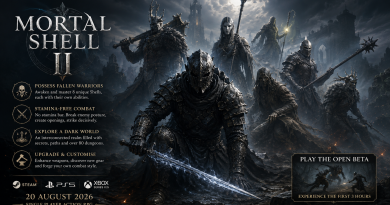
Gaijin and Matter Team are preparing the hardcore online shooter for launch on 15 September 2026 across Steam, PlayStation 5 and Xbox Series X|S.
The game combines realistic weapons with a much stranger setting.
Players enter unstable areas affected by a substance known as active matter.
Familiar environments are distorted by anomalies, unusual creatures and hostile human operatives.
The result mixes tactical gunplay with science-fiction and supernatural elements.
That makes it another departure from the straightforward historical identity many people associate with Gaijin.
Active Matter also shows how Gaijin now works with studios
The project is being developed with Matter Team.
That relationship fits the broader pattern.
Gaijin can contribute publishing infrastructure, online technology and years of multiplayer experience while another development team concentrates on the game itself.
The company is therefore becoming increasingly difficult to describe simply as “the War Thunder developer.”
That remains true.
It is simply no longer sufficient.
Budapest is Gaijin’s main development hub
Gaijin describes its main headquarters and development centre as being in Budapest, Hungary.
The company says almost 100 developers work at that main hub.
However, Gaijin’s overall workforce extends beyond Budapest.
Its current locations include offices in Germany, Cyprus, Hungary, Latvia, Armenia and the United Arab Emirates.
The company also supports remote work.
That gives Gaijin a geographically distributed development structure.
Gaijin’s current office network spans six countries
The company’s locations page currently lists:
Budapest, Hungary
Karlsruhe, Germany
Larnaca, Cyprus
Riga, Latvia
Yerevan, Armenia
Dubai, UAE
Gaijin says several hundred specialists work either from those offices or remotely.
Its careers material also makes clear that candidates can work remotely or relocate to one of the countries where the company operates.
That international structure is increasingly common in modern game development.
Specialised talent does not necessarily need to sit inside one building.
Remote development extends the network even further
Gaijin says developers also work remotely from countries including Spain, the United States, Georgia and Serbia.
That creates a company spread considerably further than its formal office list suggests.
For an online publisher supporting multiple live games, that distribution can be useful.
Different projects require programmers, artists, network specialists, community staff, QA engineers and platform experts.
Recruiting internationally expands the available talent pool.
It also means Gaijin’s description as a European developer refers more to its corporate and operational base than to a workforce contained in one country.
Gaijin’s independence is significant
Gaijin continues to describe itself as an independent developer and publisher.
That separates it from studios owned by major platform holders or multinational publishing groups.
Independence does not mean operating without partners.
Gaijin works with outside developers, console companies, distribution platforms and other businesses.
However, the company has retained its own identity while building its portfolio.
That has allowed War Thunder in particular to develop over an unusually long period without being replaced by an annualised sequel structure.
War Thunder remains the flagship
Despite everything else Gaijin does, War Thunder remains the centre of its public identity.
Gaijin itself describes it as the company’s main project.
That makes sense.
Few games survive at this scale for more than a decade.
War Thunder now contains thousands of military vehicles and continues receiving major updates.
Its cross-platform structure connects PC and console players.
The game also acts as a showcase for Dagor Engine.
For many people, War Thunder will remain their first encounter with Gaijin.
Internal link: Add a real WordPress link here to War Thunder in 2026 once the published TechnologyBlog URL is available.
War Thunder also demonstrates Gaijin’s development philosophy
One lesson from War Thunder is that Gaijin appears comfortable building platforms over long periods rather than constantly replacing them.
The game has accumulated years of content.
Aircraft progression expanded.
Ground Forces arrived.
Naval warfare developed.
Helicopters became part of combined combat.
Modern military systems continued pushing the technological ceiling forward.
Meanwhile, the underlying engine continued evolving.
That long-term approach creates enormous complexity.
It also creates something competitors cannot reproduce quickly: accumulated content.
Thousands of vehicles represent years of development
Every military vehicle added to War Thunder requires work.
Models need to be created.
Historical or technical information needs research.
Weapons need implementation.
Damage models require configuration.
Performance needs balancing.
Animations and sounds need attention.
Then the vehicle enters a game containing thousands of others.
That scale is now one of War Thunder’s biggest competitive advantages.
A new military game might match one individual feature.
Matching more than a decade of accumulated content is much harder.
Gaijin has become experienced at cross-platform development
The company’s platform history also matters.
Gaijin says its games have appeared across numerous generations of consoles and computer platforms.
War Thunder itself runs across Windows, Linux, macOS, PlayStation and Xbox.
Cross-platform multiplayer adds another layer.
Supporting a live game across different hardware generations requires specialised expertise.
Each platform has different technical requirements.
Updates need testing.
Certification matters.
Performance targets differ.
Accounts and progression need to behave consistently.
Those skills become valuable beyond one game.
The PlayStation 4 launch was an important milestone
Gaijin highlights another notable part of War Thunder’s history.
War Thunder appeared as a PlayStation 4 launch title.
According to the company, this made Gaijin the first free-to-play developer to have a game included as a console launch title.
That happened at a time when free-to-play games were still establishing themselves on consoles.
Today, the model is normal.
In 2013, it was considerably more unusual.
That makes War Thunder part of the broader shift that brought free-to-play online games into the console mainstream.
Free-to-play became central to Gaijin’s ecosystem
Several major games associated with Gaijin use free-to-play models.
War Thunder does.
Enlisted does.
Crossout does.
This creates obvious advantages for multiplayer games.
Removing an upfront purchase price lowers the barrier to entry.
Large communities are easier to build.
Returning players can reinstall without buying another copy.
However, free-to-play design also creates difficult questions around progression and monetisation.
War Thunder’s community has repeatedly debated those issues.
Maintaining a sustainable business without making progression feel unfair remains one of the hardest problems in live-service development.
Gaijin’s communities are unusually involved
Military games attract players who care deeply about detail.
War Thunder users analyse armour.
They research ammunition.
They compare aircraft performance.
They study historical documents.
They examine radar systems.
They debate vehicle specifications.
That creates an unusually knowledgeable community.
It also creates friction.
When players believe a vehicle is inaccurate or poorly balanced, discussions can become intense.
For Gaijin, community management therefore involves more than announcing new content.
The company is dealing with an audience containing genuine military-history and technical enthusiasts.
Historical accuracy and game balance can conflict
This creates one of Gaijin’s recurring design problems.
Real military equipment was not created for fair multiplayer competition.
Some vehicles were designed specifically to defeat others.
Technology developed unevenly between countries.
Weapons can have enormous differences in range and effectiveness.
A multiplayer game needs some form of balance.
War Thunder therefore sits between simulation and competitive design.
Gaijin needs enough authenticity to satisfy military enthusiasts while making battles playable.
There is no perfect solution.
Every adjustment can satisfy one group while frustrating another.
The company is increasingly dealing with modern military technology
War Thunder’s expansion into modern equipment makes that challenge harder.
Older military technology is often well documented.
Modern equipment can involve incomplete, disputed or classified information.
Advanced radar and electronic warfare systems are also far more complicated than modelling a simple gun sight.
Gaijin’s 2026 War Thunder updates continue moving into electronic warfare, including anti-radiation missiles and electronic-support systems.
The further the game moves towards contemporary equipment, the more complicated the simulation becomes.
Dagor becomes more important as the games become more complex
This is where owning an engine can become valuable.
Gaijin can adapt Dagor around the technical problems its projects encounter.
Large environments.
Vehicle physics.
Networked battles.
Destruction.
Modern rendering.
Multiple platforms.
These requirements can influence the engine directly.
That close relationship between game and engine gives Gaijin more control over its technical roadmap.
Opening parts of Dagor also gives the technology an existence outside War Thunder.
Gaijin is now a developer, publisher and technology company
After more than two decades, those three descriptions fit better than any one of them alone.
Gaijin develops games.
War Thunder is the clearest example.
It publishes games made by other studios.
Enlisted and Crossout demonstrate that role.
It develops technology.
Dagor Engine and the Gaijin.Net infrastructure demonstrate that side of the business.
It also provides services that can support external projects.
That combination makes modern Gaijin considerably broader than the company many players first encountered through War Thunder.
Why Gaijin Entertainment matters in 2026
In 2026, Gaijin occupies an interesting position in the games industry.
It is not one of the enormous platform companies.
It is not a publisher releasing dozens of unrelated blockbuster games every year.
Instead, it has built an ecosystem around online games, proprietary technology and long-running communities.
War Thunder remains the centre.
Enlisted extends its presence in military gaming through Darkflow Software.
Crossout brings vehicle construction and post-apocalyptic combat.
Other projects explore space, supernatural shooters and increasingly new multiplayer concepts.
Active Matter adds another major release in September 2026.
The portfolio is expanding without abandoning the game that made Gaijin famous.
War Thunder remains the best explanation of Gaijin
If someone wants to understand Gaijin Entertainment, War Thunder is still the best place to start.
It demonstrates the company’s interest in vehicles.
It demonstrates its technical ambitions.
It shows its approach to cross-platform development.
It reveals the strengths and complications of free-to-play progression.
It shows how Gaijin treats games as platforms that can evolve for years.
But stopping at War Thunder misses the larger picture.
The company behind it has spent more than two decades building the technology, publishing infrastructure and development network surrounding those games.
Gaijin has become much bigger than one military game
Gaijin Entertainment began in 2002 and has grown into an independent European developer and publisher with operations spread across several countries.
Its main development hub sits in Budapest.
Its games have appeared across PC, consoles and mobile devices.
Its Dagor Engine has evolved into open-source technology.
Its publishing network supports studios including Darkflow Software, Targem Games and others.
And War Thunder remains one of the most enduring examples of a live military game.
That combination explains why Gaijin is worth understanding separately from its flagship title.
War Thunder may be the game most people recognise.
The company behind it has become an increasingly important development, publishing and technology operation in its own right.