Logitech Zone Wireless 2 ES brings adaptive ANC, flexible connectivity and replaceable parts to hybrid work
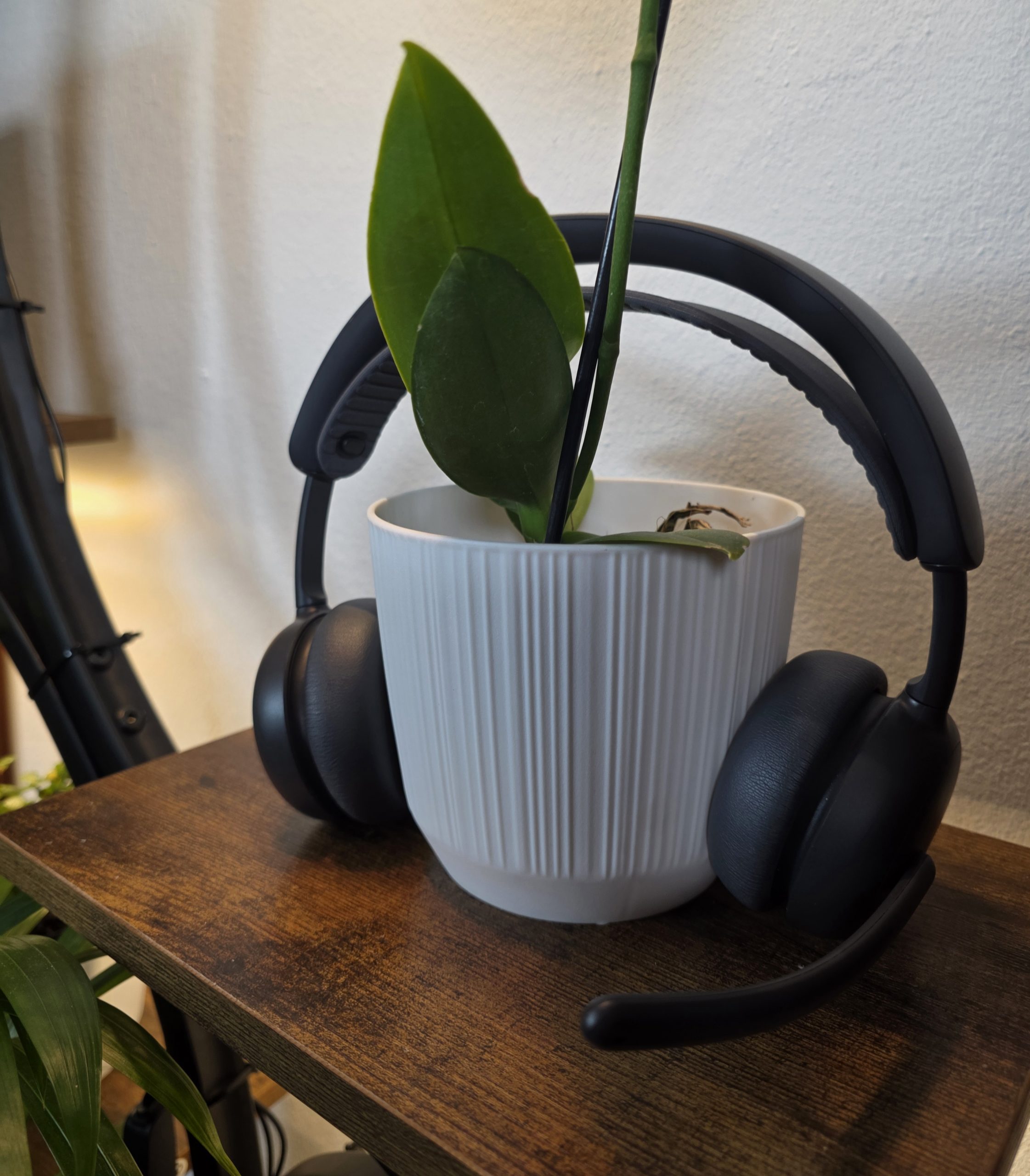
The Logitech Zone Wireless 2 ES is a business-focused wireless headset designed for organisations and employees who spend significant parts of the working day in online meetings, calls and shared office environments.
Its feature set combines adaptive hybrid active noise cancellation, two noise-cancelling microphones, 40 mm audio drivers, Bluetooth 5.3, multipoint connectivity and support for major collaboration platforms.
It also offers something increasingly relevant to companies managing large numbers of headsets: several components are replaceable rather than requiring the complete headset to be discarded when a wear item reaches the end of its useful life.
Logitech has also published detailed environmental information for the Zone Wireless 2 ES, including the recycled-material content used in parts of the product and an estimated product carbon footprint of 8.2 kg CO2e.
That does not make the headset environmentally impact-free, and it would be inaccurate to describe any electronic product simply as “safe for the environment.”
A more useful assessment comes from looking at what Logitech actually specifies: recycled materials, replaceable components, certified paper packaging and published carbon-footprint information.
The correct name is Logitech Zone Wireless 2 ES
The product’s official name is Logitech Zone Wireless 2 ES.
It should not be confused with Logitech’s existing Zone Wireless 2, which is a different headset with a different specification.
The two products share part of their names and are aimed at professional users, but Logitech lists them separately.
Zone Wireless 2 ES uses two noise-cancelling microphones with AI-based processing, while the higher-positioned Zone Wireless 2 uses a four-microphone system and includes additional features such as Advanced Call Clarity.
The Zone Wireless 2 ES is therefore its own product rather than a renamed version of Zone Wireless 2.
Adaptive hybrid ANC is designed for distracting workplaces
One of the headline features of the Zone Wireless 2 ES is adaptive hybrid active noise cancellation.
Active noise cancellation uses microphones and signal processing to reduce unwanted external sound reaching the listener.
Logitech says the adaptive mode can adjust the level of noise cancellation according to the user’s surroundings.
The adaptive ANC function is enabled through Logitech’s Logi Tune software.
That makes the headset particularly relevant to open offices, shared workspaces and other environments where surrounding conversations and background noise can make concentration difficult.
The headset also benefits from an over-ear design, providing a degree of passive isolation in addition to electronic noise cancellation.
ANC should not be interpreted as eliminating every external sound.
Its effectiveness varies according to the type of noise, fit and environment, but it can substantially reduce persistent background distractions.
Two microphones focus on the user’s voice
The Zone Wireless 2 ES uses two noise-cancelling microphones with AI-based algorithms and microphone equalisation.
Logitech says the system is designed to distinguish the user’s speech from surrounding sounds such as nearby conversation and keyboard noise.
For workplace headsets, microphone performance can be at least as important as speaker quality.
A headset can sound excellent to the person wearing it while still delivering poor audio to colleagues on the other side of a meeting.
Logitech has therefore positioned microphone noise reduction as one of the Zone Wireless 2 ES’s major business features.
The microphone system has a published frequency response of 100 Hz to 8 kHz.
Logitech also says the headset meets Microsoft Teams Premium Microphone for Open Office requirements on applicable versions.
40 mm drivers handle meetings and music
Audio is delivered through 40 mm drivers.
Logitech specifies a 20 Hz to 20 kHz frequency response in music mode and 100 Hz to 8 kHz in talk mode.
That distinction reflects the different priorities involved in music and speech.
Music benefits from a wider frequency range, while voice communication is concentrated within a narrower part of the audible spectrum.
The headset includes Dynamic EQ and can be adjusted through Logi Tune.
Logitech also lists EN 50332 compliance, ADA hearing-aid compatibility and G616 compliance relating to protection against acoustic shock and long-term sound exposure.
Native Bluetooth is an option, but the dongle has not disappeared
One of the most important details about the Zone Wireless 2 ES is that not every version is dongle-free.
Logitech offers multiple configurations.
Some versions support native Bluetooth connections without requiring a dedicated receiver.
Other versions are supplied with a Logitech USB-C receiver and USB-A adapter.
For South Africa and the broader emerging-markets region, Logitech’s official documentation lists both native-Bluetooth and receiver-equipped configurations.
The South African product page currently identifies a Graphite Teams version with a receiver, a Graphite UC version with a receiver and a Graphite Teams native-Bluetooth version.
It is therefore incorrect to say that the Zone Wireless 2 ES simply eliminates the USB dongle.
A better description is that buyers can select versions designed for either direct Bluetooth operation or receiver-based deployment, depending on platform and organisational requirements.
Logitech itself summarises this choice as being able to keep the dongle or use native Bluetooth.
Why businesses might still want a receiver
A dedicated USB receiver can seem unnecessary when modern laptops already have Bluetooth, but business deployments have different priorities from ordinary consumer use.
Receivers can provide predictable compatibility and make it easier for organisations to deploy headsets with specific collaboration-platform certifications.
Logitech’s receiver-equipped versions also support a feature the company calls smart enumeration.
When the headset is not being used, the receiver can remain hidden from conferencing applications rather than appearing as an available audio device and potentially being selected accidentally.
For organisations managing many meeting-room or employee devices, small deployment details like these can reduce user confusion.
Native Bluetooth, meanwhile, can be attractive when users want to keep USB ports free and connect without carrying another accessory.
Neither approach is universally superior.
The Zone Wireless 2 ES is designed to support both depending on the version purchased.
Bluetooth 5.3 and multipoint connectivity
The headset uses Bluetooth 5.3.
Logitech specifies a wireless range of up to 50 metres under open-field line-of-sight conditions, although the company notes that actual range can vary according to the environment and computer configuration.
The headset can connect to two devices, allowing a user to move between, for example, a notebook used for meetings and a smartphone used for calls or music.
That is particularly useful for hybrid workers who regularly use more than one device during the day.
The headset can also operate as a wired USB audio device by connecting it to a computer with its supplied USB-C charging cable.
Collaboration certification depends on the version
The Zone Wireless 2 ES supports major workplace collaboration platforms, but certification should be described carefully because it varies according to the model and connection method.
Logitech lists compatibility with Microsoft Teams, Zoom, Google Meet, Google Voice and Fast Pair.
Receiver-equipped business versions are certified for platforms including Microsoft Teams, Zoom, Google Meet and Google Voice, depending on the specific configuration.
Native-Bluetooth certification has additional host requirements.
For example, Logitech states that Microsoft Teams certification over native Bluetooth requires Windows 11 and the new Microsoft Teams application.
Zoom certification over native Bluetooth also depends on supported Windows 11 configurations and compatible Zoom Workplace software.
Google Meet call-control support over native Bluetooth has its own platform requirements.
The safest approach for an organisation purchasing hundreds of units is therefore to choose the exact Zone Wireless 2 ES version approved for its software and computer environment rather than assuming all variants carry identical certifications.
Intel vPro certification targets managed business laptops
Logitech also says Zone Wireless 2 ES meets the requirements of the Intel vPro Certified Accessories Program.
This applies to operation with supported Intel vPro laptops over native Bluetooth.
The certification is relevant primarily to organisations standardising equipment across managed business-computing fleets.
It does not mean Intel vPro is required to use the headset.
Zone Wireless 2 ES remains usable with other compatible computers and mobile devices.
The Intel certification is an additional enterprise-oriented qualification rather than a basic system requirement.
Battery life reaches 20 hours of talk time with ANC enabled
Battery performance varies according to how the headset is being used.
Logitech rates the Zone Wireless 2 ES for up to 20 hours of talk time with ANC enabled and up to 25 hours with ANC disabled.
Listening time is rated at up to 25 hours with ANC enabled and up to 48 hours with ANC turned off.
Actual results depend on usage and computing conditions.
The lithium-ion battery charges through USB-C.
Logitech lists approximately two hours for a full charge, while a five-minute quick charge can provide up to one hour of talk time.
That combination is designed to make the headset suitable for a normal working day without requiring frequent charging.
Replaceable components could extend useful life
One of the more practical design decisions involves replaceable parts.
Logitech says the Zone Wireless 2 ES has replaceable earpads, headset strap and battery.
Earpads and headbands are common wear points on heavily used office headsets.
A battery can also lose capacity after repeated charging cycles.
Being able to replace those parts can extend the period during which the headset remains useful instead of requiring the entire device to be replaced because one component has worn out.
Logitech notes that spare-part availability can differ between markets.
The company also provides an optimised charging option through Logi Tune that is intended to help extend battery lifespan.
The headset weighs 212 grams
The Zone Wireless 2 ES weighs 212 grams.
Its published dimensions are 185.2 mm high, 183.6 mm wide and 73 mm deep.
Logitech says the headband design was influenced by its experience developing gaming headsets and is intended to distribute weight across the user’s head.
The headset also includes rotating earcups, an adjustable headband and a microphone boom that can rotate through 270 degrees.
The microphone can therefore be positioned on either side depending on user preference.
Comfort remains subjective, especially during long working sessions, but the relatively low weight and adjustable design are relevant specifications for users who spend hours in meetings.
Sustainability claims should be specific rather than absolute
The Zone Wireless 2 ES includes several documented sustainability measures.
For the graphite model, Logitech says specified plastic parts contain 57% post-consumer recycled plastic.
For off-white and rose versions, that figure is 50%.
Those percentages exclude plastics used in areas including the printed wiring assembly, cables, speaker and packaging.
Logitech also states that the magnets use 100% recycled rare-earth metal, the battery materials include 100% recycled cobalt, and the travel-bag fabric uses 100% recycled plastic material.
These figures provide meaningful information about material choices.
They should not, however, be converted into a claim that the product has no environmental impact.
Manufacturing electronics still requires raw materials, energy, transportation and eventual end-of-life processing.
The more defensible description is that Logitech has incorporated recycled materials and design measures intended to reduce aspects of the headset’s environmental footprint.
Logitech publishes an 8.2 kg CO2e product carbon footprint
Logitech publishes a product carbon footprint of 8.2 kg CO2e for the Zone Wireless 2 ES.
Carbon-dioxide equivalent, or CO2e, is used to express the combined climate impact of different greenhouse gases in a common unit.
Publishing a footprint gives purchasers a measurable figure rather than relying solely on broad environmental marketing.
It is also an important reason not to describe the headset as simply environmentally “safe.”
A stated carbon footprint demonstrates that producing, transporting, using and ultimately disposing of a physical electronic product has an environmental cost.
The relevant question is how manufacturers attempt to measure and reduce that impact.
Packaging uses FSC-certified paper
Logitech says the paper packaging used for the Zone Wireless 2 ES comes from FSC-certified forests and other controlled sources.
FSC certification relates to responsible forest-management standards and associated supply-chain requirements.
The headset is also listed as TCO Certified Generation 10.
TCO Certified is an independent sustainability certification for IT products covering environmental and social criteria including areas such as climate, circularity, hazardous substances and supply-chain responsibility.
Certification does not mean a device is impact-free.
It does provide a defined set of external criteria against which the product has been assessed.
Logitech Sync supports silent firmware updates
The headset has also been designed with centralised business management in mind.
Through Logitech Sync, IT administrators can deploy firmware updates remotely when Logi Tune is installed on individual computers.
Logitech describes these as silent firmware updates because they can be installed without requiring the employee to manually initiate each update.
For a consumer with one headset, this may not matter much.
For an organisation with hundreds or thousands of devices, centralised updating can reduce the work involved in keeping equipment on supported firmware versions.
Logitech states that products covered by TCO Certified Generation 10 receive free security and corrective software updates needed to retain their initial functionality for at least five years from the later of the product’s final sale by Logitech or final manufacture.
Logi Tune provides user controls
Employees can use Logi Tune to adjust several headset settings.
These include ANC behaviour, microphone equalisation and other audio preferences.
The application also enables the optimised charging feature intended to reduce unnecessary battery wear.
This software layer allows organisations to standardise hardware while still giving individual employees some control over how the headset behaves.
The hardware itself remains functional without turning every setting into an IT project.
Zone Wireless 2 ES is built for business flexibility
The most accurate way to describe the Logitech Zone Wireless 2 ES is as a flexible professional headset rather than as a purely dongle-free or environmentally harmless product.
Some models use native Bluetooth.
Others include a USB-C receiver and USB-A adapter.
Certification varies according to the version purchased and the host platform.
The headset combines adaptive hybrid ANC, two AI-assisted noise-cancelling microphones, 40 mm drivers, Bluetooth 5.3 and support for two connected devices.
Its battery is rated for up to 20 hours of talk time with ANC on, and it can also operate through USB-C as a wired audio device.
For organisations looking beyond immediate specifications, Logitech has added replaceable earpads, a replaceable headband strap and a replaceable battery.
The company also publishes specific recycled-material percentages, uses FSC-certified paper packaging and reports an 8.2 kg CO2e carbon footprint for the product.
Those measurable details provide a stronger basis for assessing the Zone Wireless 2 ES than broad claims that it is simply “safe for the environment.”
The headset still carries the environmental footprint associated with producing an electronic device.
What Logitech has done is publish more information about that footprint while incorporating recycled materials and designing several frequently worn or ageing components so they can be replaced.
For business buyers, the more immediate attraction may be simpler: Zone Wireless 2 ES provides multiple connection options, enterprise collaboration certifications, remote firmware management and active noise cancellation in a headset designed specifically for modern workplaces.