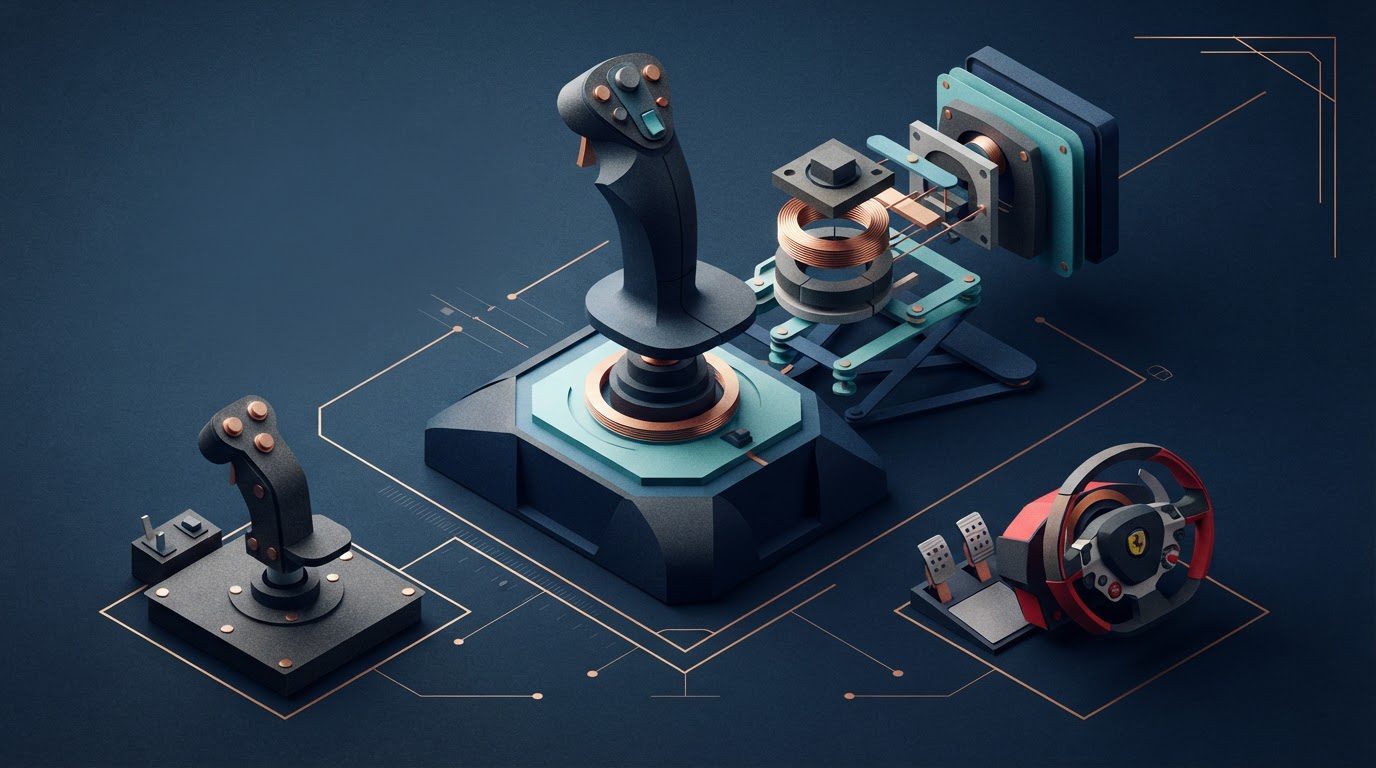
Thrustmaster History: From High-End Controllers to Modern Racing and Flight Simulation
Thrustmaster’s history is best understood through simulation controls rather than through the broad label “gaming peripherals”. The brand was founded in the United States in 1990 as a specialist in high-end controllers, and the category it became known for—joysticks, racing wheels, pedals and related controls—tries to reproduce physical actions from aircraft and vehicles rather than simply provide generic buttons for games.
A major corporate change came in 1999, when France’s Guillemot Corporation acquired the peripherals and accessories division of the American Thrustmaster group. That transaction separated the modern brand story from the original company structure while preserving the Thrustmaster name. It also gave the business a platform for wider international distribution and licensed products, which became particularly important in racing and console accessories.
From High-End Controllers to Modern Racing and Flight Simulation
The company’s own timeline highlights a stream of products aimed at increasing immersion. In 2009 it introduced H.E.A.R.T., or HallEffect AccuRate Technology, in the T.16000M joystick. Magnetic Hall-effect sensing matters because it measures position without the same kind of physical contact used by traditional potentiometers, helping preserve precision as a controller ages. This was a technically meaningful development for a brand whose reputation depends on repeatable control rather than decorative gaming features.
Thrustmaster also built its racing business around licensed automotive and platform relationships, including Ferrari-branded hardware and products designed for major console ecosystems. In simulation, those relationships can affect more than logos: wheel geometry, button layouts and compatibility all influence whether a device feels like a credible control surface or a generic gamepad with a steering rim attached.
Thrustmaster today
Thrustmaster remains a Guillemot brand focused on racing and flight controls, where wheels, pedals, shifters and joysticks compete on mechanical feel, precision, compatibility and ecosystem support.
The company’s modern position in racing and flight hardware is therefore a continuation of its founding specialism. Thrustmaster did broaden its catalogue, but its history is not really the familiar story of a peripheral brand moving from one accessory into everything else. It is a story about refining a narrow input problem—turning real-world control movements into digital signals—and using sensing technology, mechanical design and licensing to make that translation more convincing.