Silicon Motion: NAND Flash and SSD Controllers
Silicon Motion is a semiconductor company specialising in controllers for NAND flash memory and solid-state storage. Its products combine integrated circuits with firmware that manages how information is written, retained and retrieved from memory devices. The portfolio includes controllers for enterprise and client SSDs, embedded eMMC and UFS storage, and products for automotive and industrial applications. The company describes more than three decades of specialised processor development, with particular expertise in the characteristics of NAND flash. Its customers incorporate these technologies into systems serving personal computing, mobile devices, data centres and increasingly demanding artificial-intelligence workloads.
Controllers manage the behaviour of flash storage
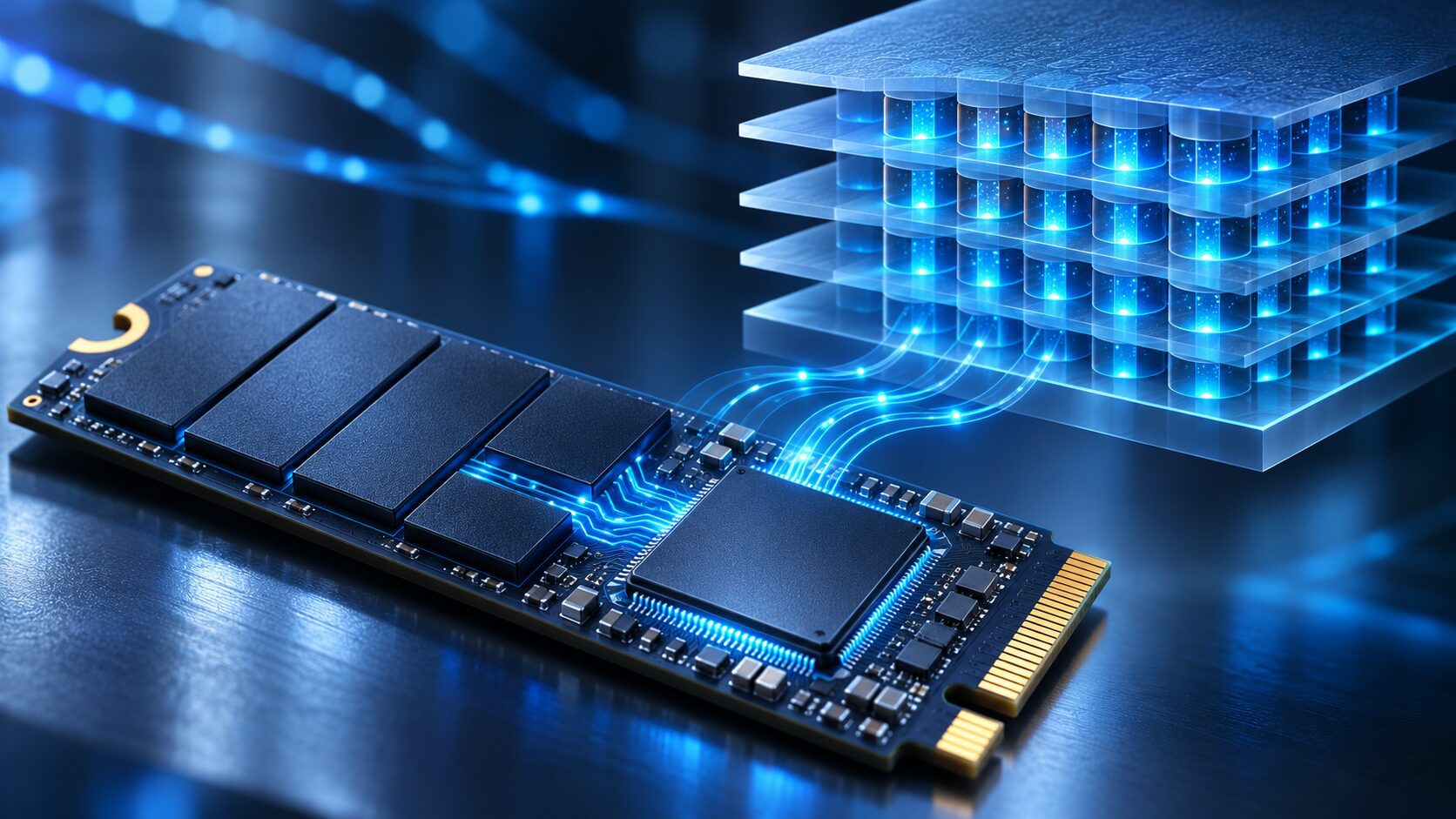
Silicon Motion develops controller chips and firmware for NAND flash. These technologies manage how data is stored and retrieved, connecting the memory hardware with the system using it.
The controller is therefore a central part of a storage device’s behaviour. Silicon Motion’s expertise combines processor design with knowledge of NAND characteristics, rather than focusing solely on manufacturing the memory itself.
A portfolio spanning enterprise and embedded systems
Enterprise SSD controllers serve storage requirements in data-centre infrastructure. Other controller families address edge computing, personal devices and embedded eMMC or UFS storage.
The company also offers Ferri products for automotive and related applications. Different systems have different requirements for form factor, reliability and operating conditions, so the portfolio includes several approaches to incorporating flash storage.
Firmware and partnerships support product integration
Silicon Motion works with memory manufacturers, module makers and equipment companies. Its controller and firmware platforms support the development of storage products using NAND from different suppliers.
Founded in 1995, the company describes more than three decades of specialised processor development. Its work supports the storage layer of computing systems, including AI infrastructure, where data access remains part of delivering usable computing performance.