ROMOSS History: From Power Banks to Larger Portable-Power Products
ROMOSS says it was founded in 2012 by a team of engineers with a straightforward goal: make charging faster and safer. That gives the brand a narrower and more useful origin than describing it as a general backup-power company. Its identity was built first around portable charging for personal electronics.
Power banks defined the early ROMOSS identity
Power banks became important as smartphones grew more capable but remained constrained by battery life. A portable battery turned charging from a fixed-location activity into something users could carry. ROMOSS built its early recognition in that market and says it became a leading power-bank brand in mainland China; that market-position statement remains a company claim.
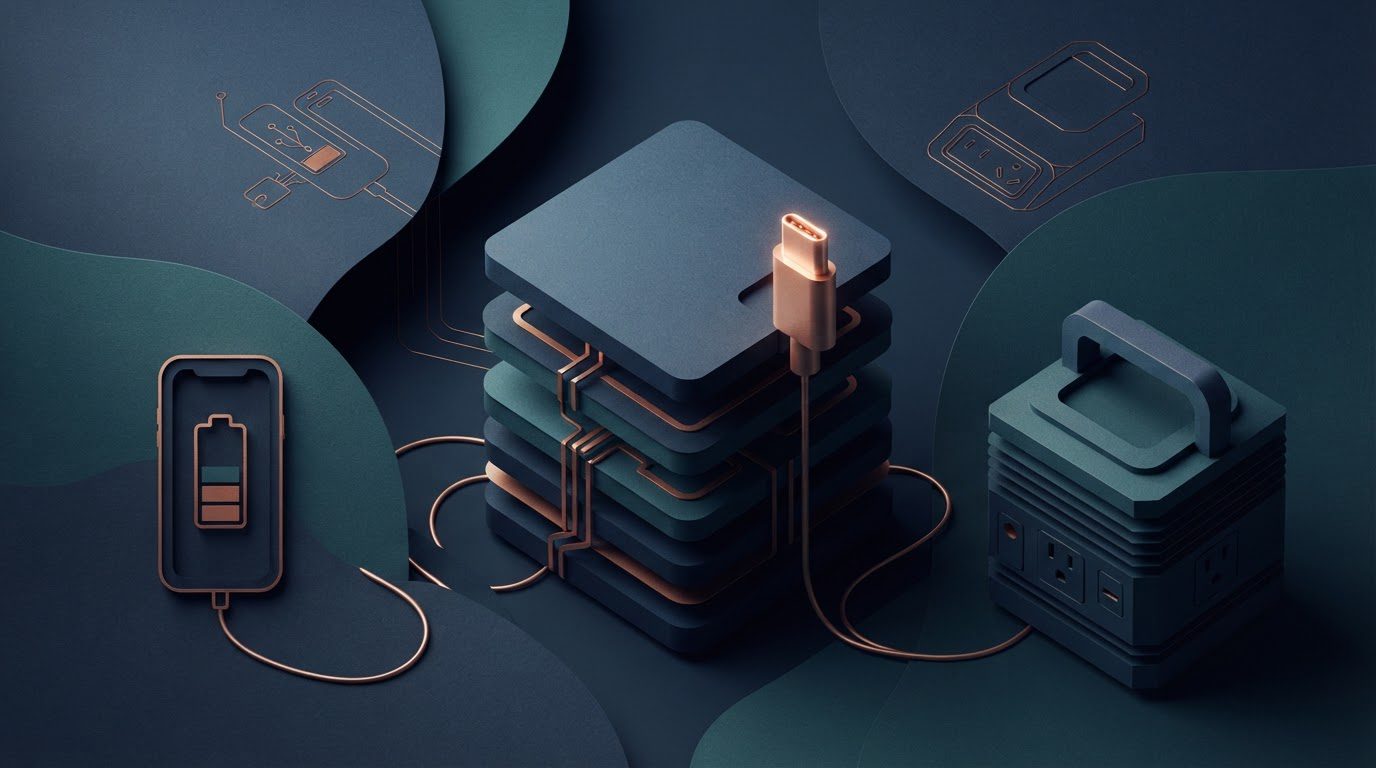
The range later expanded into cables, wall chargers and larger portable power products. Those categories share underlying concerns—battery cells, power conversion, charging protocols, thermal management and safety—even though a compact phone power bank and a larger power station serve different use cases.
USB-C and power stations expanded mobile charging
The company's modern portfolio therefore reflects an expansion in scale rather than a move into an unrelated field. USB charging standards became faster, laptops adopted USB-C power delivery, and users began expecting one charger or battery to support multiple devices. ROMOSS followed those shifts with higher-output products and more varied form factors.
ROMOSS's evolution tracks the changing definition of mobile power. Early power banks answered a smartphone-era problem: batteries were sealed into increasingly capable devices and users needed portable charging away from a wall socket. As charging standards became faster and USB-C spread, the engineering emphasis shifted toward higher output, multiple devices and power-delivery protocols. Portable power stations extended the same idea to much larger loads. ROMOSS therefore has a coherent power history without borrowing language from unrelated PC component categories. The common thread is storing and delivering electrical energy to consumer electronics at progressively larger capacities and power levels.
ROMOSS's history is best framed around portable energy, not storage or generic consumer electronics. The 2012 founding and power-bank focus established the problem the company still addresses: keep mobile devices operating away from a wall outlet. Later chargers and power stations extend that same idea to more devices and more wattage.