PUBG: BATTLEGROUNDS: survival decisions and the platforms still supported
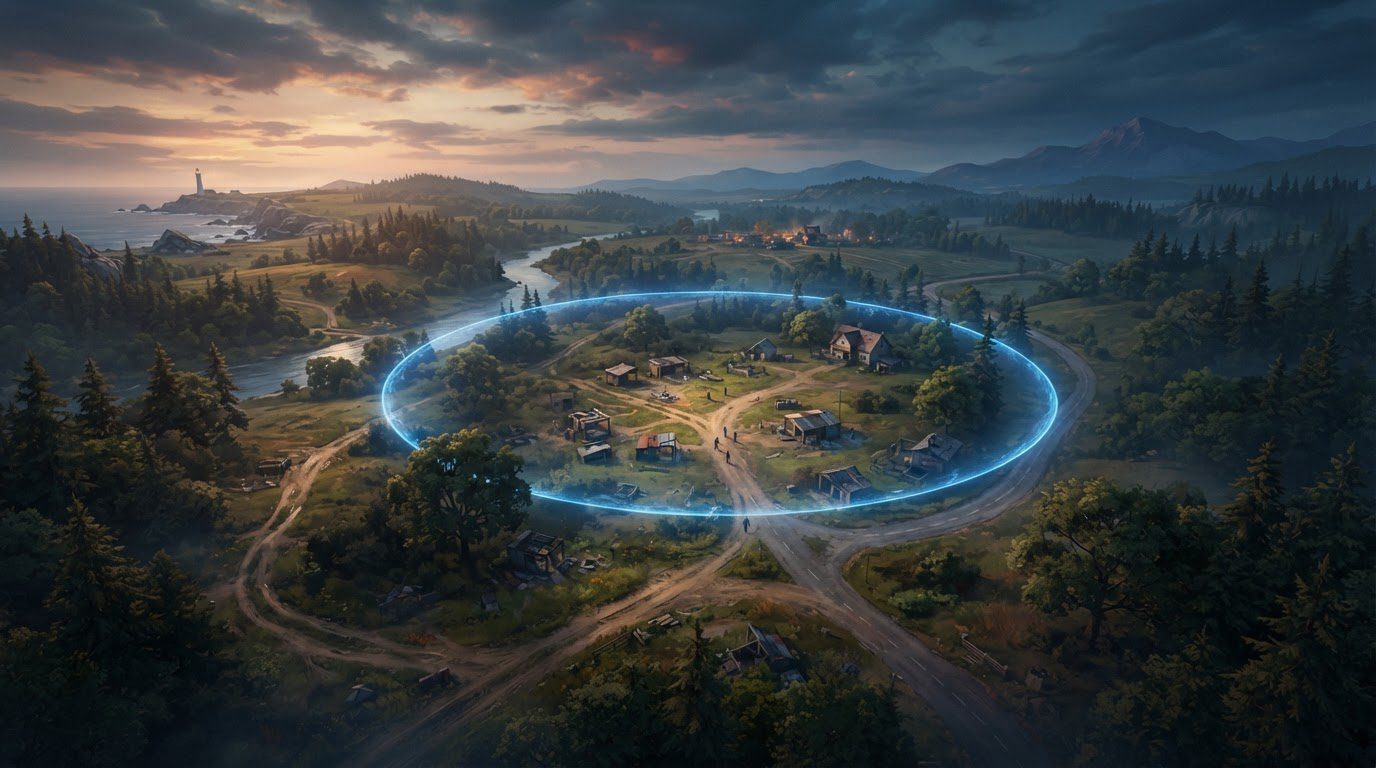
PUBG: BATTLEGROUNDS turns a simple objective into a sequence of difficult choices: survive until the end. Players land on a map, gather equipment and move within a shrinking safe area while competing against other survivors.
The base game is free to play, with optional purchases. Its Steam listing dates the PC release to 21 December 2017 and identifies KRAFTON as publisher. The supported console generation has since changed, making older platform lists misleading.
A match starts with the landing decision
The official gameplay overview describes a battle royale with up to 100 players. Choosing where to parachute affects the early encounter: a busy location may offer equipment alongside immediate competition, while a quieter landing creates different movement demands.
Loot includes weapons, armour and supplies. Care packages offer another source of equipment but announce their presence to other players. A desirable item can therefore create a contested location rather than a straightforward upgrade.
Vehicles provide ways to travel across the map. Movement still has to account for other players and the shrinking zone. The decision is not simply whether a weapon is effective, but whether a route or position leaves enough options for the next stage of the match.
Survival changes the value of a fight
A battle royale rewards survival, so taking every visible fight is not automatically the right decision. Position, equipment and the remaining safe area affect the value of an engagement.
That is the useful distinction from a match built around a kill target. Winning one exchange can still leave a player poorly placed for the next. The pressure comes from making decisions with incomplete information as the usable area becomes smaller.
The official overview lists solo, duo and squad play, with squads of up to four. Team play adds shared decisions about movement and support. Training provides a separate place to practise equipment, parachuting and driving before entering those situations.
Current console support excludes PS4 and Xbox One
PUBG’s console service announcement states that support moved to PlayStation 5 and Xbox Series X|S on 13 November 2025. PS4 and Xbox One versions became unavailable to download or play after the transition.
That is a service change, rather than merely a recommendation to use newer hardware. An old list of platforms or an existing installation on a previous-generation console does not establish current access.
The announcement also explains that account data and purchased items are preserved for players continuing on the supported console family. This should not be stretched into a promise that every account or purchase transfers between unrelated platforms.
PC specifications and downloads
For Windows, Steam lists a minimum Core i5-4430 or AMD FX-6300, 8 GB RAM and a GTX 960 2GB or Radeon R7 370 2GB. Its listed minimum storage is 40 GB; the recommended specification calls for 16 GB RAM and 50 GB storage.
These are publisher-supplied requirements. They do not establish a particular frame rate, and an online connection introduces considerations separate from local hardware.
PUBG: BATTLEGROUNDS should also be distinguished from PUBG MOBILE. Similar branding does not make the PC, console and mobile products interchangeable downloads.
What defines the experience
PUBG’s appeal rests on the link between scavenging, movement and the final survival contest. A quiet opening can develop into a pressured crossing or a close-range encounter as the zone contracts.
For a new player, understanding that rhythm and checking the correct platform are more useful starting points than assuming every shooter offers the same format. The game’s current requirements and service notices belong alongside its gameplay description, because they determine whether the experience being described is accessible on the intended machine.