NearStream History: Where the Creator Brand Fits Inside Nearity
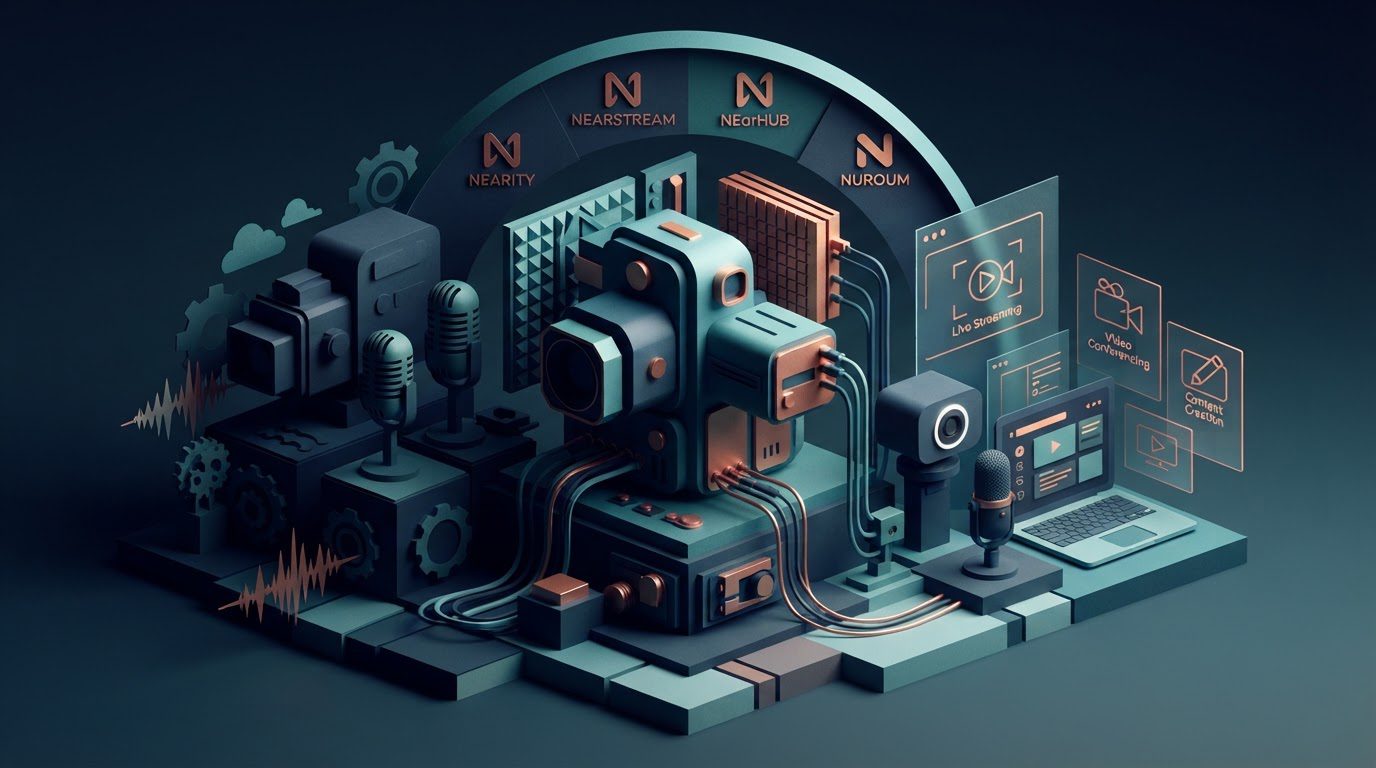
NearStream is better treated as a brand inside a wider collaboration-technology portfolio than as a standalone company with a long, independently documented corporate history. Nearity's own brand page lists NearStream alongside Nearity, NearHub and NUROUM and describes it as the video-hardware and software brand for live streaming and video conferencing.
NearStream sits inside a wider Nearity portfolio
That distinction avoids inventing a founding year. The reviewed NearStream pages explain the current mission—simplifying professional video creation with cameras, microphones, audio, lighting and integrated kits—but do not provide a reliable public timeline identifying the brand's legal formation or one definitive first commercial product. Those gaps should remain gaps until a primary source establishes them.
What can be traced is the product logic. NearStream addresses a problem familiar to small production teams: assembling a working video setup often means buying separate cameras, microphones, interfaces, lights and software from multiple vendors. Its current strategy is to bundle those pieces into modular kits so non-specialist business teams can create livestreams, podcasts and recorded video without building a traditional studio.
Integrated creator kits define the current strategy
The brand therefore sits at the convergence of creator hardware and business communications. Streaming cameras need image processing and tracking; microphones need noise control; software has to coordinate the devices; and the package must remain simple enough for users who are not broadcast engineers. That integration is the meaningful technical story, not an unsupported claim about a 'breakthrough' model.
NearStream is harder to date than Nearity itself, and its precise launch chronology remains publicly unclear. Nearity currently presents NearStream as part of its brand portfolio for livestreaming and video production, but its public material does not establish a precise launch date or first commercial product. What is clear from the present range is the workflow problem the brand targets: creators often have to combine cameras, microphones, capture devices and control software from different vendors. NearStream's modular kits and creator-oriented hardware attempt to reduce that assembly work, which is a more defensible narrative than inventing an unsupported founding story.
NearStream's history is still young and incompletely documented in public. A responsible profile should say that plainly while explaining the brand's place in Nearity's portfolio and the product problem it is trying to solve. Future launch archives may eventually provide a cleaner chronology; until then, precision is more valuable than a made-up origin story.