Lorgar History: How a 2022 Gaming Brand Entered a Crowded Peripherals Market
LORGAR is a recent gaming brand, and its own material gives a useful boundary for the story: the brand says it entered the market in 2022. It is owned by ASBISc Enterprises, a large technology distributor, which means LORGAR began with access to an established regional channel rather than having to build distribution from scratch.
LORGAR entered an already crowded market
The product strategy extends beyond the usual keyboard-and-mouse pair. LORGAR markets mice, keyboards, headsets and other gaming gear, but also targets streamers and content creators with microphones and multimedia devices. That combination reflects how the gaming-accessories market changed as streaming, Discord-style voice communication and content creation became normal parts of a gaming setup.
Because the public history is short, there is no reason to manufacture an elaborate founding myth. The more relevant question is how the brand uses its parent's distribution network and chooses categories where an ecosystem effect can develop: a gamer who buys a mouse may later add a keyboard, headset or microphone from the same software and design family.
ASBIS gave the young brand a distribution advantage
LORGAR's current messaging emphasises packaging, materials and user experience alongside performance. Those are brand claims rather than historical facts, but they show the commercial layer at which it competes. It does not design CPUs or GPUs; its value is in the downstream devices that shape control, communication and presentation around the PC.
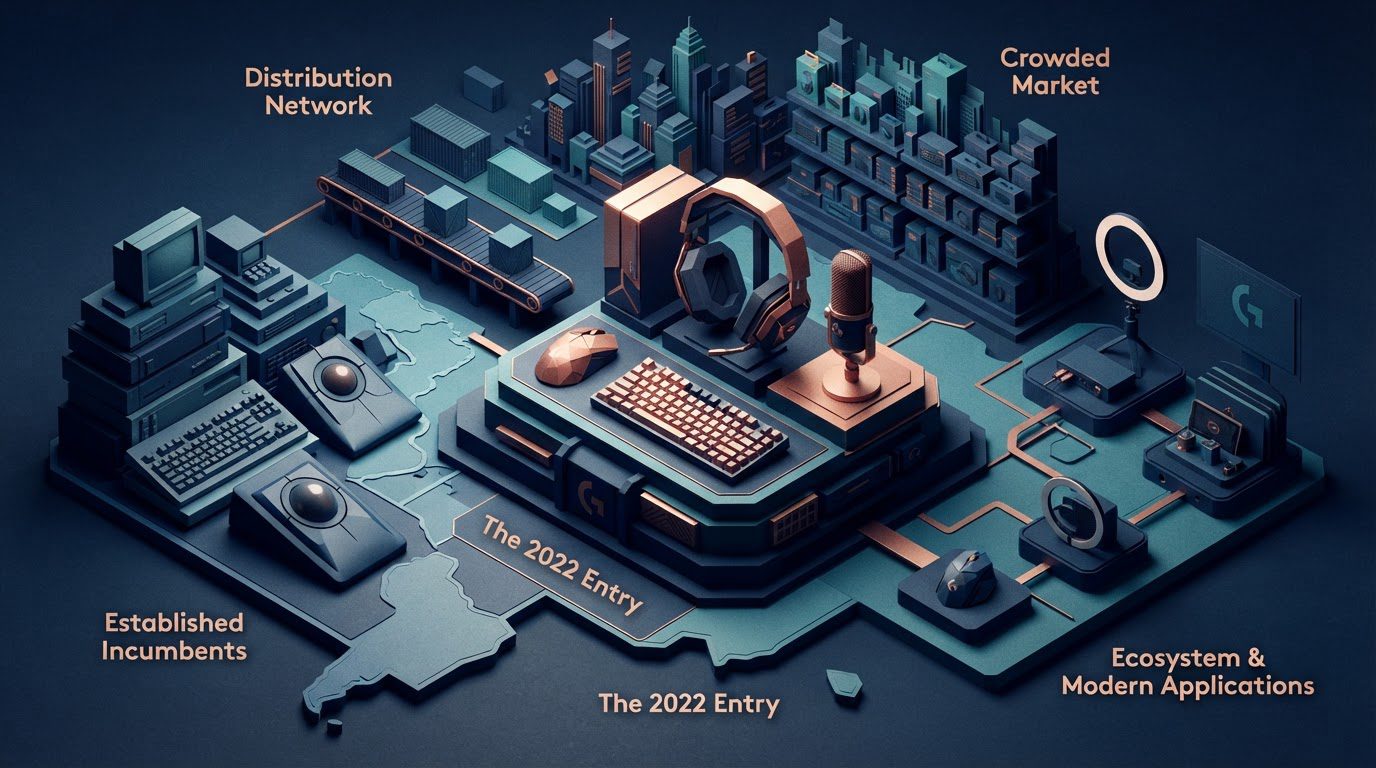
Lorgar's youth is part of the story. Entering the market in 2022 meant arriving after gaming peripherals had already become a mature category with established incumbents, extensive RGB software and crowded retail shelves. As a brand owned by ASBISc Enterprises, Lorgar could use an existing distribution network rather than building every market connection from scratch. Its challenge has therefore been differentiation—industrial design, software, streaming products and regional availability—rather than creating the gaming-mouse category itself. That context is more useful than inventing a distant founding myth: Lorgar is a recent portfolio brand competing inside an already-developed gaming ecosystem.
For LORGAR, 2022 is the documented starting point. Its short history is best measured through verifiable launches, distribution expansion and product categories rather than by borrowing the age of ASBISc.