Lindy: Following successive interface transitions
LINDY was founded by Kurt Lindenberg in Breslau, Germany, in 1932. The family business began with petrol lamps and early electrical equipment before moving deeper into industrial electronics and, later, the IT and AV connectivity products associated with the brand today.
After moving to Mannheim in the late 1940s, the business expanded through electrical and electronic products as radio, television and computing created new connection problems. That long transition explains why modern LINDY is organised around cables, conversion, switching and signal extension rather than one device platform.
Following successive interface transitions
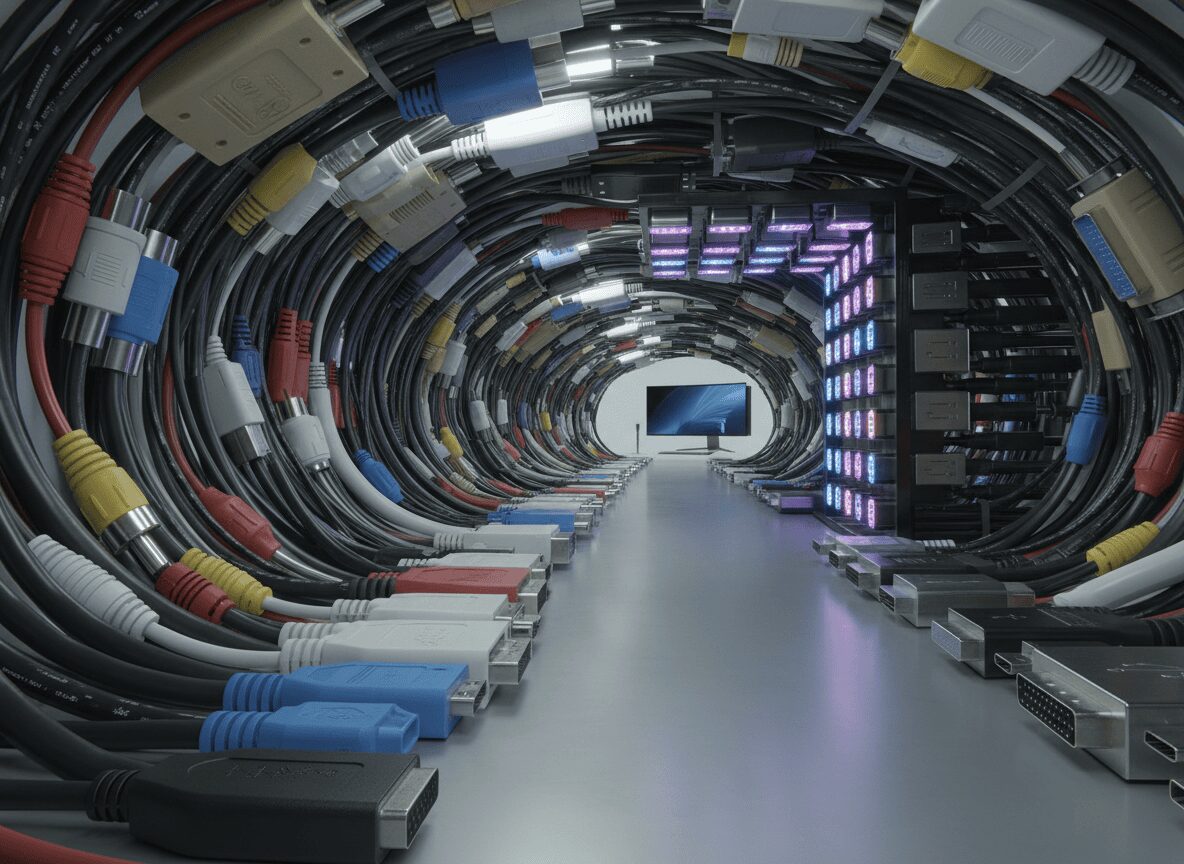
Its product range broadened with successive interface generations—from analogue video and traditional computer cabling to USB, HDMI, DisplayPort, KVM, fibre and network-based AV distribution.
LINDY operates at an interoperability layer where signal integrity, cable length, bandwidth, protocol conversion and connector quality determine whether otherwise compatible devices work together reliably.
Lindy today
The brand remains active internationally with consumer and professional connectivity products for IT, AV and installation markets.
LINDY’s relevance comes from the unglamorous but persistent problem of transitions between standards. Every new connector generation creates a new set of compatibility, distance and deployment problems for this type of supplier to solve.