Lenovo Legion History: From the Y520 and Y720 to a Gaming Ecosystem
Legion is not a 1984 company. Lenovo is. The gaming brand itself arrived at CES in January 2017, when Lenovo introduced Legion as a new sub-brand and unveiled the Y520 and Y720 laptops. Keeping those dates separate prevents a common brand-history error: giving a product family the age of its parent corporation.
The Y520 and Y720 created Legion
The launch formalised work Lenovo had already been doing in gaming-oriented IdeaPad and IdeaCentre systems. By creating Legion, Lenovo gave that business a dedicated identity that could carry across laptops, desktops and accessories without being tied to the older IdeaPad Y-series naming. The Y520 and Y720 were therefore important not because Lenovo had never sold a gaming PC before, but because they marked the start of a unified gaming label.
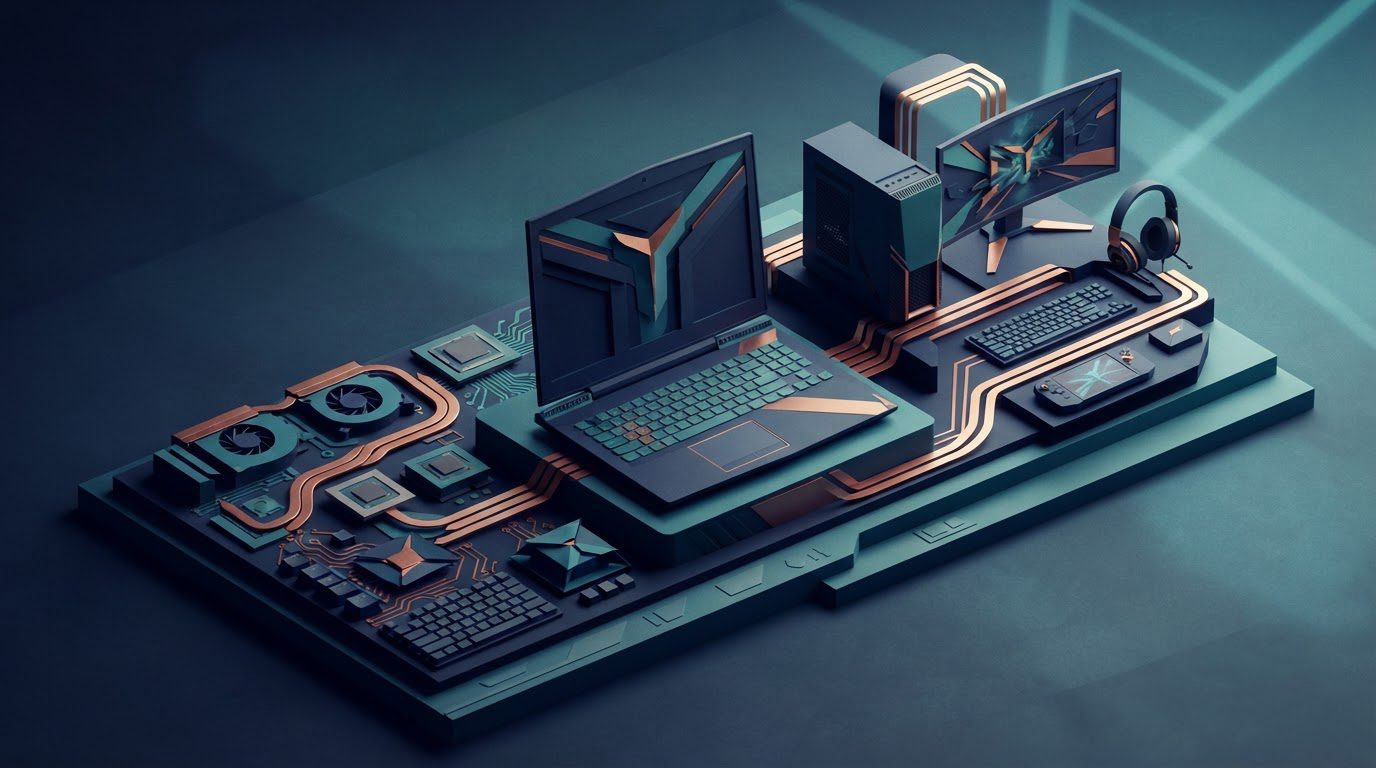
Legion later expanded into desktops, monitors, tablets and handheld gaming devices in different markets. The brand also moved away from the original Y-number naming toward families such as Legion 5, 7 and 9. Those changes show how a sub-brand can become an organising layer for multiple product categories rather than remain the name of one notebook line.
How Legion grew beyond two launch laptops
Technically, Legion's identity depends on integration rather than ownership of a core component architecture. Lenovo combines processors and GPUs from suppliers such as Intel, AMD and Nvidia with cooling systems, displays, keyboards, firmware and software. The differentiation is therefore at system level: how much performance can be sustained, how the machine is packaged and how the user controls it.
The fact that Legion began with the Y520 and Y720 matters because it gives the brand a clean launch point that should not be confused with Lenovo's 1984 corporate origin. Lenovo already had decades of PC engineering, supply-chain experience and retail reach when it created Legion in 2017. The new label was a segmentation decision: gaming hardware needed a distinct identity, industrial design and performance message rather than simply another IdeaPad or mainstream desktop variant. As Legion expanded into towers, monitors and accessories, the brand became a way to organise a complete gaming portfolio while still drawing on the parent company's manufacturing and service infrastructure.
The most important date in Legion's history is 2017, not Lenovo's 1984 founding. The parent company's scale supplied engineering, manufacturing and distribution; the Legion launch supplied a specialist identity. That distinction is precisely what lets the brand's later growth be measured honestly instead of borrowing decades of history that belong to Lenovo as a whole.