Leadtek History: From EGA BIOS to WinFast Graphics
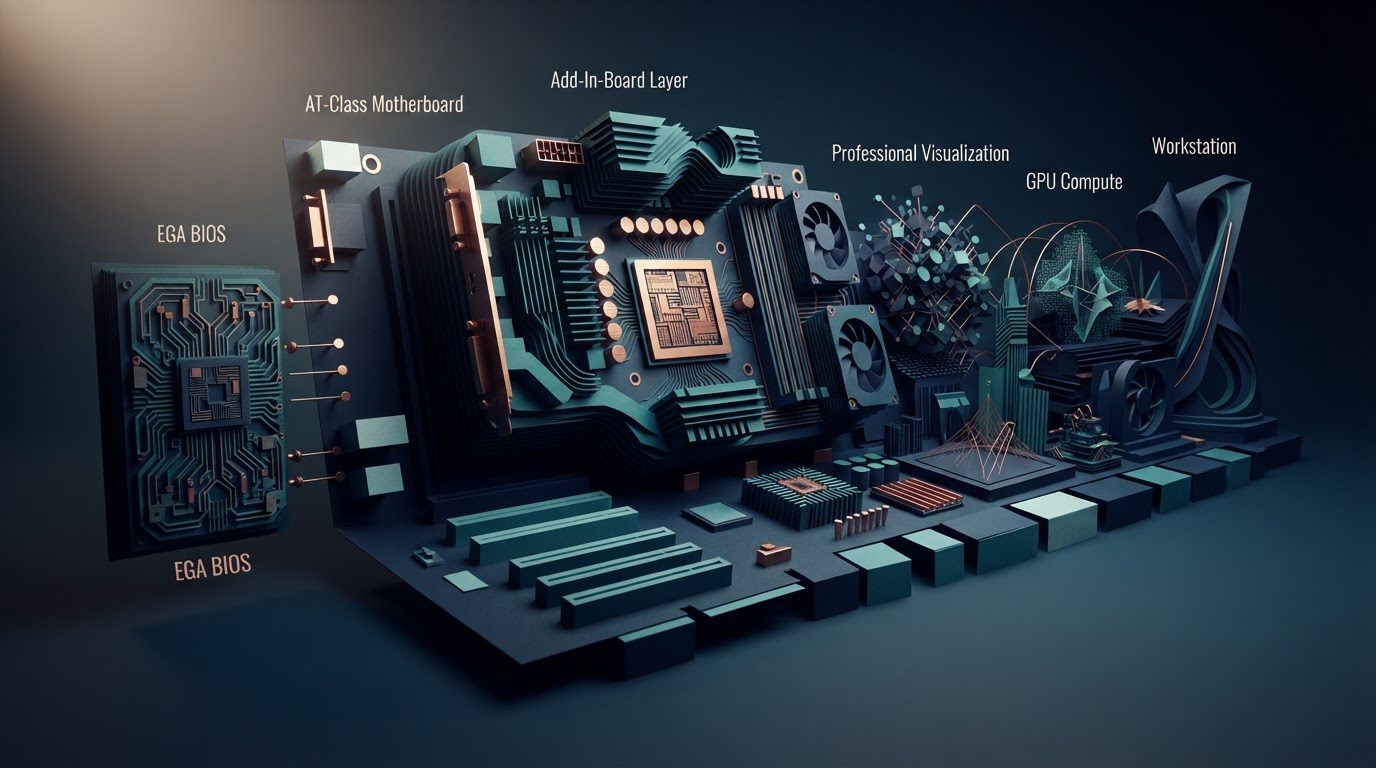
Leadtek's history starts before 3D gaming became the market that would make graphics cards a mass enthusiast category. Founded in Taiwan in 1986, the company initially worked on products including EGA BIOS technology and AT-class motherboards. Its later reputation in graphics therefore grew out of broader PC engineering rather than from a company created solely to sell GPUs.
Before WinFast: BIOS and motherboards
The WinFast name became central as Leadtek moved into graphics accelerators. The company's historical material identifies the WinFast line and products such as the WinFast 3D GD400 as important steps in building an international graphics business. That placed Leadtek in the add-in-board layer of the market: it did not design the underlying GPU architecture, but it turned graphics processors into complete boards with memory, power delivery, cooling and firmware.
That distinction remains important. Add-in-board companies compete on more than the silicon supplied by GPU vendors. Board layout, component selection, thermal design, clock profiles, warranties and channel relationships can determine how the same processor performs and is perceived in different products. Leadtek also developed professional and workstation offerings, giving it exposure to visualisation and compute workloads beyond consumer gaming.
WinFast moved Leadtek into graphics
Over time, the company's portfolio broadened into workstation graphics and other computing products while WinFast remained the most recognisable historical label. That evolution mirrors the way discrete graphics itself moved from 2D/3D display acceleration into programmable shading, professional visualisation and GPU compute.
Leadtek's position in the graphics market is also easy to misunderstand if the story is told only through GPU names. The company is an add-in-board partner rather than the designer of the underlying Nvidia or other graphics architectures it has used. Its contribution sits in board engineering, cooling, memory configurations, qualification and channel sales. That distinction became more important as graphics processors grew from display accelerators into compute devices used for professional visualisation and AI workloads. Leadtek's WinFast identity helped it build consumer recognition, but the longer history is one of taking semiconductor platforms designed elsewhere and turning them into finished products for specific workstation, gaming and professional customers.
Leadtek is best understood as a board-and-systems specialist that kept adapting to what graphics processors could do. Its early BIOS and motherboard work established PC-platform expertise; WinFast turned that expertise toward graphics. The common thread is not 'power' or generic gaming culture, but the engineering required to package increasingly capable processors into usable PC hardware.