Konica Minolta: How Two Imaging Rivals Became One Digital-Workplace Company
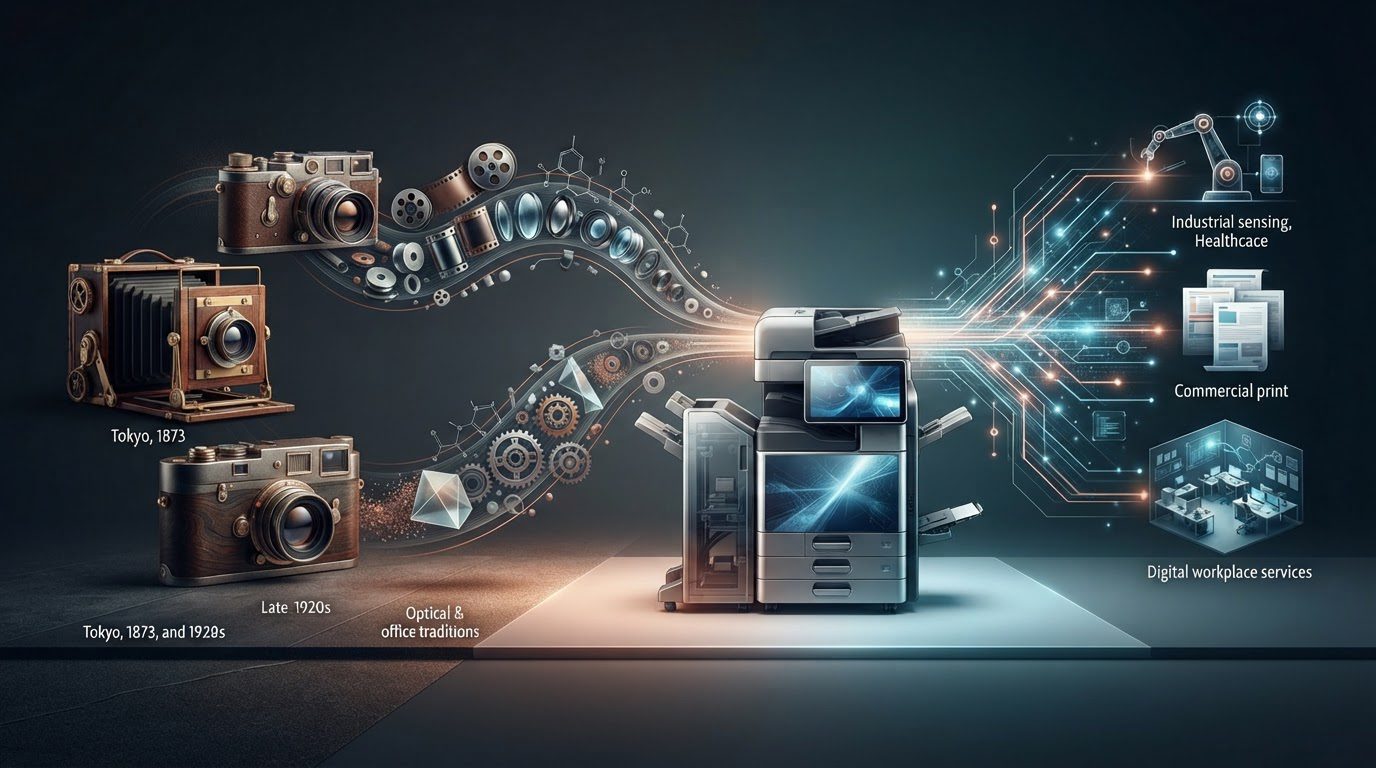
Konica traces to a photographic-materials business begun in Tokyo in 1873, while Minolta developed its own camera business from the late 1920s. The two companies integrated management in 2003.
Konica’s early photographic materials and the Cherry Hand Camera, followed by Minolta cameras such as the Nifcalette, established two separate imaging traditions long before the merger.
From photography to digital workplace systems
Office imaging became strategically important before the merger; Konica Minolta says the copier and MFP businesses were central to the 2003 integration. The group later withdrew from its founding photo and camera businesses to concentrate capital elsewhere.
Its contribution sits across imaging chemistry, optics, print engines, toner, sensing and digital-workplace systems rather than a single device category.
Konica Minolta today
Today Konica Minolta operates across digital workplace and professional print as well as healthcare, sensing, optical components and other industrial imaging fields.
The company’s history matters because it shows an imaging business repeatedly changing the medium—from film to copiers, digital print, sensors and software—without abandoning its core expertise in creating and measuring images.