Samsung Galaxy Z Fold8 reshapes the Fold around a lighter 201g design
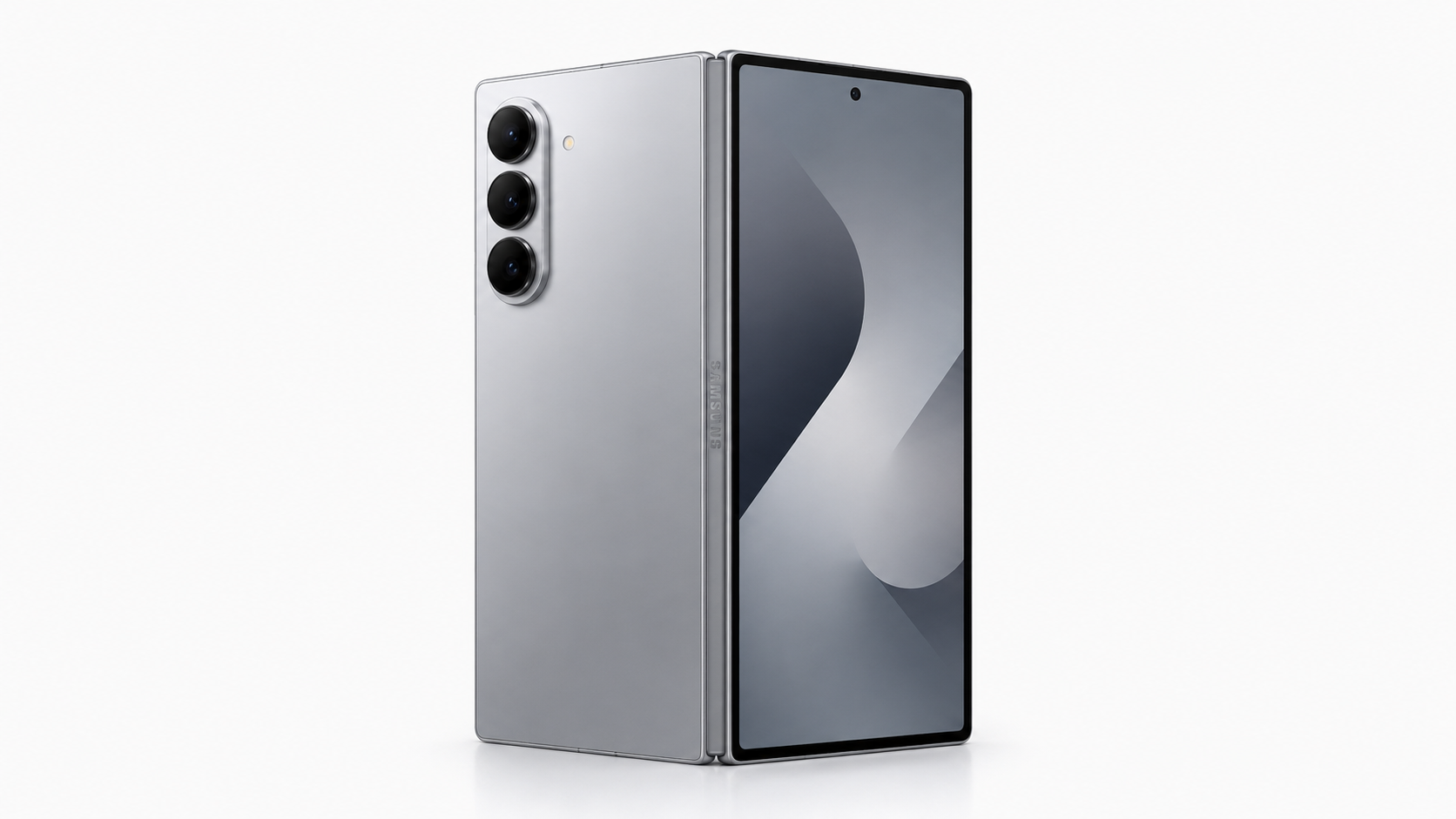
Samsung has redesigned the Galaxy Z Fold8 around portability and content rather than simply increasing the size of its previous Fold formula. The new foldable weighs 201g, measures 4.5mm thick when opened and introduces different screen proportions on both the cover and folding displays.
The phone uses a 5.5-inch cover display with a 10:16 aspect ratio. Opening it reveals a 7.6-inch main screen with a 4:3 format. Samsung designed those proportions to move more naturally between short-form content on the outside and video, reading or multitasking on the larger inner display.
Inside, Samsung uses the Snapdragon 8 Elite Gen 5 for Galaxy processor, 12GB of memory and a 4,800mAh battery. Photography comes from two 50MP rear cameras rather than a conventional three-camera flagship arrangement.
Samsung began South African sales of the new Galaxy Z generation on 21 August 2026, following its earlier pre-order period. The Fold8 is available locally through operators, retailers, Samsung.com and Samsung Experience Stores.
TechnologyBlog.co.za has not tested the Galaxy Z Fold8. This article therefore examines its verified specifications and features rather than making conclusions about camera quality, battery endurance or long-term foldable durability.
Samsung has changed the shape of the Fold
The most important Fold8 change is not a processor or camera specification. Samsung has reconsidered the dimensions of the device itself.
When closed, the phone uses a 5.5-inch cover display with a 10:16 aspect ratio. Samsung designed this format around activities such as scrolling through social feeds, messaging and other tasks that users may want to complete without unfolding the device.
Opening the phone reveals a 7.6-inch main display with a 4:3 aspect ratio. Rotating it effectively changes the orientation to 3:4, which provides a different layout for reading websites, documents and e-books.
The decision gives the Fold8 a different purpose from simply acting as a smaller version of the Fold8 Ultra. Samsung describes the Ultra around productivity and maximum screen space, while the Fold8 puts more emphasis on content consumption and portability.
That distinction makes sense as Samsung expands its foldable family. One Fold design no longer has to satisfy every large-screen foldable buyer.
At 201g, Fold8 is Samsung’s lightest Fold yet
The Galaxy Z Fold8 weighs 201g, making it Samsung’s lightest Galaxy Fold to date. It measures 4.5mm thick when unfolded.
Reducing weight matters more on a foldable than the specification may initially suggest. A book-style folding phone needs two chassis sections, a hinge and a larger internal display, which can make older designs noticeably heavier in everyday use.
Samsung has therefore concentrated on making the Fold8 easier to carry while still retaining the large folding display.
The design also illustrates Samsung’s broader interest in thinner premium mobile hardware. TechnologyBlog.co.za previously looked at the company’s approach to slim smartphone engineering in our Samsung Galaxy S25 Edge coverage.
The Fold8 presents a more complicated engineering problem because Samsung must reduce weight while still accommodating a folding mechanism, two displays and a sizeable battery.
Flex Titanium reinforces the folding screen
Samsung uses its Flex Titanium design beneath the Fold8’s main display.
Two titanium layers sit inside the shock-absorbing structure below the folding panel. Samsung designed the arrangement to strengthen the screen without adding excessive bulk.
The phone also uses Samsung’s Armor FlexHinge. A widened inner bezel and revised hinge structure aim to make opening the Fold8 smoother.
Armor Aluminum protects the frame. Samsung combines Gorilla Glass Ceramic 3 on the front with Gorilla Glass Victus 2 on the rear.
These materials strengthen the physical specification, but they cannot tell us how the folding mechanism will perform after years of use. TechnologyBlog.co.za has not conducted long-term hinge or folding-screen testing.
IP48 water resistance still leaves a dust limitation
The Galaxy Z Fold8 carries an IP48 rating. Samsung describes the rating as sufficient for protection against accidental spills and common water exposure.
The second digit covers water resistance. The first digit deserves closer attention because an IP48 device does not have the same fine-dust protection as an IP68 conventional flagship.
That means sand, fine dirt and similar particles remain worth avoiding around the hinge and folding display.
Foldable hardware continues to require some additional care despite improvements in materials and construction.
Snapdragon 8 Elite Gen 5 for Galaxy handles processing
Samsung equips the Fold8 with the Snapdragon 8 Elite Gen 5 for Galaxy processor.
The customised Qualcomm platform combines CPU, GPU and NPU hardware for general applications, gaming and AI workloads. Samsung also uses the processor alongside its mDNIe display technology to manage image processing and power consumption.
The graphics hardware supports Vulkan and real-time ray tracing in compatible games. Actual gaming performance will depend on software optimisation, display resolution, cooling and graphics settings.
Samsung also relies increasingly on the processor’s NPU for Galaxy AI functions.
An NPU does not automatically accelerate every application. Individual software features need to support the hardware before they can take advantage of its AI-processing capability.
Now Nudge uses the folding display for contextual actions
Galaxy AI plays a significant role in Samsung’s Fold8 software experience.
Now Nudge can identify information on the screen and suggest a related action. A message discussing an upcoming appointment could create a prompt to open the calendar.
The Fold form factor gives this feature an additional option. Opening the suggestion can place the relevant application beside the original content in split-screen view rather than replacing it.
This helps explain why Samsung continues to focus heavily on multi-window software. A 7.6-inch screen offers considerably more room for two applications than a conventional smartphone display.
Samsung also includes Photo Assist and other Galaxy AI functions. Some features process data locally, while others may require network access or cloud services.
Availability can vary according to language, region and Samsung Account requirements.
Dual 50MP cameras take a simpler approach
Samsung uses two 50MP rear cameras on the Fold8.
The main wide camera has an f/1.8 aperture. It can also produce a 2x optical-quality view from the high-resolution sensor.
A second 50MP sensor handles ultra-wide photography with an f/1.9 aperture. Samsung uses its ProVisual Engine for image processing and noise reduction.
There is no dedicated telephoto camera.
This separates the Fold8’s camera strategy from Samsung’s more photography-focused Fold8 Ultra. The standard Fold instead covers conventional wide and ultra-wide photography while relying on its main sensor for a closer 2x perspective.
Samsung lists digital zoom up to 10x.
TechnologyBlog.co.za has not tested image quality. The presence of two 50MP sensors also does not mean the cameras produce identical results, as the lenses and intended fields of view differ.
Both rear cameras support 8K video
Samsung says the Fold8 can retain detail across its wide and ultra-wide cameras when recording 8K video.
The ProVisual Engine also supports Samsung’s Nightography video processing. It analyses the captured image and applies noise reduction and other adjustments in lower-light conditions.
Samsung adds Dual Recording, which can capture the person filming and their subject in a split-screen layout at the same time. Both participants can preview the recording through the phone’s displays.
My FanCam provides another AI-assisted video feature. It can identify a selected person in existing footage and reframe the video to follow them.
Automated subject tracking can make editing easier, but users should still inspect the result before publishing important footage.
Two 10MP cameras handle selfies and calls
The Fold8 includes a 10MP cover-screen camera for conventional selfies and video calls.
Another 10MP camera sits on the main folding display. Samsung gives this camera a 100-degree field of view, which provides more space for group calls or selfies.
The folding design also lets users photograph themselves with the rear cameras while using the external display for framing.
This remains one of the practical photography advantages of a book-style folding phone. Users can access the higher-resolution rear cameras without losing a live view of the composition.
The 4,800mAh battery targets up to 26 hours of video
Samsung fits a 4,800mAh typical battery inside the Fold8.
The company rates the phone for up to 26 hours of video playback under its test conditions.
Real battery endurance will depend on how someone uses the device. Keeping the 7.6-inch main screen active for long periods can produce different results from spending most of the day on the smaller cover display.
Mobile signal quality, brightness, gaming, cameras and background applications will also affect battery life.
TechnologyBlog.co.za has not independently tested Samsung’s 26-hour claim.
12GB of memory comes with local storage options
Samsung’s South African buying page currently shows 12GB of RAM with both 256GB and 512GB storage selections.
Samsung’s general South African product FAQ currently mentions only a 256GB option, which conflicts with the live buying page. The buying page therefore provides the stronger indication of the configurations Samsung is currently presenting for purchase locally.
Storage availability may also change by operator or retailer.
There is no microSD expansion, so buyers should choose enough internal capacity for the period they plan to keep the phone.
Photos and especially 8K video can consume storage quickly.
The Fold8 does not support S Pen
Samsung has removed S Pen support from the Galaxy Z Fold8. The company’s South African FAQ confirms that the phone does not work with the stylus.
This is a notable limitation for a device with a large folding display.
Some Fold owners may use the main screen for handwritten notes, annotations or drawing. Those workflows will not carry over to the Fold8.
Samsung has instead concentrated on touch interaction, multi-window applications and AI-assisted productivity.
Users who consider stylus input essential should account for its absence before changing devices.
Up to seven generations of software support
Samsung promises up to seven generations of operating-system upgrades and security updates for the Galaxy Z Fold8.
A long update policy can extend the useful software life of a premium smartphone. It also reduces the risk of the device losing security support while the hardware remains otherwise functional.
Foldables add another consideration. The physical display, hinge and battery need to remain serviceable for users to benefit fully from an extended software-support period.
Samsung Care+ provides an additional support option for buyers who want coverage beyond the standard device warranty.
Galaxy Z Fold8 specifications
| Specification | Samsung Galaxy Z Fold8 |
|---|---|
| Main display | 7.6-inch folding display |
| Main display ratio | 4:3 |
| Cover display | 5.5-inch |
| Cover display ratio | 10:16 |
| Processor | Snapdragon 8 Elite Gen 5 for Galaxy |
| Memory | 12GB |
| Storage | 256GB or 512GB shown on SA buying page |
| Main camera | 50MP Wide, f/1.8 |
| Ultra-wide camera | 50MP, f/1.9 |
| Main-camera zoom | 2x optical-quality |
| Maximum digital zoom | Up to 10x |
| Cover camera | 10MP |
| Main-screen camera | 10MP |
| Video | Up to 8K |
| Battery | 4,800mAh typical |
| Rated video playback | Up to 26 hours |
| Unfolded thickness | 4.5mm |
| Weight | 201g |
| Display reinforcement | Flex Titanium |
| Frame | Armor Aluminum |
| Water and particle resistance | IP48 |
| S Pen support | No |
| Software support | Up to seven OS generations and security updates |
| Colours | Lavender, Graphite and Cream |
| Samsung.com colour | Pistachio |
Samsung South Africa’s current product and buying pages provide the specifications above.
Lavender, Graphite and Cream lead the colour range
Samsung offers the Galaxy Z Fold8 in Lavender, Graphite and Cream.
Customers buying through Samsung.com can also choose Pistachio as an exclusive colour.
The broader design remains recognisably part of the Galaxy Z family, but the changed proportions give this model a distinct appearance compared with Samsung’s productivity-focused Fold.
The 201g weight arguably matters more than the colour choices. It makes the Fold8 easier to position as an everyday phone that happens to open into a substantially larger display.
Where the Fold8 fits in Samsung’s new foldable range
Samsung now offers three distinct Galaxy Z approaches rather than a simple Fold-and-Flip split.
The Galaxy Z Fold8 Ultra targets users who prioritise maximum screen area, camera hardware and productivity. It uses an 8-inch main display, 200MP wide camera, telephoto camera and a 5,000mAh battery.
The standard Fold8 instead weighs 201g and uses a 7.6-inch 4:3 inner display. Its dual 50MP camera system is simpler, and the battery drops to 4,800mAh.
That is a useful distinction rather than simply a hierarchy of better and worse specifications.
Someone interested in a large folding workspace and more extensive cameras may find the Ultra format more appealing. Someone who sees weight and everyday portability as the bigger challenge of owning a Fold may prefer the standard Fold8’s approach.
Both remain Samsung products within the same foldable family, but they solve different parts of the form-factor problem.
Who should consider the Samsung Galaxy Z Fold8?
The Fold8 makes the strongest case for users who like the idea of a large folding screen but do not want the largest or heaviest Fold configuration.
Its 201g weight and 5.5-inch cover screen make the phone more manageable when closed. Opening it still provides a 7.6-inch display for video, reading, gaming and multi-window applications.
The 4:3 inner format also gives the Fold8 a distinct content-focused identity. Samsung has designed the outside screen around short-form interaction and the inside around more immersive content.
There are important trade-offs.
The phone lacks a dedicated telephoto camera and does not support S Pen. The IP48 rating also means users still need to take care around fine dust and sand.
Those limitations should form part of the buying decision alongside the headline benefits of a lighter chassis and larger folding screen.
Galaxy Z Fold8 is now available in South Africa
Samsung officially launched the Galaxy Z Fold8 in South Africa alongside the Fold8 Ultra, Flip8, Watch Ultra2 and Watch9.
Local sales began on 21 August 2026 following a pre-order period that ran from 22 July to 12 August. Samsung lists availability through operators, retailers, Samsung.com and Samsung Experience Stores.
The Fold8 represents a notable change in Samsung’s folding-phone strategy. Rather than making its standard Fold the largest possible productivity device, Samsung has given that role to the Ultra.
That allows the Galaxy Z Fold8 to concentrate on becoming lighter and easier to carry. Its 201g body, 4:3 folding display and dual 50MP cameras define that approach more clearly than simply increasing specifications across the board.
For users who want Samsung’s foldable format primarily for entertainment, reading and everyday multitasking, the Fold8 may therefore make more sense than automatically choosing the largest model in the range.